
Aswan High Dam
The Dam at a Glance
Aswan High Dam: Egypt's Modern Wonder on the Nile
Stretching across the northern reach of Lake Nasser south of Aswan, the Aswan High Dam (Saad al-Aali) stands as one of the most ambitious engineering achievements of the 20th century. Built to tame the unpredictable, annual flooding of the Nile River, this colossal rockfill embankment transformed Egypt’s agricultural landscape, secured a vast multi-year water supply, and generated hydroelectricity that catalyzed the country’s industrialization.
Known colloquially as the High Dam Egypt, this modern wonder created Lake Nasser—one of the largest man-made reservoirs on Earth—and sparked an unprecedented international effort to rescue ancient Nubian monuments from rising waters. Today, the Aswan dam is both a critical piece of national infrastructure and a compelling historical stop on any luxury Nile River tour.
| Feature | Details |
| Official Name | Aswan High Dam (Al-Sadd al-‘Aali) |
| Location | Aswan Governorate, Egypt (13 km south of Aswan town) |
| Construction Period | January 9, 1960 – July 15, 1970 |
| Official Inauguration | January 15, 1971 (by President Anwar Sadat) |
| Dam Type | Embankment (Clay-core rockfill) |
| Height & Crest Length | Height: 111 m (364 ft) | Length: 3,830 m (12,570 ft) |
| Base Width | 980 meters (3,220 ft) |
| Reservoir Created | Lake Nasser dam reservoir (Surface area: ~5,250 sq km) |
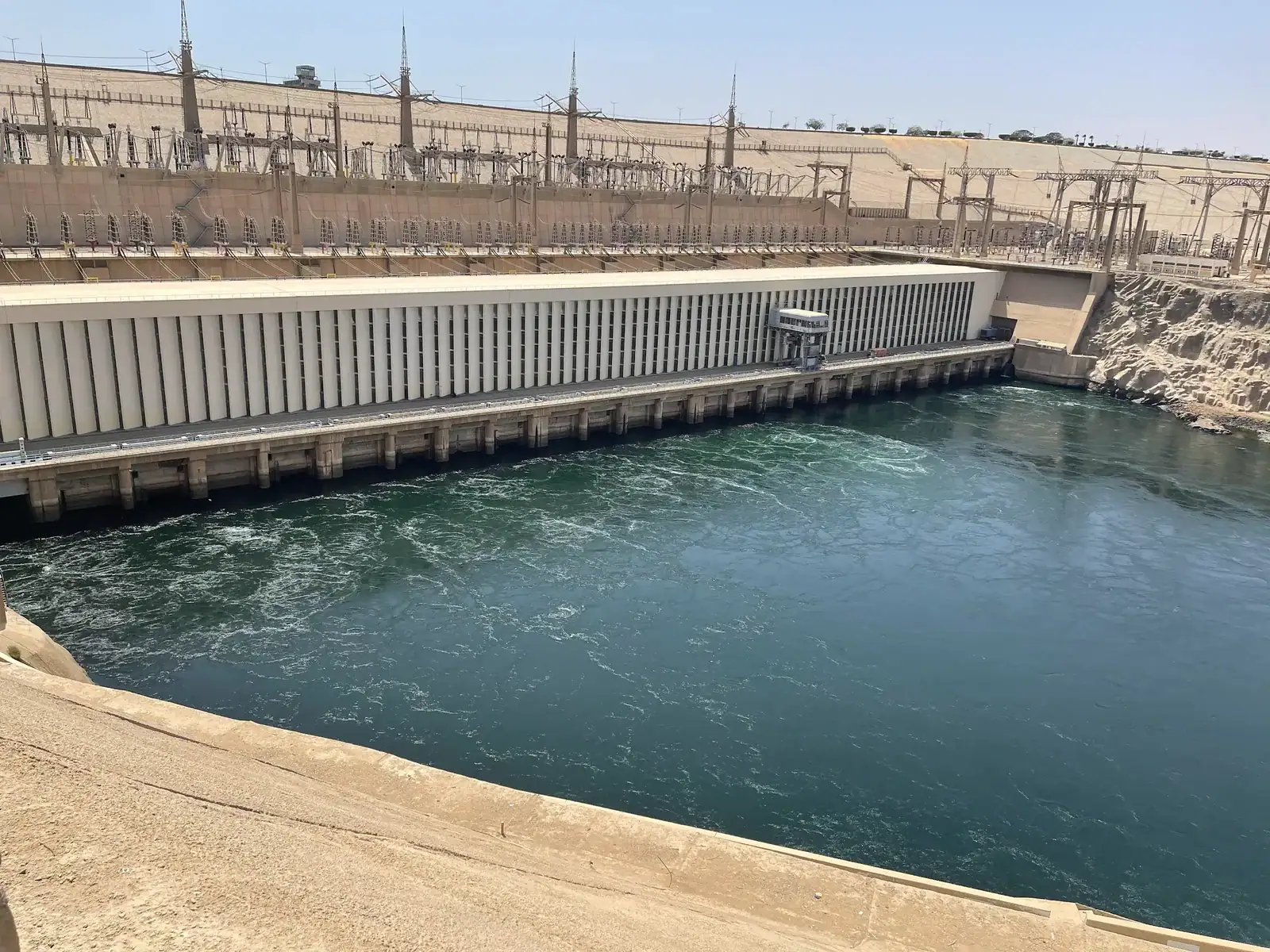
| Hydroelectric Capacity | 2,100 MW (12 Francis-type turbines @ 175 MW each) |
| Design Architect | Nikolai Malyshev (Moscow Hydroproject Institute) |
| Site Hours | Daily, 7:00 AM – 5:00 PM |
| Primary Purpose | Flood control, year-round irrigation, hydropower generation, river navigation |
Historical Timeline
1902 ── Aswan Low Dam Completed by British Engineers
1952 ── Egyptian Revolution; President Nasser Envisions the High Dam
1960 ── Construction Begins with Soviet Technical & Financial Support (Jan 9)
1964 ── First Phase Completed; Nile River Diverted into Bypass Channel
1967 ── First Hydroelectric Turbines Begin Generating Power (Oct 15)
1970 ── Final Construction Completed; Reservoir Begins Filling (Jul 15)
1971 ── Official Inauguration on President Nasser’s Birthday (Jan 15)
1980 ── UNESCO Relocation Campaign Concludes (Abu Simbel & Philae Saved)
Historical Background
Historical Background & Timeline
For thousands of years, Egypt depended on the Nile’s annual floods, which enriched farmland with fertile silt but were highly unpredictable. Excessive flooding destroyed villages and crops, while low floods caused drought and famine.
The first attempt to control the Nile at Aswan came in the 11th century when the scholar Ibn al-Haytham studied the site. He concluded that building a dam was beyond the engineering capabilities of his time. Centuries later, the British constructed the Aswan Low Dam (1898–1902), but it could not store enough water to manage long-term droughts.
After the 1952 Egyptian Revolution, President Gamal Abdel Nasser launched the Aswan High Dam project to regulate the Nile, expand irrigation, and generate hydroelectric power. With Soviet financial and technical support, construction began in 1960 and was completed in 1970.
The dam created Lake Nasser, one of the world’s largest artificial lakes, providing a dependable water reserve for agriculture, drinking water, and electricity generation. Although the project transformed Egypt’s economy and infrastructure, it also caused environmental changes and required the relocation of thousands of people.

Explore the Wonders of Ancient Egypt
Book your visit to the Aswan High Dam and explore one of the world’s most iconic ancient landmarks.
What Makes It Extraordinary
What Makes Aswan High Dam Extraordinary
01
Unrivaled Scale of Material Engineering
At the time of its completion, the aswan high dam was the largest embankment dam in the world. The volume of rock, sand, and clay used to construct it—roughly 44 million cubic meters—is equivalent to nearly 17 times the material inside the Great Pyramid of Khufu. To anchor the dam into the porous riverbed, engineers injected a grout curtain 100 meters deep into the substrate, a groundbreaking feat for 1960s civil engineering.
02
Creation of Lake Nasser
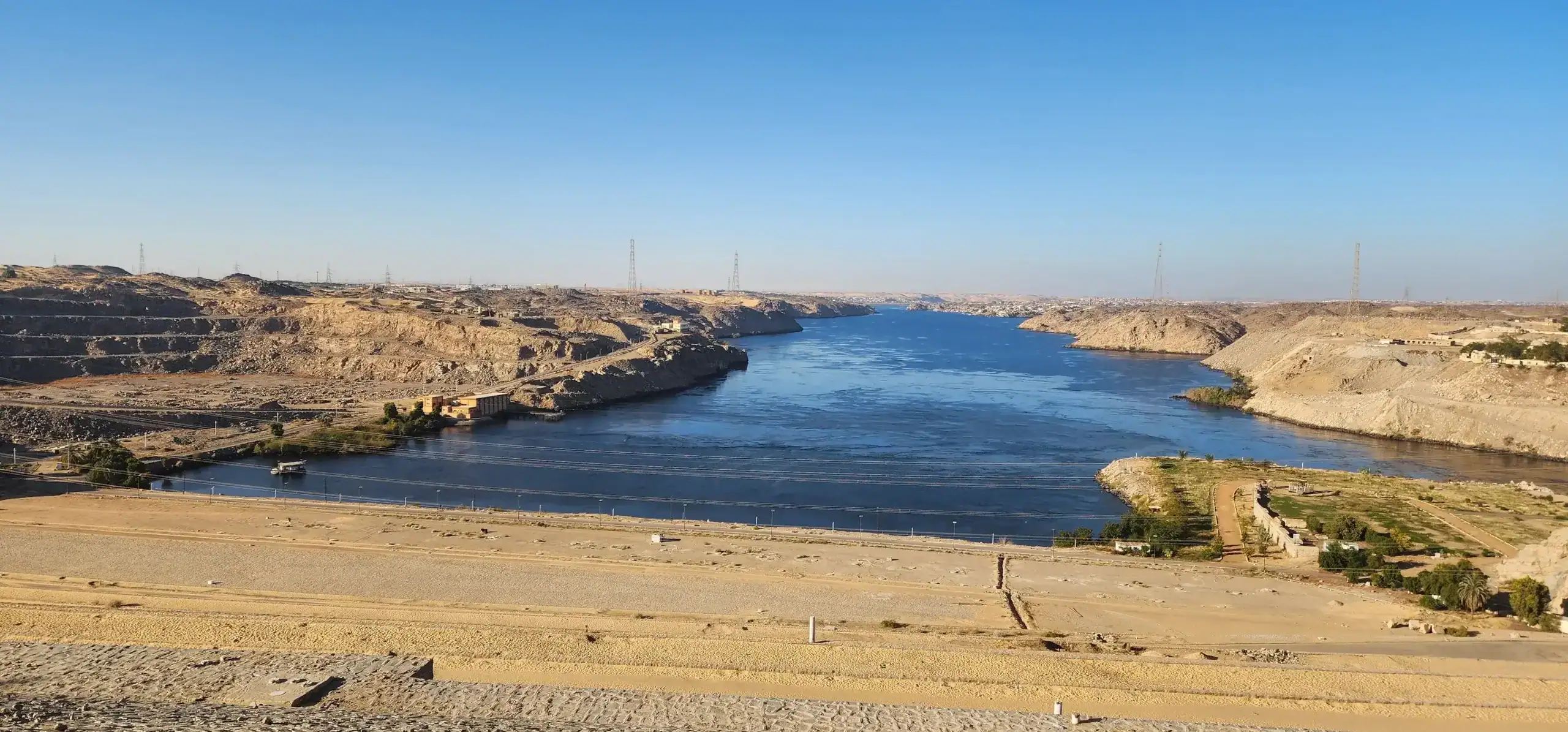
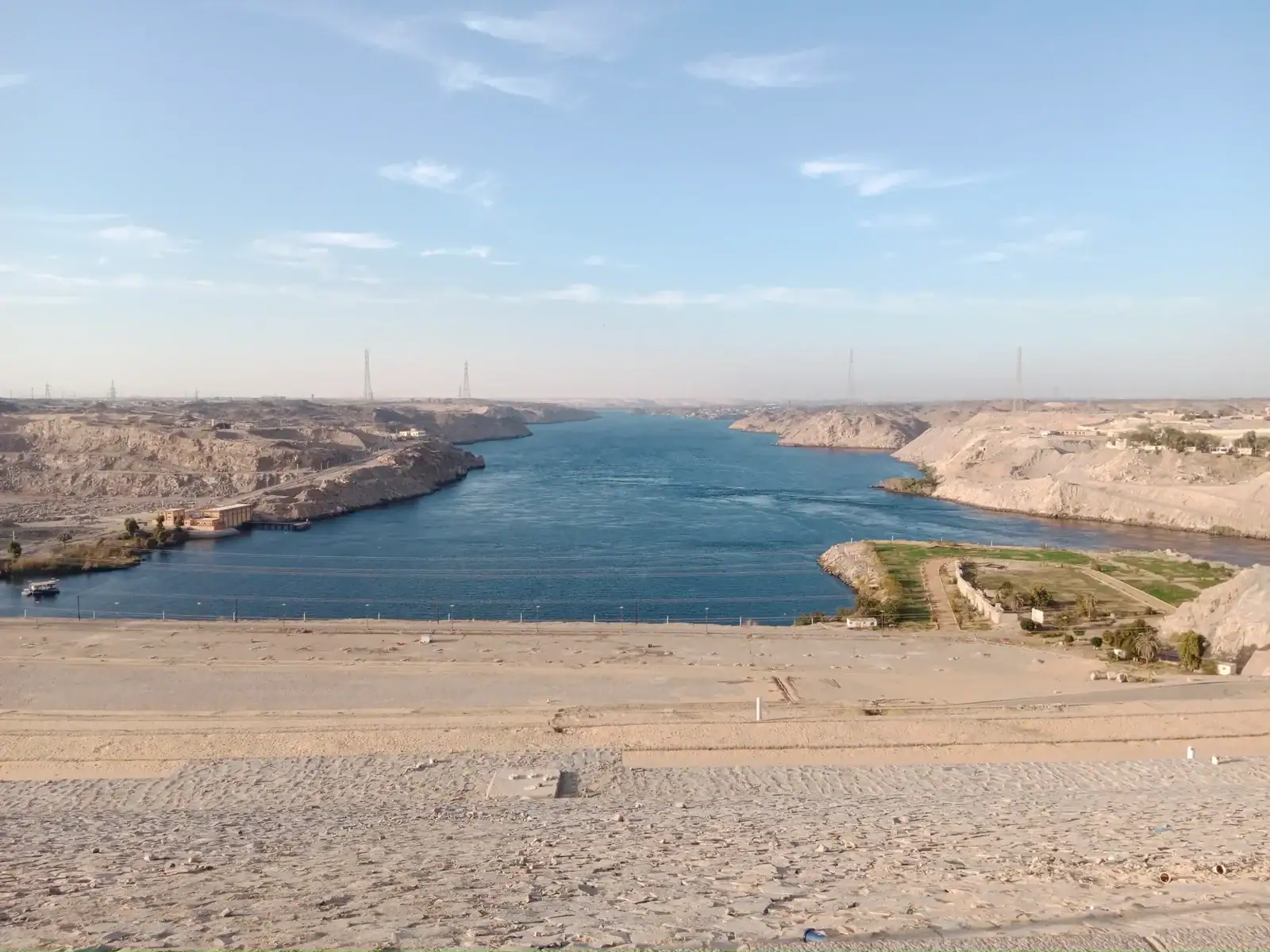
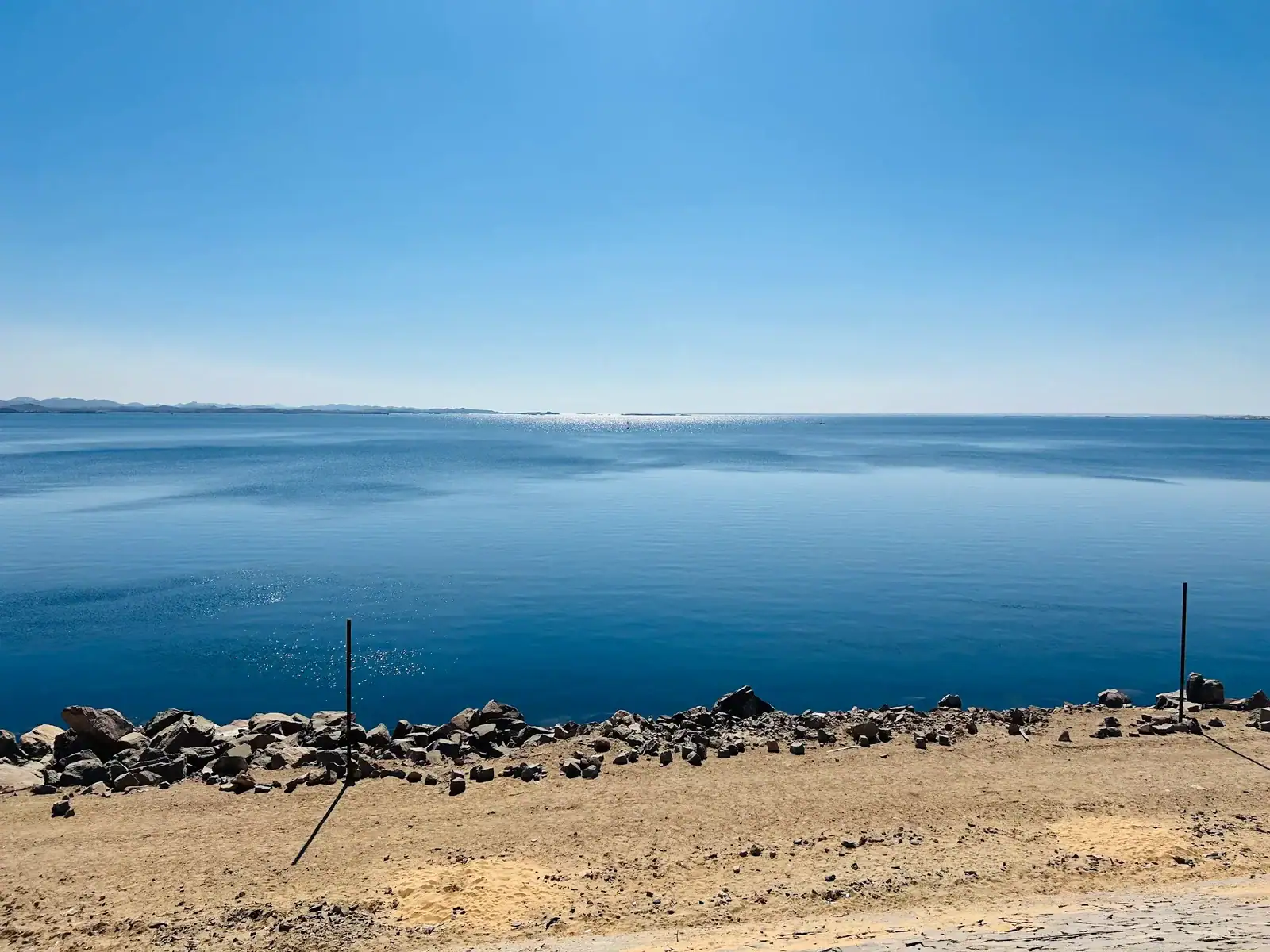
The dam impounded the Nile to create the Lake Nasser dam reservoir, one of the world's largest artificial bodies of water. Extending approximately 550 kilometers long and up to 35 kilometers wide, Lake Nasser holds up to 132 billion cubic meters of water. This enormous storage capacity guarantees Egypt a continuous supply of freshwater regardless of seasonal droughts or regional rainfall fluctuations upstream.
03
Energy Transformation of a Nation
Equipped with 12 massive Francis-type hydro turbines producing a total capacity of 2,100 Megawatts (2.1 GW), the dam’s power plant initially generated over 50% of Egypt’s total electricity in the early 1970s. This reliable power supply allowed remote villages to be electrified for the first time, spurred industrial expansion across the Nile Delta, and laid the foundation for modern urban life.
04
Catalyst for UNESCO’s Greatest Heritage Rescue
The filling of Lake Nasser threatened to submerge priceless ancient Egyptian and Nubian heritage, including the iconic temples of Abu Simbel and Philae. In response, UNESCO coordinated a 20-year international campaign that dismantled these massive monuments stone by stone and rebuilt them on higher ground. This effort did not just save Egypt’s ancient treasure; it led directly to the creation of the UNESCO World Heritage Site framework used worldwide today.


What to See & Experience
Explore the Great Sphinx Experience
Visiting the High Dam Egypt site offers striking panoramic views and an up-close look at modern monumental architecture.
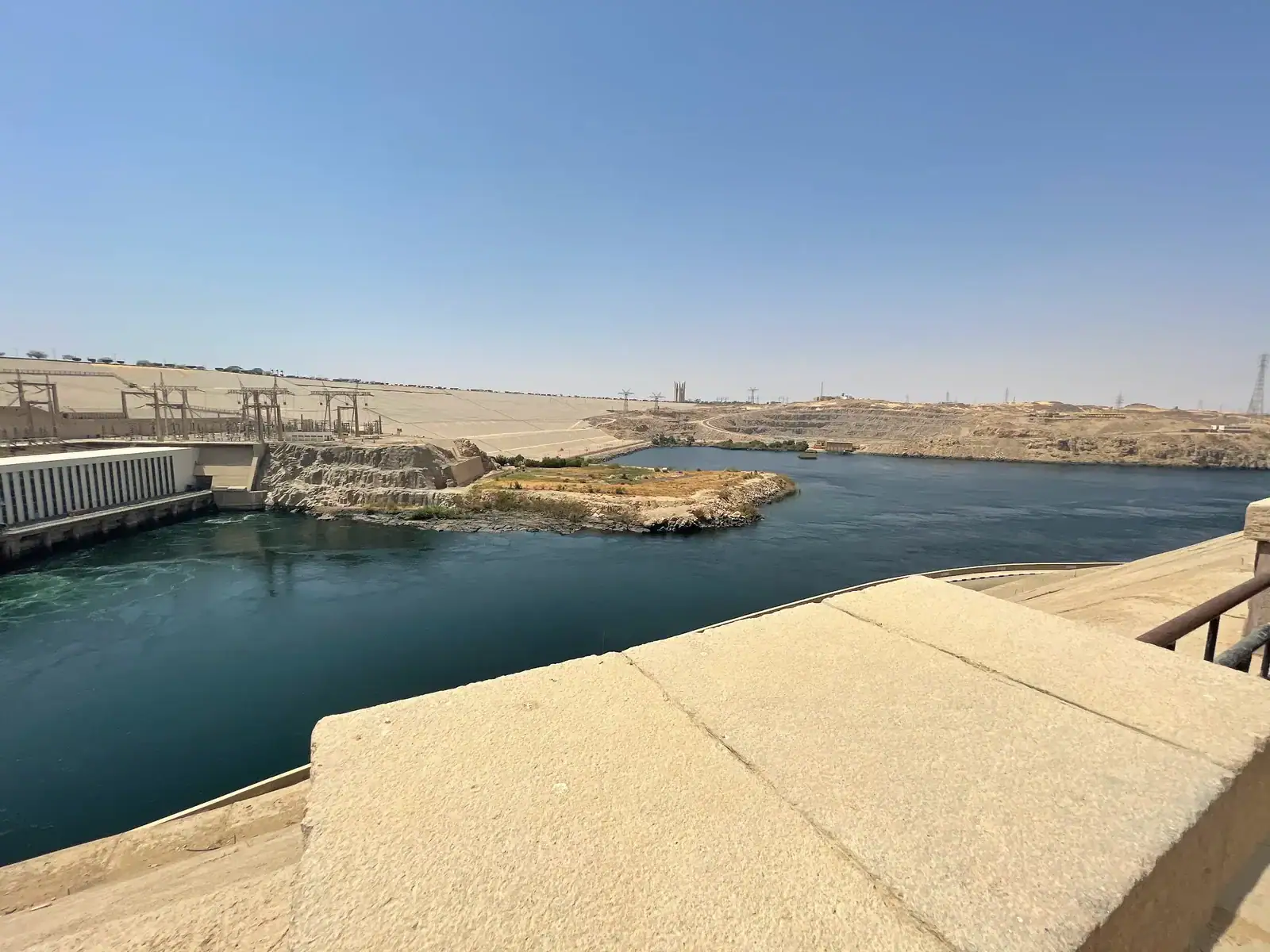
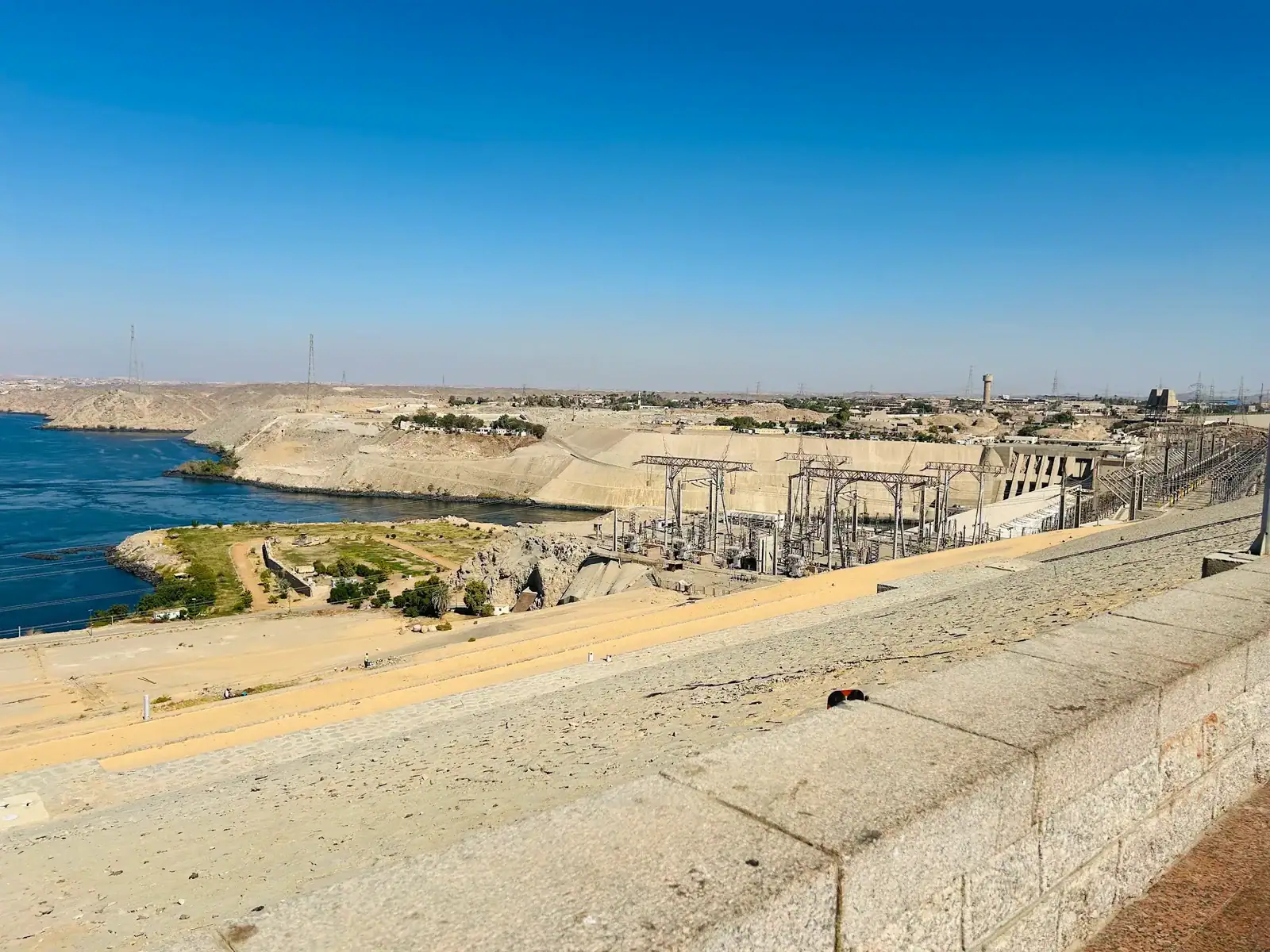
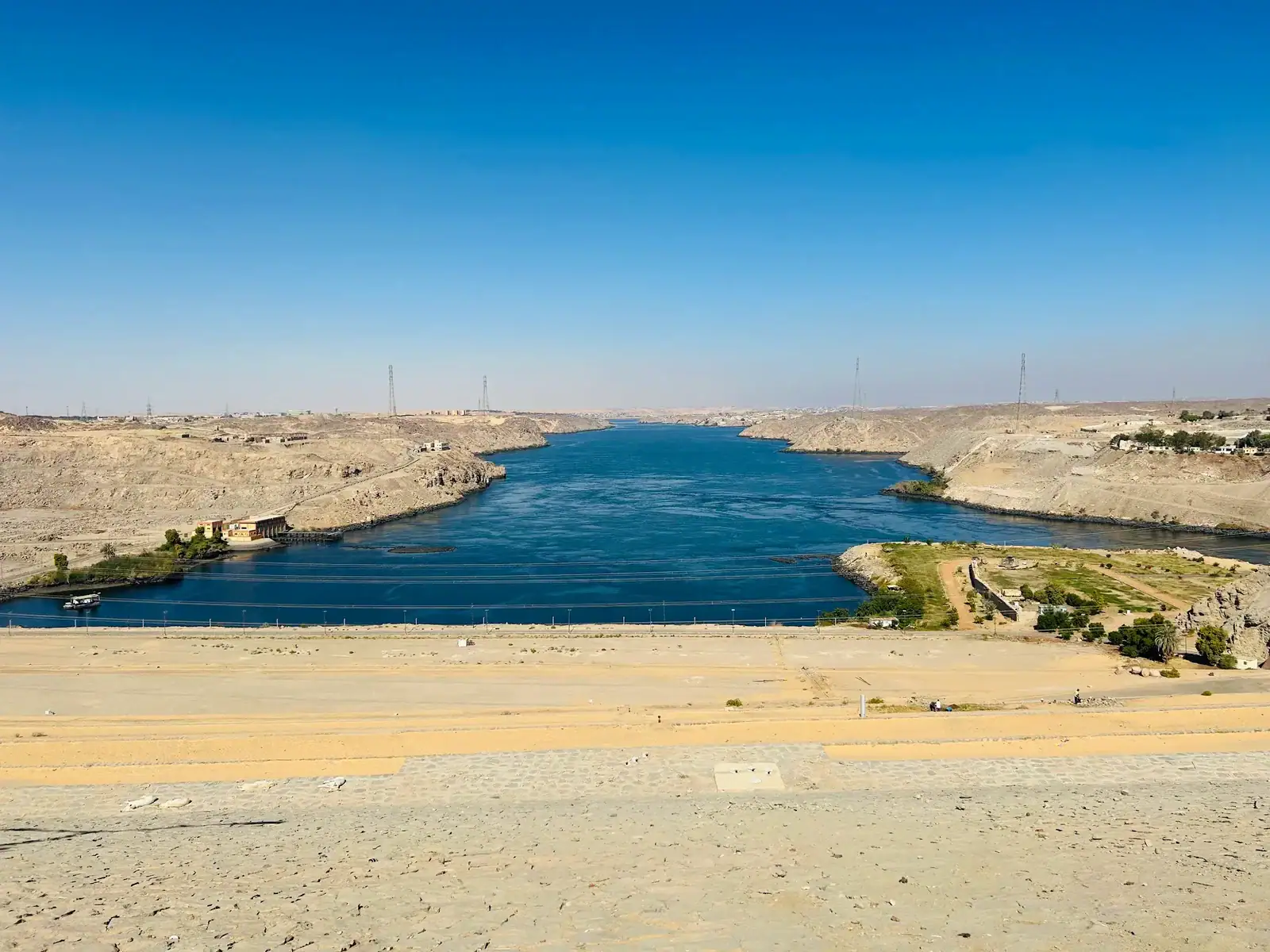
The Dam Crest Promenade: Visitors can walk or drive across the 3.8-kilometer-long top of the dam. Standing on top of the crest gives you a stark side-by-side contrast: on one side lies the calm, deep-blue expanse of Lake Nasser stretching toward Sudan, while on the other, the Nile flows northward toward Aswan and Cairo.
Soviet-Egyptian Friendship Monument: Rising 75 meters into the sky near the western end of the dam, this colossal lotus-flower-shaped concrete monument commemorates the joint engineering efforts of Soviet and Egyptian workers. Elevators take visitors to an upper observation deck offering breathtaking 360-degree views of Lake Nasser and the surrounding desert landscape.
Hydroelectric Power Station Viewpoint: From designated viewing areas, travelers can look down onto the intake channels, power plant building, and water outlets where 12 huge turbines churn out renewable energy.
Lake Nasser Overlook: The edge of the reservoir offers a pristine vantage point over Lake Nasser. It is a prime location to observe cruise boats embarking on multi-day journeys to Abu Simbel, as well as local wildlife and migratory birds that thrive along the lakeshore.
Historical Display Wall: Located near the central visitor zone, informative panels detail the construction stages, engineering schematics, and historical photos of the 34,000 workers who built the dam between 1960 and 1970.
Why Visit
Cultural & Historical Significance
While ancient temples capture Egypt’s pharaonic past, the aswan high dam tells the story of modern Egypt’s determination, geopolitical resilience, and technical triumph.
“The High Dam was our new pyramid—built not as a tomb for a pharaoh, but as a living monument to the freedom and future of the Egyptian people.”
— Gamal Abdel Nasser
Symbol of National Independence: Constructed shortly after Egypt gained independence from colonial influence, the dam came to represent sovereignty and self-reliance. It stands as an enduring symbol of the 1952 revolution and the country’s transition into an industrialized state.
Agricultural Revolution: By regulating water flow, the dam allowed Egyptian farmers to transition from traditional seasonal irrigation to year-round perennial farming. This enabled multiple harvests per year, expanded farmable land by over 2 million acres (feddans), and protected the agricultural economy from devastating multi-year droughts.
Human & Ecological Cost: A visit to the dam also invites reflection on the environmental and human trade-offs of large infrastructure. The reservoir submerged traditional Nubian homelands, displacing approximately 100,000 Nubian residents to planned resettlement towns like New Nubia. Additionally, trapping rich silt behind the dam required farmers downstream to use artificial fertilizers, altering river ecosystems. Understanding both the massive benefits and the trade-offs provides a nuanced view of modern river management.

Explore the Wonders of Ancient Egypt
Book your visit to the Aswan High Dam and explore one of the world’s most iconic ancient landmarks.
Visitor Information
Location & Access
The dam is located approximately 13 kilometers south of downtown Aswan and 18 kilometers from Aswan International Airport (ASW). Most travelers arrive by private car, taxi, or arranged tour bus as part of a classic "Aswan Day Tour".
Ticket Pricing
| Detail | Information |
| Operating Hours | Daily: 7:00 AM – 5:00 PM |
| Recommended Duration | 30 to 45 minutes |
| General Site Ticket | ~100 to 150 EGP (approx. $2.50 – $3.50 USD) |
| Friendship Monument Access | Small additional fee (approx. 50 EGP) |
Essential Tips
- Visit with Philae Temple and the Unfinished Obelisk.
- Arrive early or late to avoid the heat.
- Bring a hat, sunscreen, sunglasses, and water.
- Do not photograph military or security areas.
- Hire a local guide for historical insights.
- Wear comfortable walking shoes.

FAQs
Frequently Asked Questions About the Aswan High Dam
Is the Aswan High Dam open to tourists?
Yes, the site is open daily to visitors. Travelers can walk or drive across the crest of the dam, take in panoramic views of Lake Nasser and the Nile River, and visit the iconic Soviet-Egyptian Friendship Monument. Most visitors spend about 30 to 45 minutes at the location.
Can you go inside the Aswan High Dam or the power plant?
No, entry into the inner tunnels, dam core, or power plant building is restricted for security reasons. Visitors are guided to dedicated observation decks on top of the dam structure where they can clearly see the water intake channels, turbines, spillways, and the powerhouse from above.
How long did it take to build the Aswan High Dam?
Construction officially began on January 9, 1960, and was completed on July 15, 1970—taking roughly 10 years to construct. The dam was officially inaugurated on January 15, 1971, by Egyptian President Anwar Sadat.
What is the difference between the Aswan Low Dam and the High Dam?
The Aswan Low Dam was built by British engineers between 1898 and 1902 closer to Aswan city. However, it was not tall enough to store multi-year water supplies or stop catastrophic floods. The Aswan High Dam was built 7 km upstream in the 1960s as a far larger rockfill structure, successfully creating Lake Nasser and providing complete flood control for Egypt.
Why did UNESCO have to save temples like Abu Simbel when the dam was built?
The creation of Lake Nasser created a massive reservoir that threatened to permanently submerge ancient Egyptian and Nubian temples along the riverbanks. Between 1960 and 1980, UNESCO led an international rescue effort to dismantle key monuments—including Abu Simbel and Philae Temple—and rebuild them piece-by-piece on higher ground.
How far is the High Dam from central Aswan, and how do I get there?
The dam is located about 13 km (8 miles) south of downtown Aswan. It is easily reached via a 20-minute taxi ride, private driver, or as part of a guided day tour that typically combines the High Dam, Philae Temple, and the Unfinished Obelisk.
Plan Your Visit
Ready to Step Inside Egypt's Royal History?
Book your cruise or tour package to ensure seamless entry, expert guidance, and the most meaningful experience at the last surviving Wonder of the Ancient World.