
Colossi of Memnon
The Colossi at a Glance
The Story Behind Luxor's Giant Stone Guardians
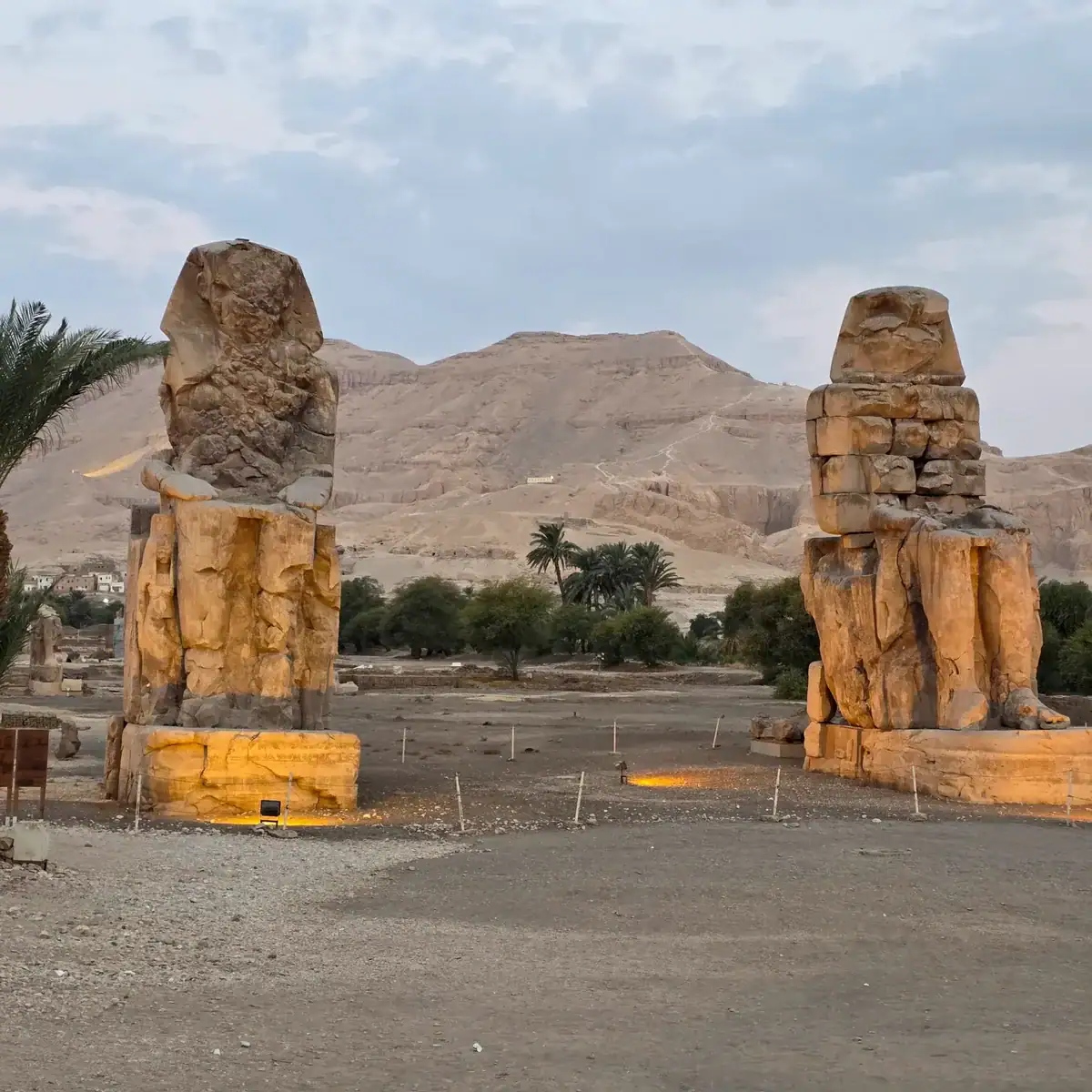
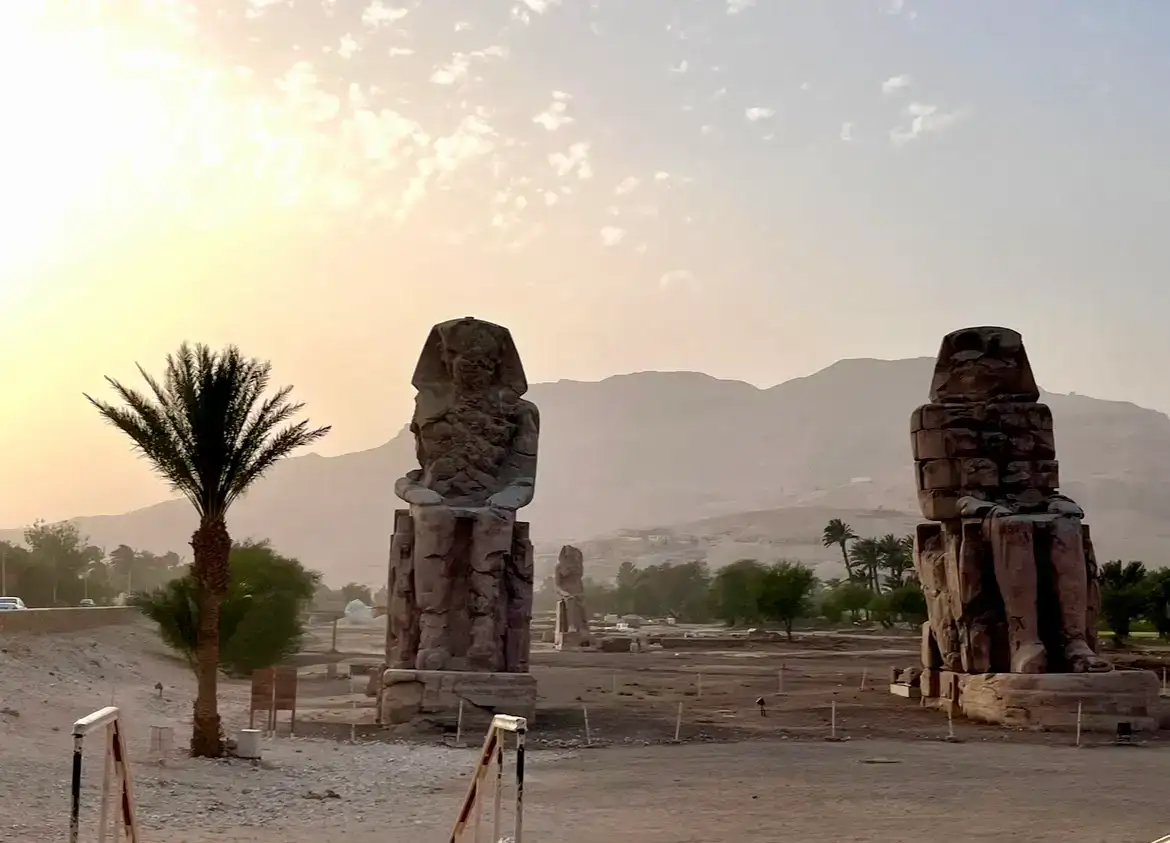
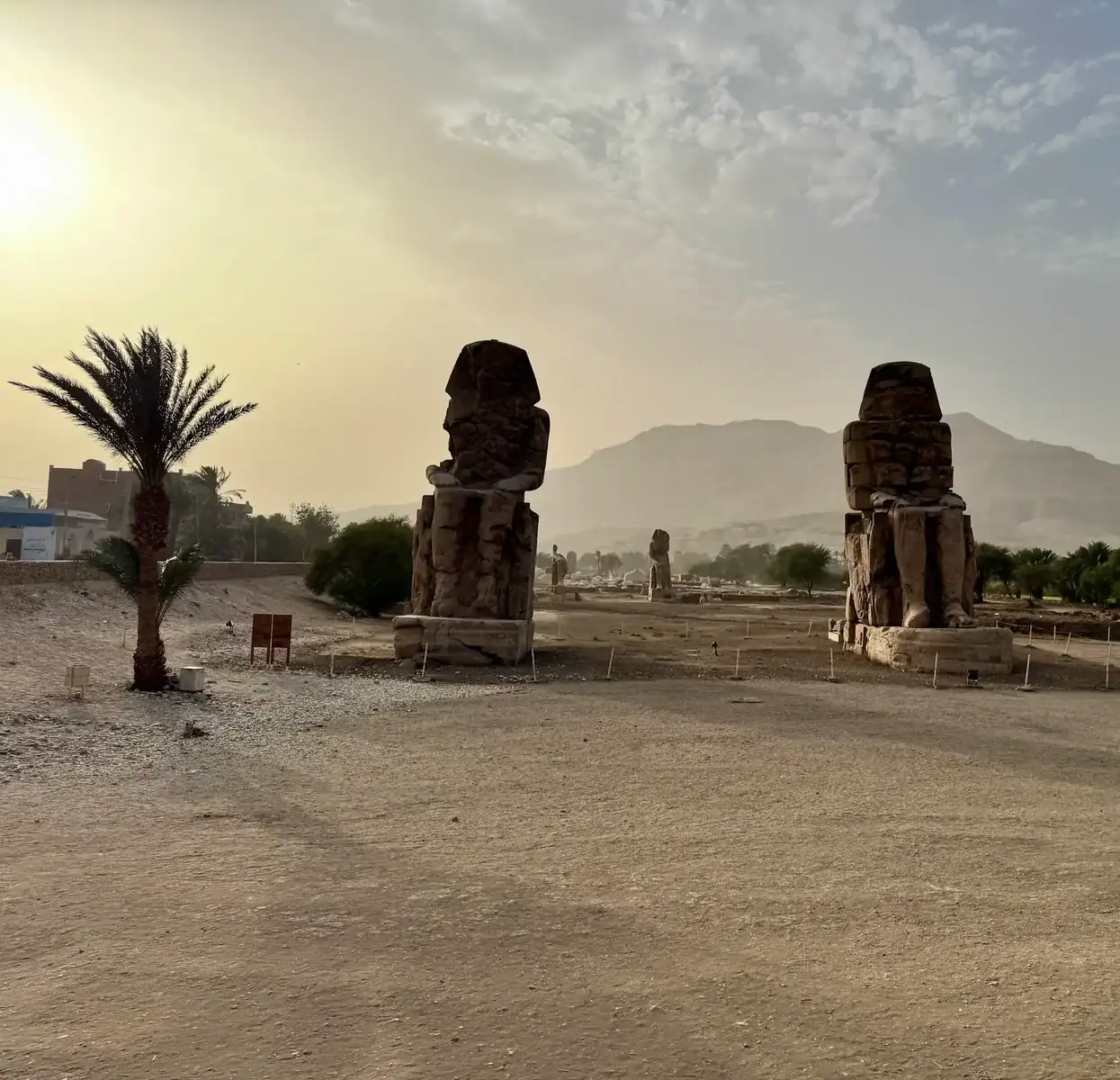
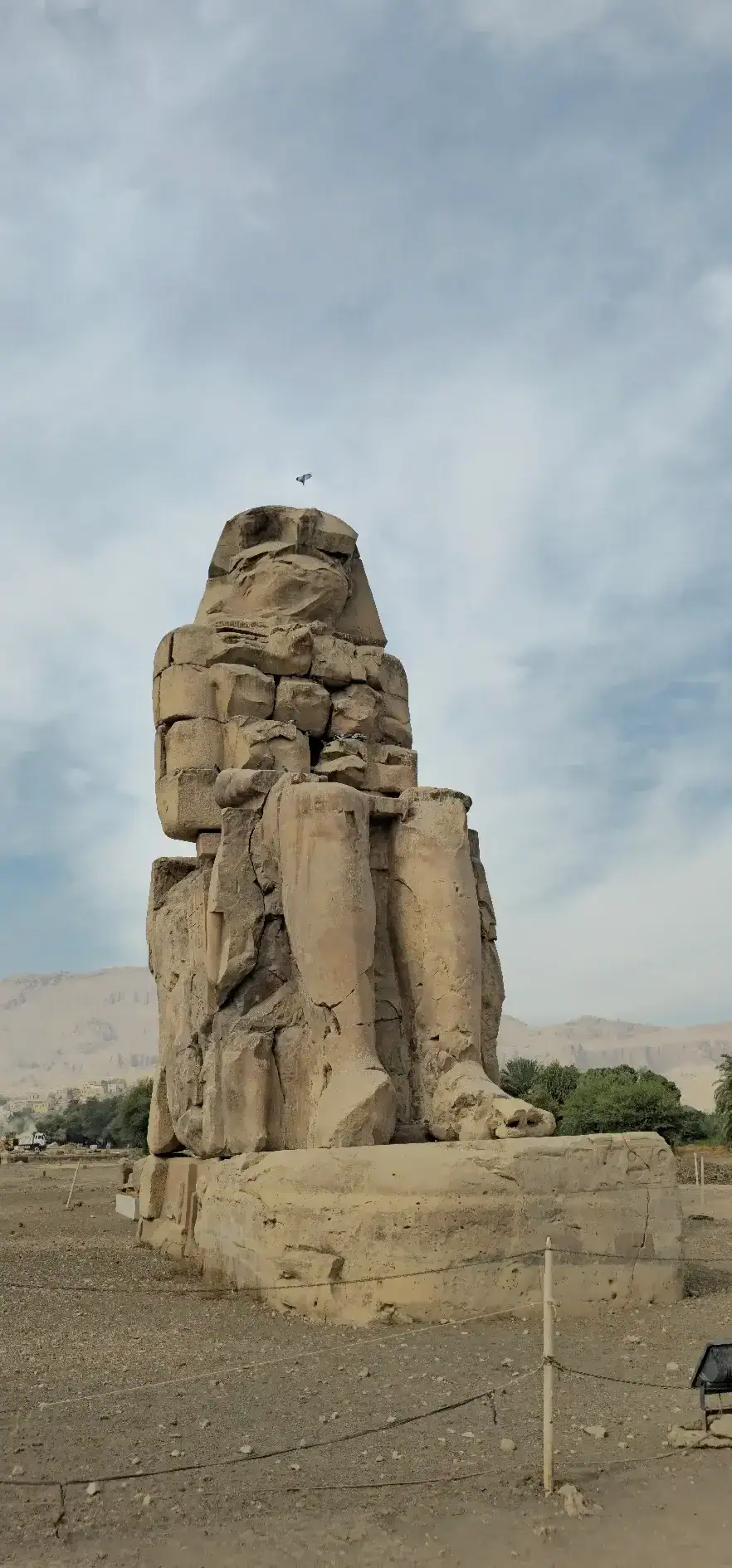
Rising majestically from the fertile agricultural plains of Luxor’s West Bank, the Colossi of Memnon stand as two towering guardians of ancient Egyptian civilization. Built around 1350 BCE during the reign of Pharaoh Amenhotep III, these colossal stone figures have anchored the entrance to the monumental Theban Necropolis for over 3,400 years.
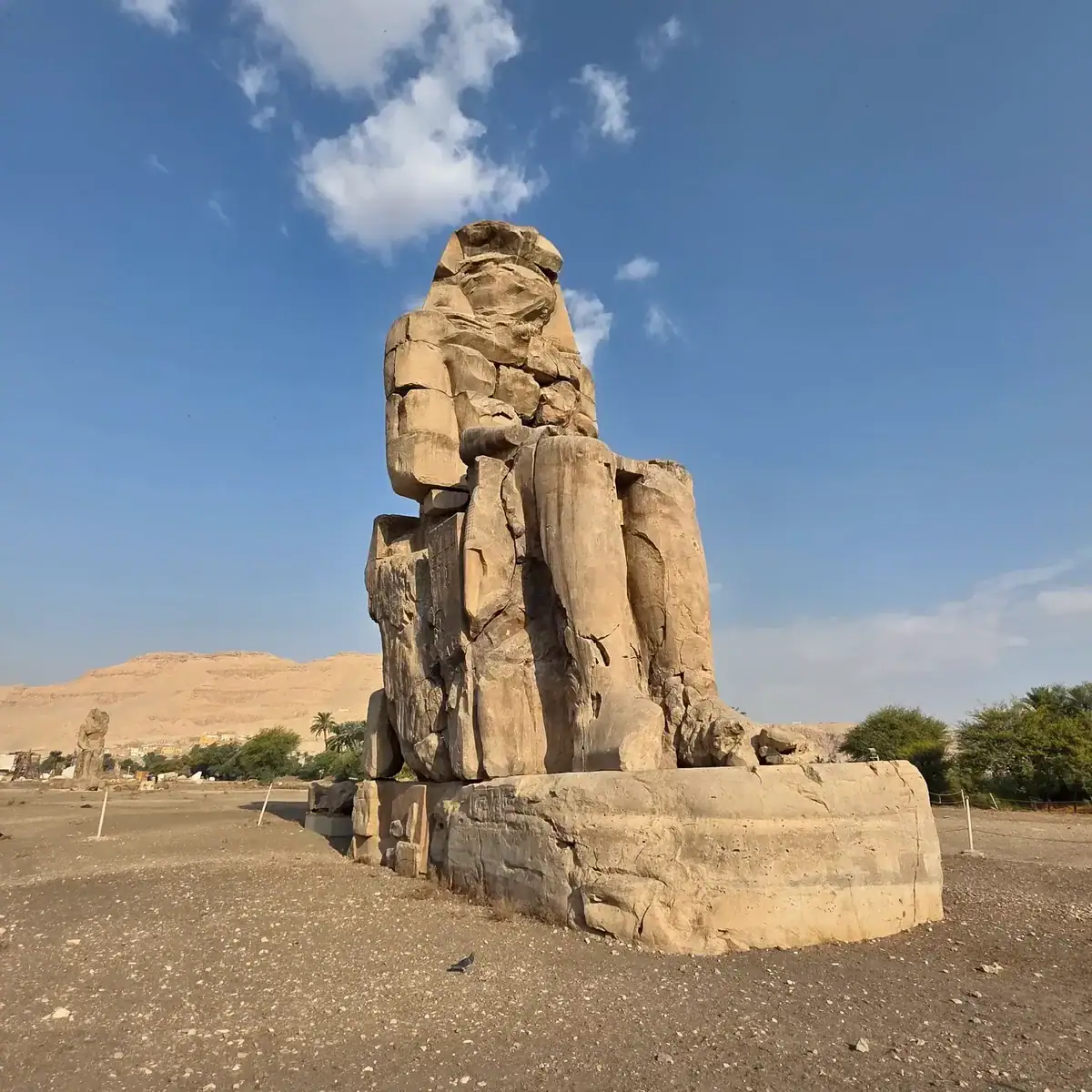
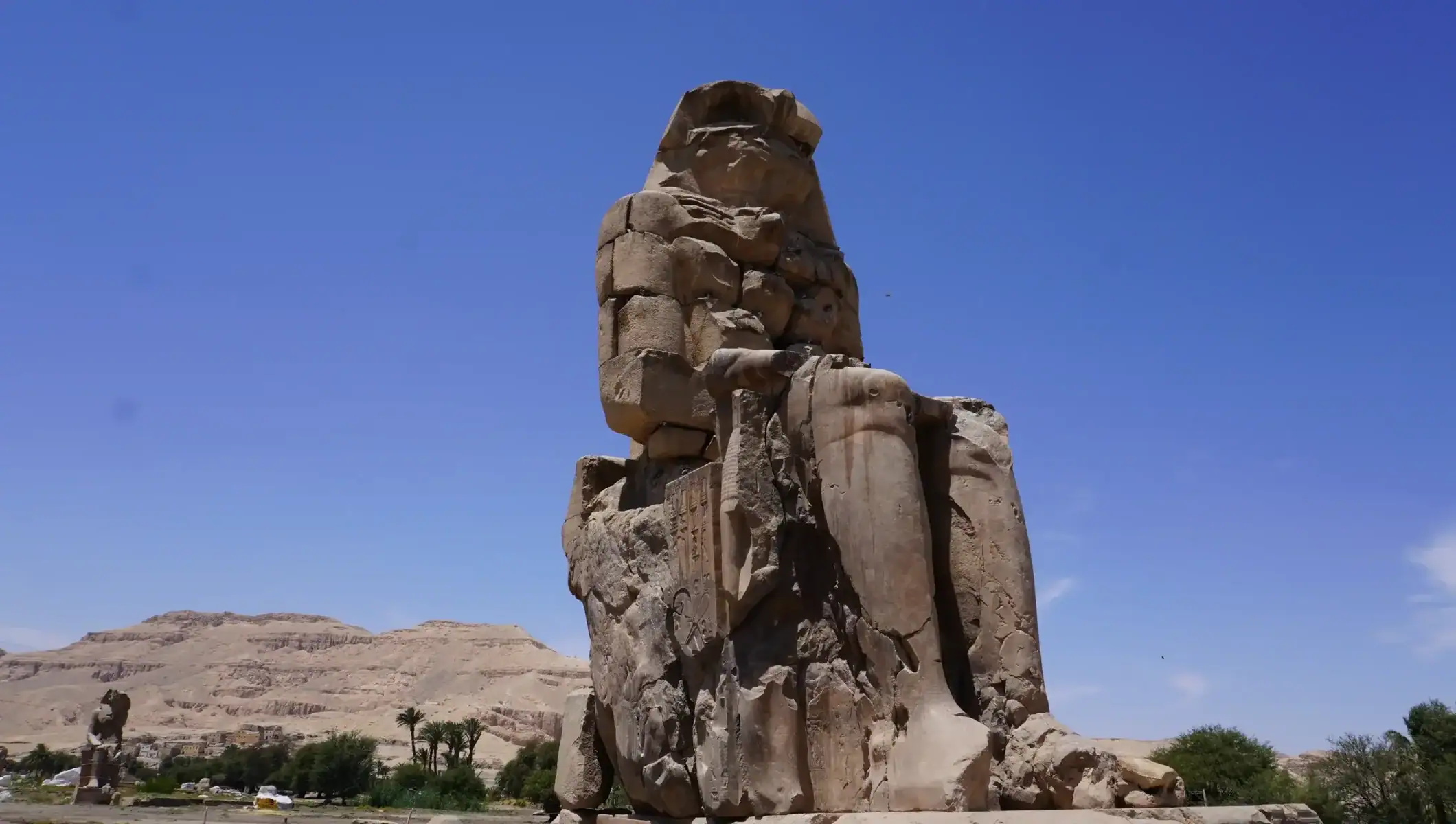
Known locally in Arabic as el-Colossat or es-Salamat, these Memnon statues once guarded the grandest funerary complex ever constructed in ancient Egypt: the Mortuary Temple of Amenhotep III. Standing nearly 18 meters high and carved from solid blocks of quartzite sandstone, they remain among the most recognizable Luxor colossi and an unmissable highlight of any West Bank itinerary.
| Detail | Information |
| Official Name | Colossi of Memnon (Statues of Amenhotep III) |
| Location | West Bank, Luxor (Theban Necropolis), Egypt |
| Built | c. 1350 BCE (18th Dynasty, New Kingdom) |
| Primary Material | Quartzite Sandstone (quarried at el-Gabal el-Ahmar near Cairo) |
| Height & Weight | ~18 meters (60 feet) tall; ~720 metric tons each |
| Site Hours | 6:00 AM – 5:00 PM (Daily) |
| Entry Fee | Free / Open-air roadside access |
| UNESCO Status | Part of Ancient Thebes with its Necropolis (1979) |
Historical Timeline
c. 1390 BCE — Amenhotep III becomes Pharaoh during Egypt’s prosperous 18th Dynasty.
c. 1350 BCE — Construction of the Colossi of Memnon and the vast Mortuary Temple of Amenhotep III is completed.
13th–11th centuries BCE — Nile floods and earthquakes begin damaging the temple complex.
27 BCE — A major earthquake cracks the northern statue, leading to the mysterious “singing” phenomenon.
1st–2nd centuries CE — Greek and Roman travelers flock to hear the Singing Colossus, leaving over 100 inscriptions.
c. 199 CE — Emperor Septimius Severus restores the damaged northern statue, ending the mysterious sounds.
1799–1801 — European scholars document the Colossi during Napoleon’s Egyptian expedition.
1979 — The statues become part of the UNESCO World Heritage Site of Ancient Thebes with its Necropolis.
21st Century — Ongoing archaeological excavations uncover additional statues, temples, and monumental remains surrounding Amenhotep III’s mortuary complex.
Historical Background
Historical Background & Timeline
The Amenhotep III statues were originally commissioned during the 14th century BCE at the height of Egypt’s 18th Dynasty. Amenhotep III, widely regarded as one of Egypt’s most prosperous pharaohs, ushered in an era of unprecedented peace, artistic achievement, and monumental construction. To secure his eternal legacy, he ordered the construction of a massive mortuary temple covering roughly 35 hectares (86 acres)—a complex larger than Karnak Temple at the time and far surpassing the later Ramesseum.
The twin colossi were carved from single monolithic blocks of quartzite sandstone transported overland more than 675 kilometers (420 miles) from quarries near modern Cairo. Weighing over 700 tons each, these engineering marvels were positioned in front of the temple’s first pylon facing east-southeast toward the Nile.
The Vanished Temple: Unlike the solid stone structures of Karnak or Luxor Temple, Amenhotep III built his mortuary complex right on the Nile’s edge. Annual river inundations gradually weakened its mud-brick enclosures. Over centuries, earthquakes and stone scavenging by later pharaohs dismantled the temple, leaving the twin singing colossi to stand alone across the silent agricultural fields.

Explore the Wonders of Ancient Egypt
Book your visit to the Colossi of Memnon and explore one of the world’s most iconic ancient landmarks.
What Makes It Extraordinary
What Makes the Colossi of Memnon Extraordinary
01
The Myth of the "Singing" Colossi
Following the earthquake in 27 BCE, the northern statue began emitting a high-pitched whistling or musical sound at dawn. Ancient Greeks and Romans attributed this voice to Memnon, the mythical Ethiopian king and son of Eos (Goddess of the Dawn) who was slain by Achilles at Troy. Modern geologists attribute the sound to thermal expansion and humidity evaporating through the porous cracked stone as the morning sun hit.
02
Feat of Ancient Transport & Logistics
Weighing approximately 720 metric tons apiece, the quartzite blocks were too dense and heavy to be floated upstream on wooden river barges during high flood season. Engineers transported these giant monoliths overland across 675 kilometers (420 miles) of terrain—a testament to the incredible organizational power of New Kingdom Egypt.
03
Gateways to the Largest Mortuary Complex
The colossi were not standalone monuments; they served as the grand entrance guards for the largest funerary temple in ancient Egypt. Spanning 35 hectares, the complex was bigger than the Ramesseum or Medinet Habu, designed so the pharaoh could be worshipped as a living god during and after his life.
04
Roman Epigraphic Treasure
Carved directly into the base and legs of the northern colossus are 107 historical inscriptions written in classical Greek and Latin. Left by ancient Roman tourists, governors, and emperors like Hadrian between 20 CE and 250 CE, these carvings form one of the world's most significant surviving records of classical travel and pilgrimage.


What to See & Experience
Explore the colossi of memnon Experience
Visiting the colossi of memnon site offers far more than a quick photo stop. Recent archaeological breakthroughs have transformed the surrounding landscape into an active open-air museum.
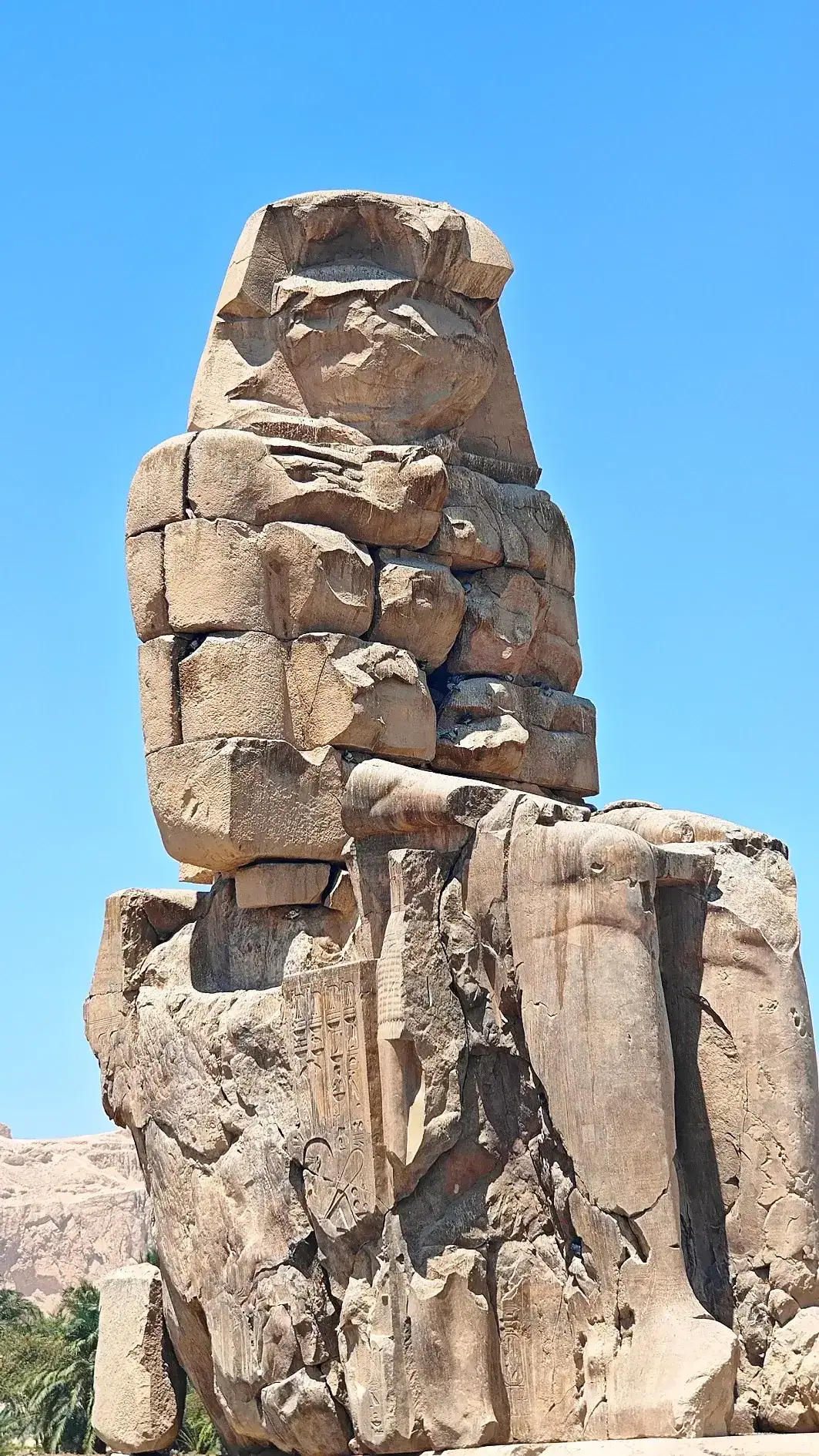
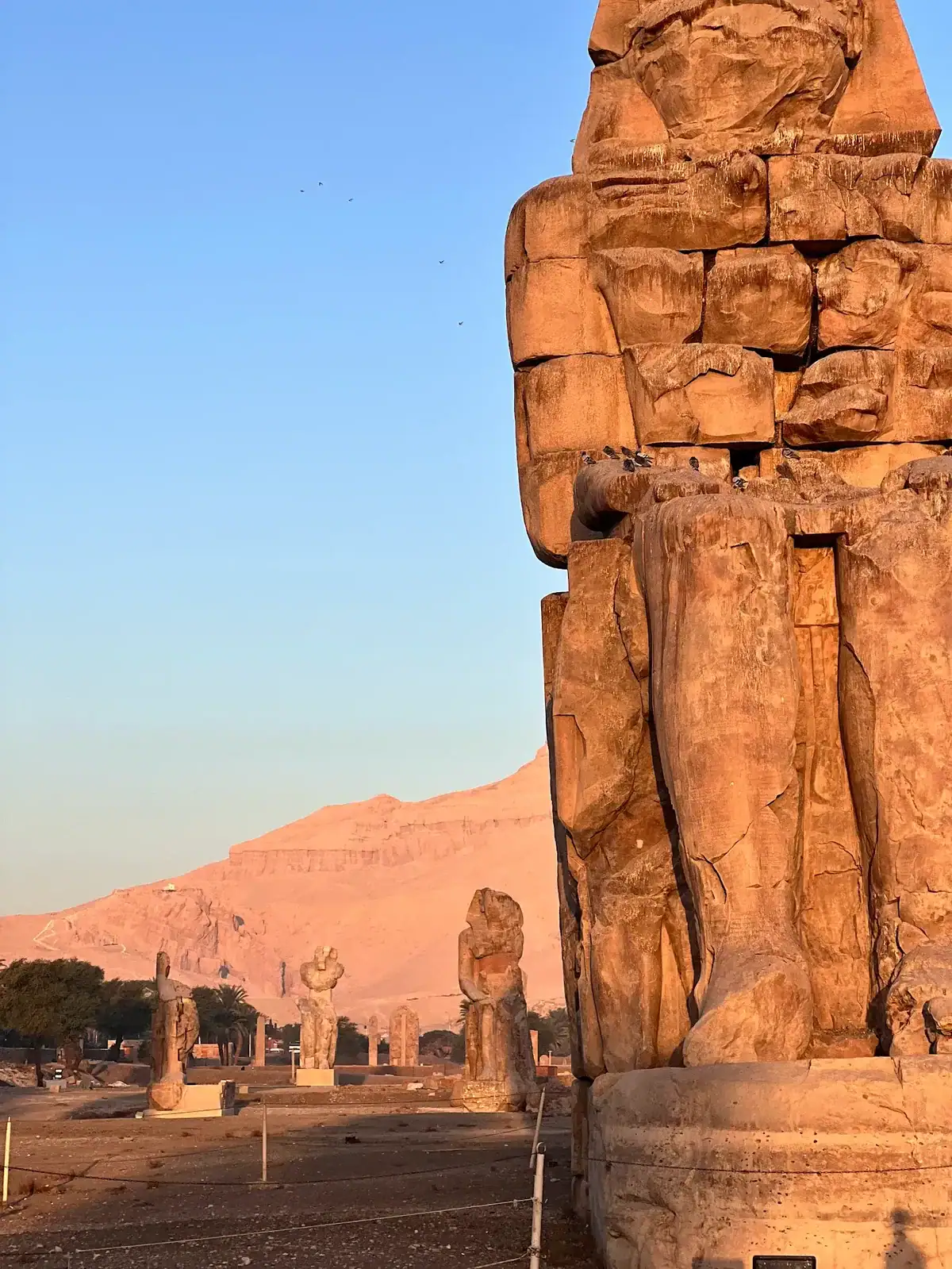
The Twin Guard Statues: Examine the scale of the two seated pharaohs. Look closely at the southern colossus, which remains carved from a single block of quartzite, and contrast it with the northern colossus, assembled from five tiers of Roman-era sandstone blocks.
Royal Family Side Carvings: Flanking the knees of Amenhotep III are smaller relief sculptures depicting his influential wife, Queen Tiye, and his mother, Mutemwiya. Look between his feet for the traces of an ancient carved figure of one of his daughters.
Hapi & Nile Reliefs: On the side panels of the royal thrones, observe detailed carvings depicting Hapi, the deity of the Nile flood. The carvings display Hapi binding together papyrus and lotus plants, symbolizing the unification of Upper and Lower Egypt.
Greek & Latin Graffito Inscriptions: With guided help or close observation, spot the Roman-era inscriptions etched into the lower stone legs of the northern statue, documenting ancient visitors who came to hear the “voice of Memnon” at sunrise.
The Excavated Mortuary Temple Precinct: Walk behind the main statues into the active archaeological field. Thanks to the ongoing Memnon Conservation Project, you can now view newly re-erected quartzite statues at the Second Pylon and magnificent alabaster colossi recently restored at the Third Pylon.
Sunrise Hot Air Balloon Views: For an aerial perspective, view the statues during an early morning hot air balloon flight over Luxor’s West Bank. From above, the colossal figures stand out against the backdrop of farmland and limestone cliffs.
Why Visit
Cultural & Historical Significance
Divine Kingship & Royal Ideology: Amenhotep III used statuary as a medium to express his divine nature. Inscriptions on the statues refer to him as the “Good God” and lord of the sky. The sheer height of the statues meant they could be seen from miles away across the Nile valley, reminding commoners and nobles alike of royal power.
Accessible Public Worship: Unlike the inner sanctuaries of ancient temples, which were strictly restricted to high priests and pharaohs, the Memnon statues stood outside the temple enclosure walls. Egyptologists highlight that this allowed the general public to gather at their bases, offering prayers and worshiping the divine image of the king.
A Bridge Between Civilizations: The statues represent a cultural crossroads. Built by New Kingdom Egyptian artisans, reinterpreted through Greek mythology, restored by Roman emperors, and analyzed by modern Egyptologists, the Luxor colossi connect three thousand years of Mediterranean history.
Modern Archaeological Revival: The site is a major center for contemporary Egyptology. The long-term conservation work led by international teams continues to rescue submerged statues, limestone sphinxes, and royal stelae from rising groundwater, breathing new life into Amenhotep III’s lost temple.

Explore the Wonders of Ancient Egypt
Book your visit to the Colossi of Memnon and explore one of the world’s most iconic ancient landmarks.
Visitor Information
Location & Access
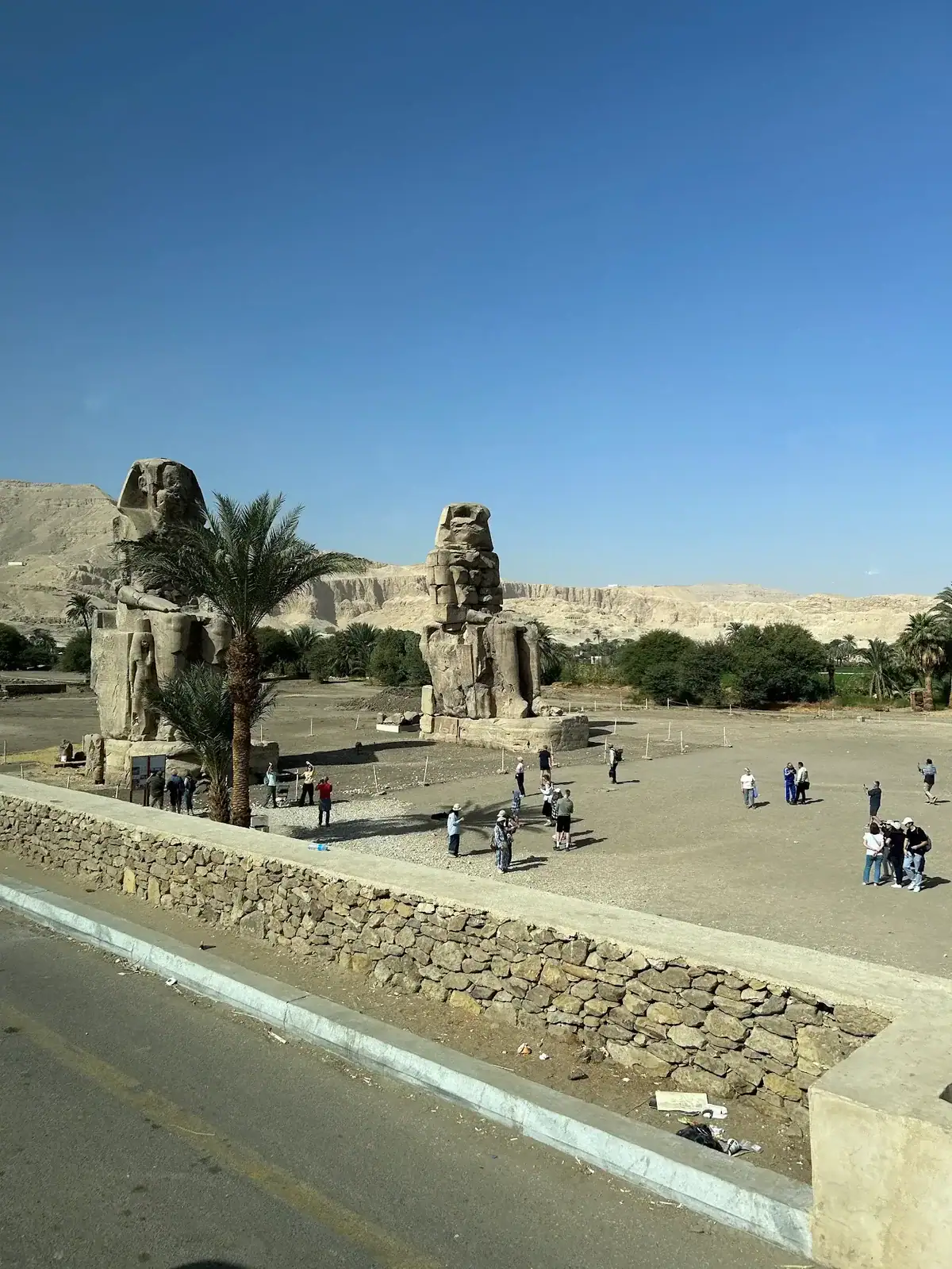
The Colossi of Memnon are situated along the main West Bank road (Al Bairat) in Luxor, approximately 2.5 km from the Nile ferry dock and about 8 km from central Luxor city. They are conveniently located en route to major West Bank attractions like Medinet Habu, the Valley of the Kings, and the Ramesseum.
Plan Your Visit
The Colossi of Memnon are best experienced as part of an organized, luxury exploration of Luxor’s ancient monuments. Whether arriving via a Nile River cruise or embarking on a private guided day tour, combining the West Bank's iconic sights provides a complete picture of New Kingdom royal architecture.
Ticket Pricing
Operating Hours: Open daily from 6:00 AM – 5:00 PM. (Because the statues sit on open public land next to the roadway, they are visible 24/7).
Ticket Pricing: FREE. No entry tickets, general plateau passes, or reservation fees are required to view or take photographs of the main twin colossi.
Essential Tips
- Best Time: Visit early morning for cooler weather and better photos.
- Duration: Spend 20–45 minutes at the site.
- Photography: Personal photos are allowed; drones require permits.
- Dress: Wear comfortable shoes, a hat, and sunscreen.
- Respect: Do not climb or touch the ancient statues.
FAQs
Frequently Asked Questions About the Colossi of Memnon
Do the statues still "sing"?
No. Sound came from thermal tension in earthquake-damaged stone. Repairs by Roman Emperor Septimius Severus around 200 CE sealed the cracks and permanently silenced them.
Why are they named "Memnon"?
Ancient Greek and Roman visitors misidentified Amenhotep III as Memnon, a Trojan War hero whose mother, Eos (goddess of dawn), wept for him every morning.
How much does it cost to visit?
It is 100% free. The statues stand openly alongside the main West Bank road in Luxor, so no ticket is needed.
How big are the statues?
Each statue stands 18 meters (60 feet) tall including its base, and weighs around 720 metric tons.
What was behind the statues originally?
They guarded the entrance pylon of Amenhotep III’s mortuary temple—the largest temple complex in ancient Egypt, now mostly destroyed by earthquakes and Nile floods.
When is the best time to visit?
Early morning at sunrise. The statues face east, so the morning sun lights them up perfectly for photos before the heat sets in.
Plan Your Visit
Ready to Step Inside Egypt's Royal History?
Book your cruise or tour package to ensure seamless entry, expert guidance, and the most meaningful experience at the last surviving Wonder of the Ancient World.