
Dendera Temple Complex
The Temple at a Glance
The Masterpiece of Color, Astronomy, and Divine Joy
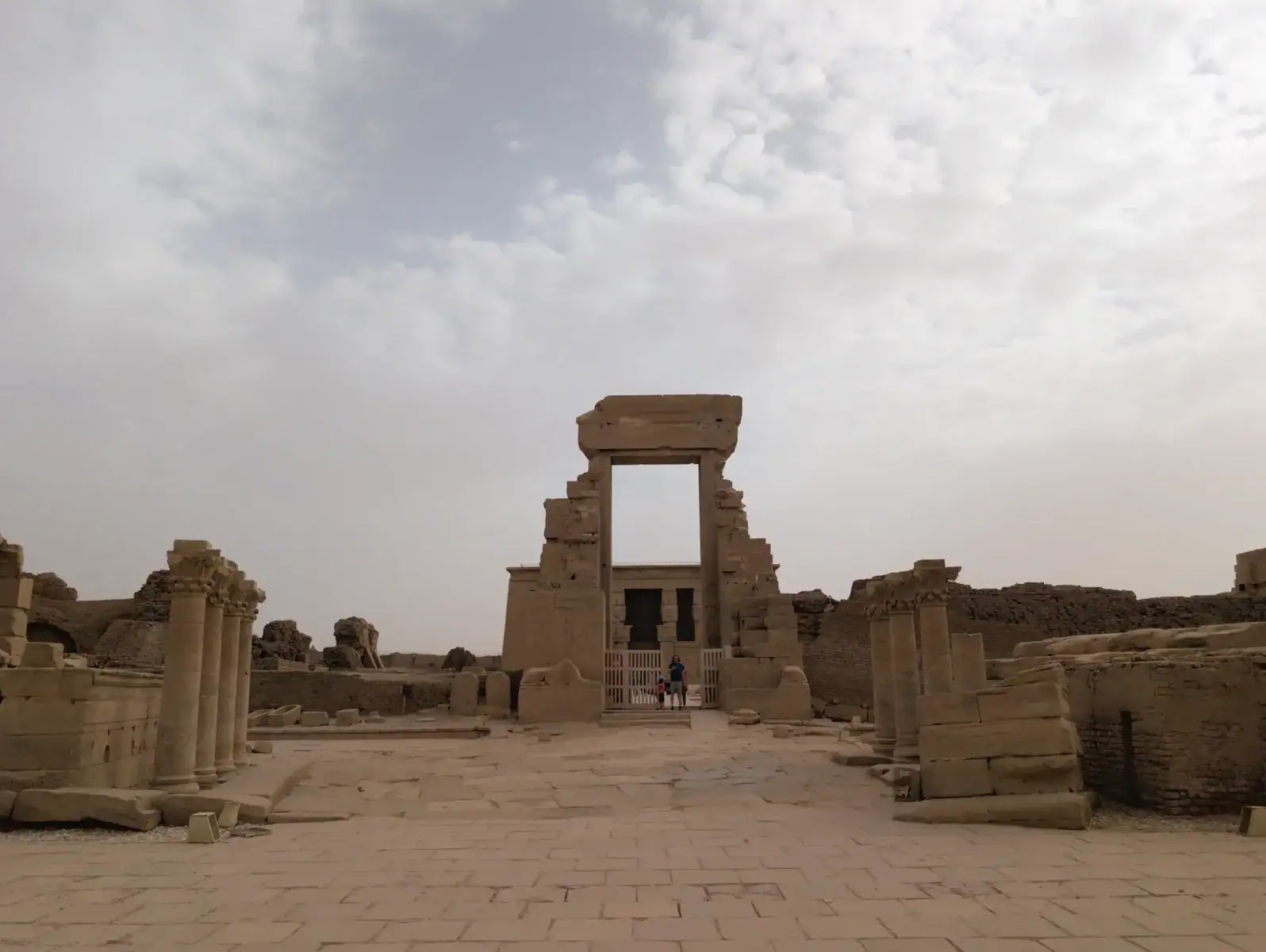
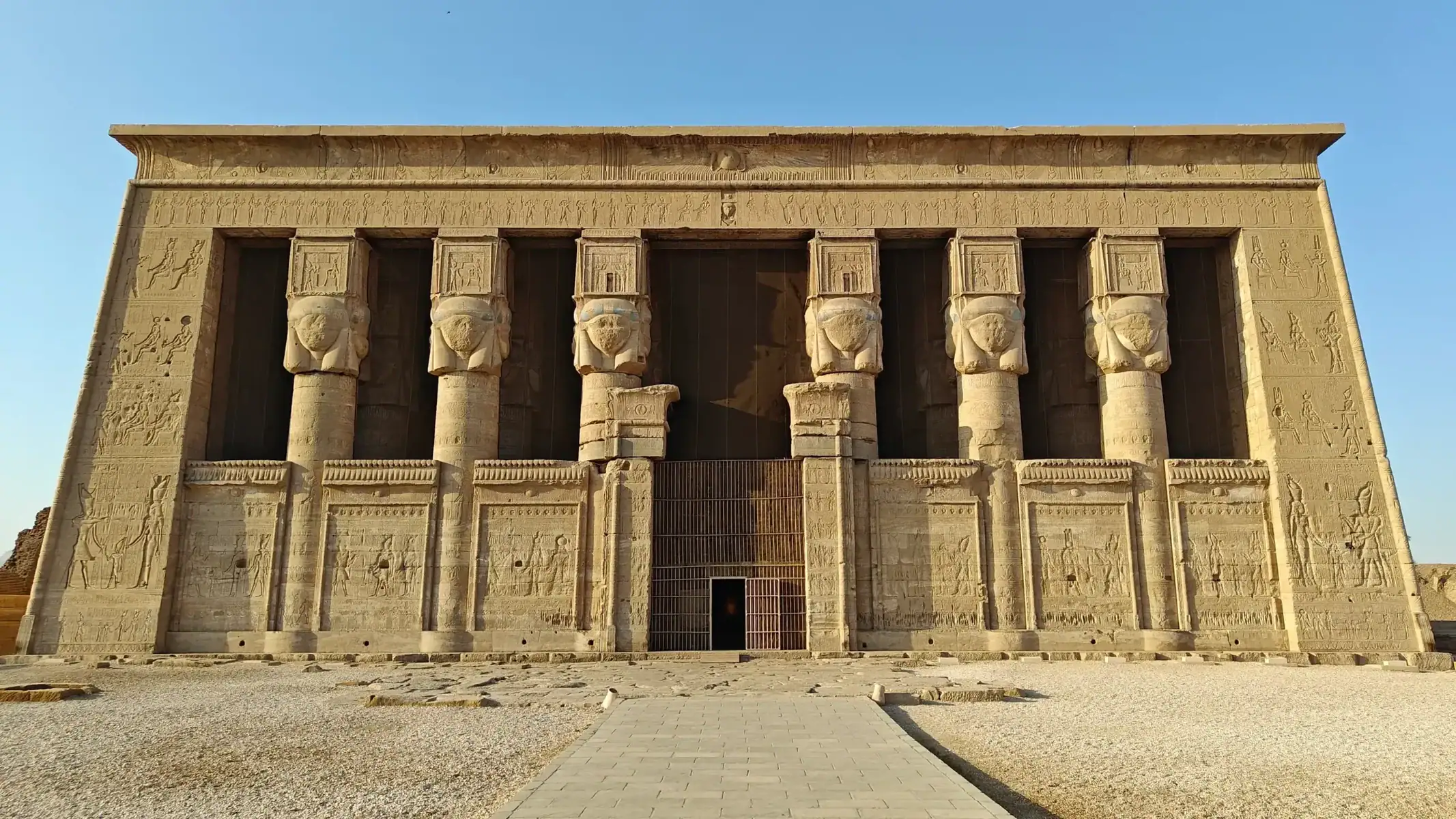
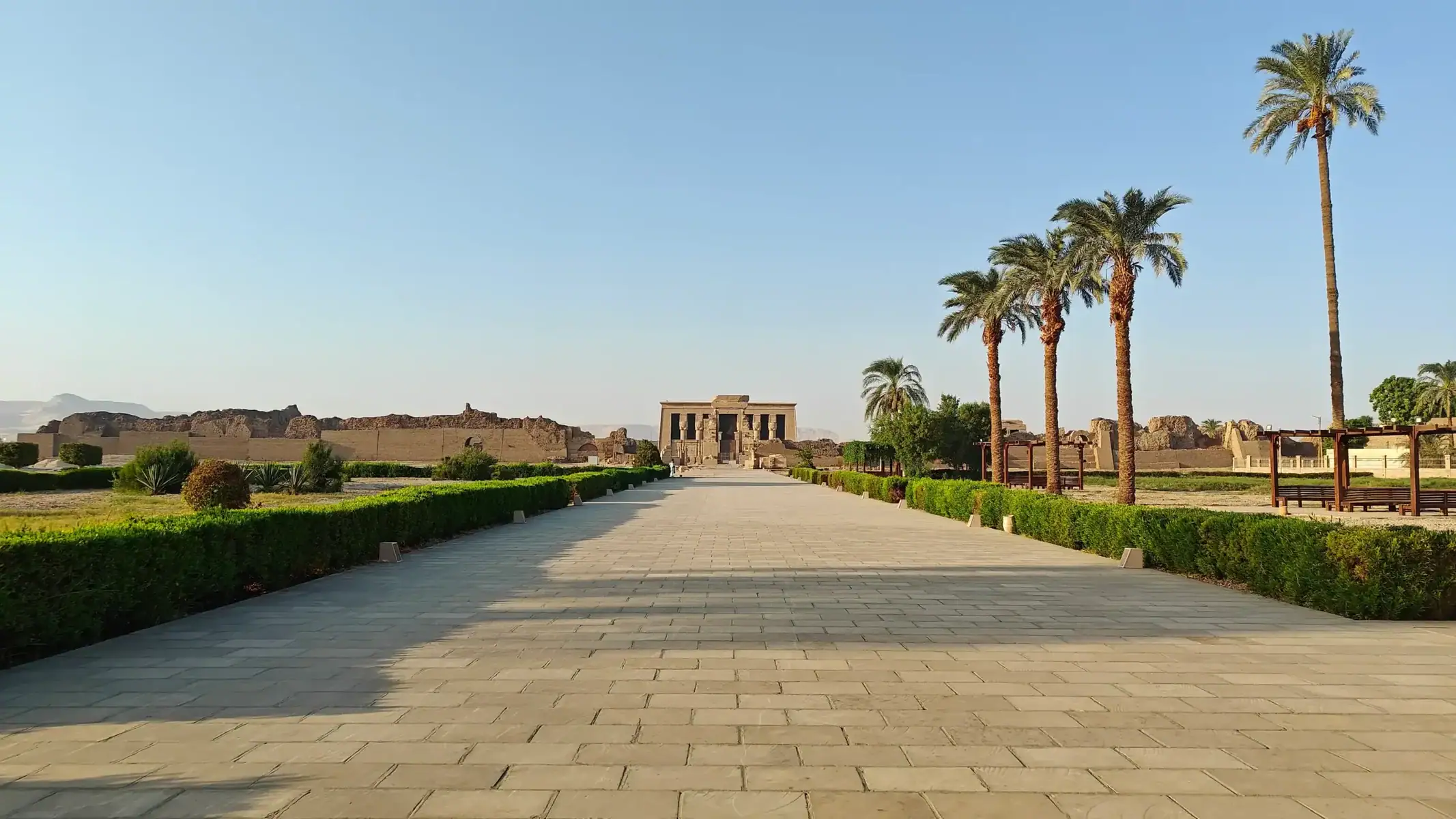
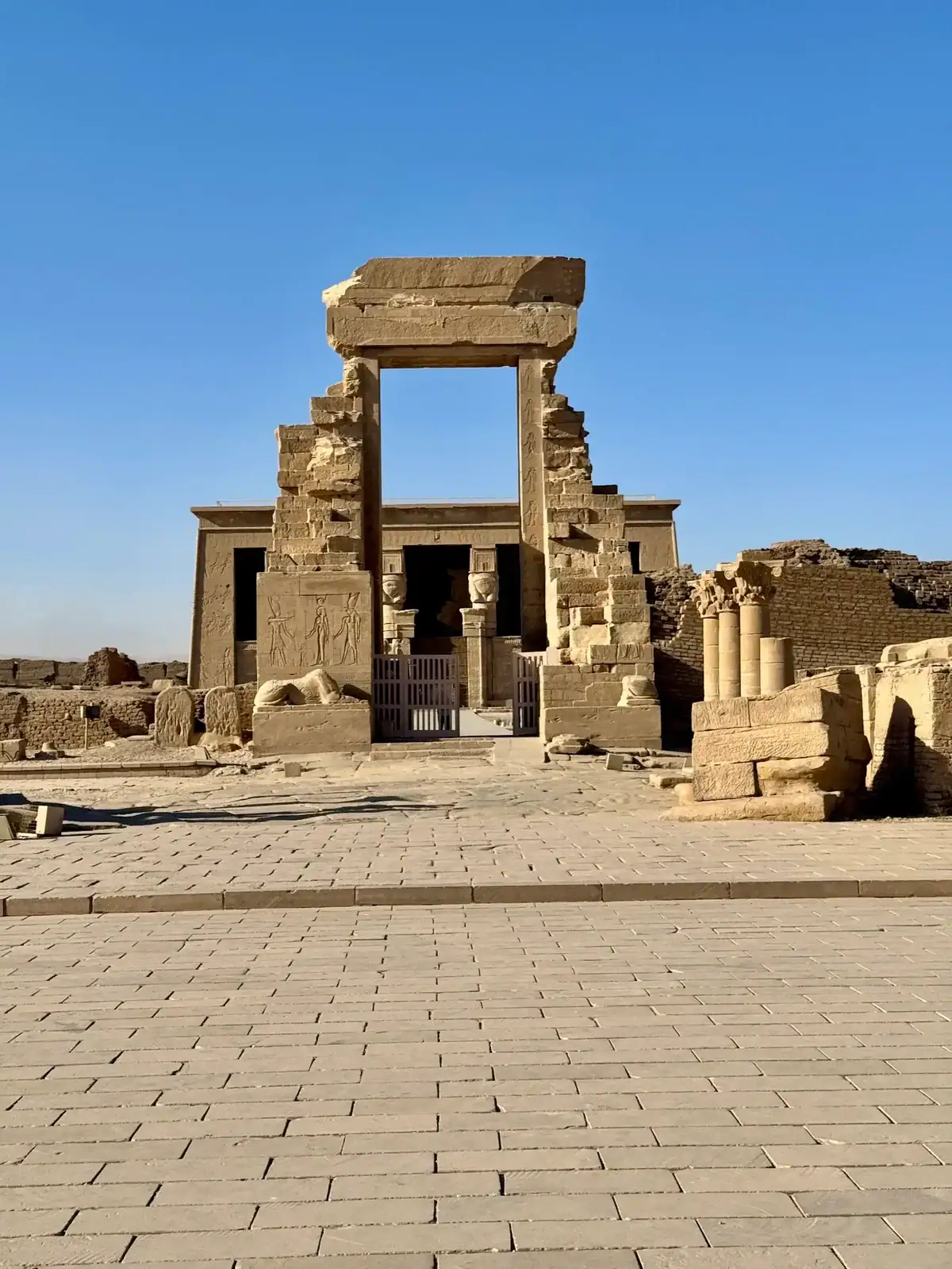
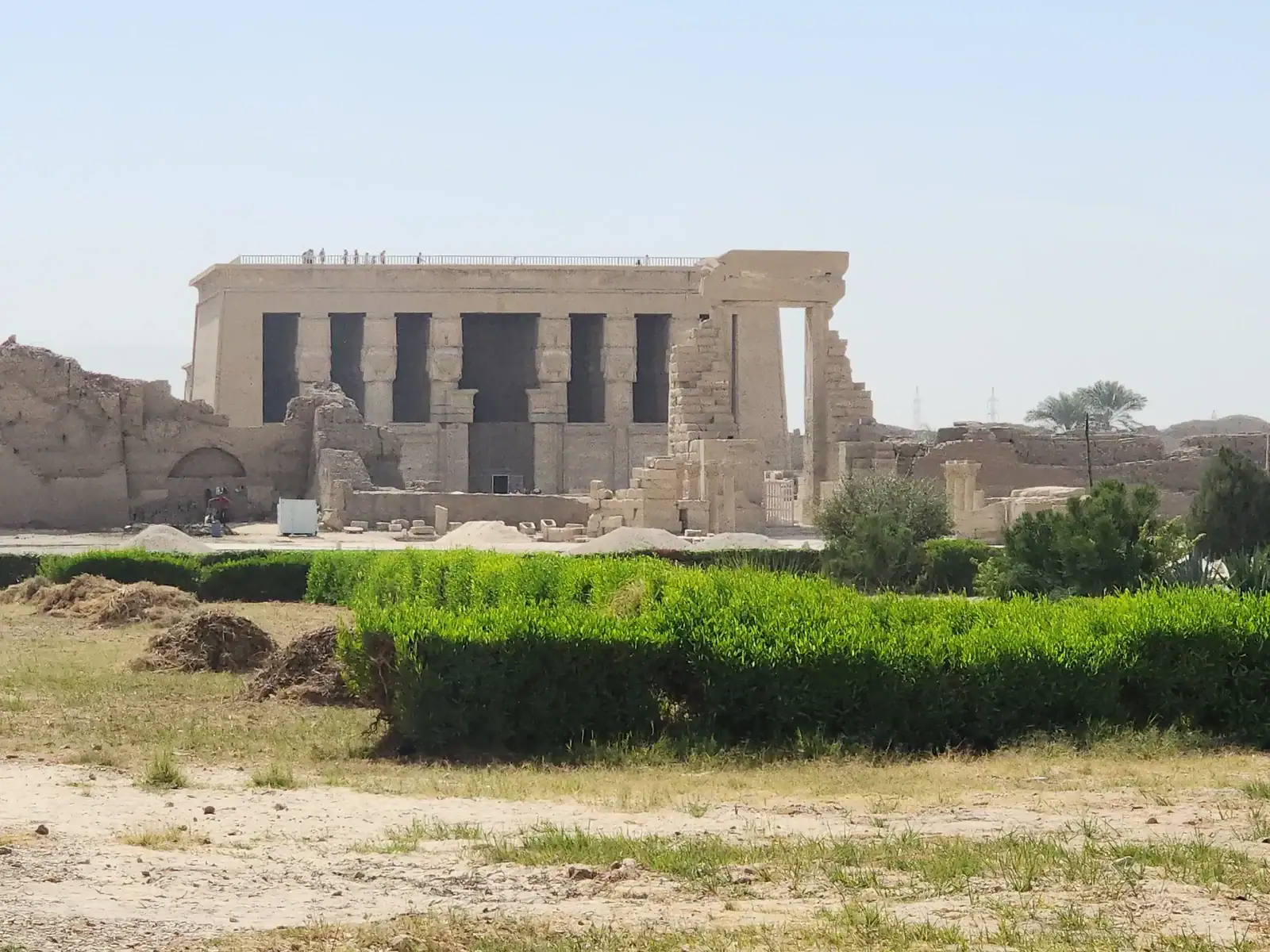
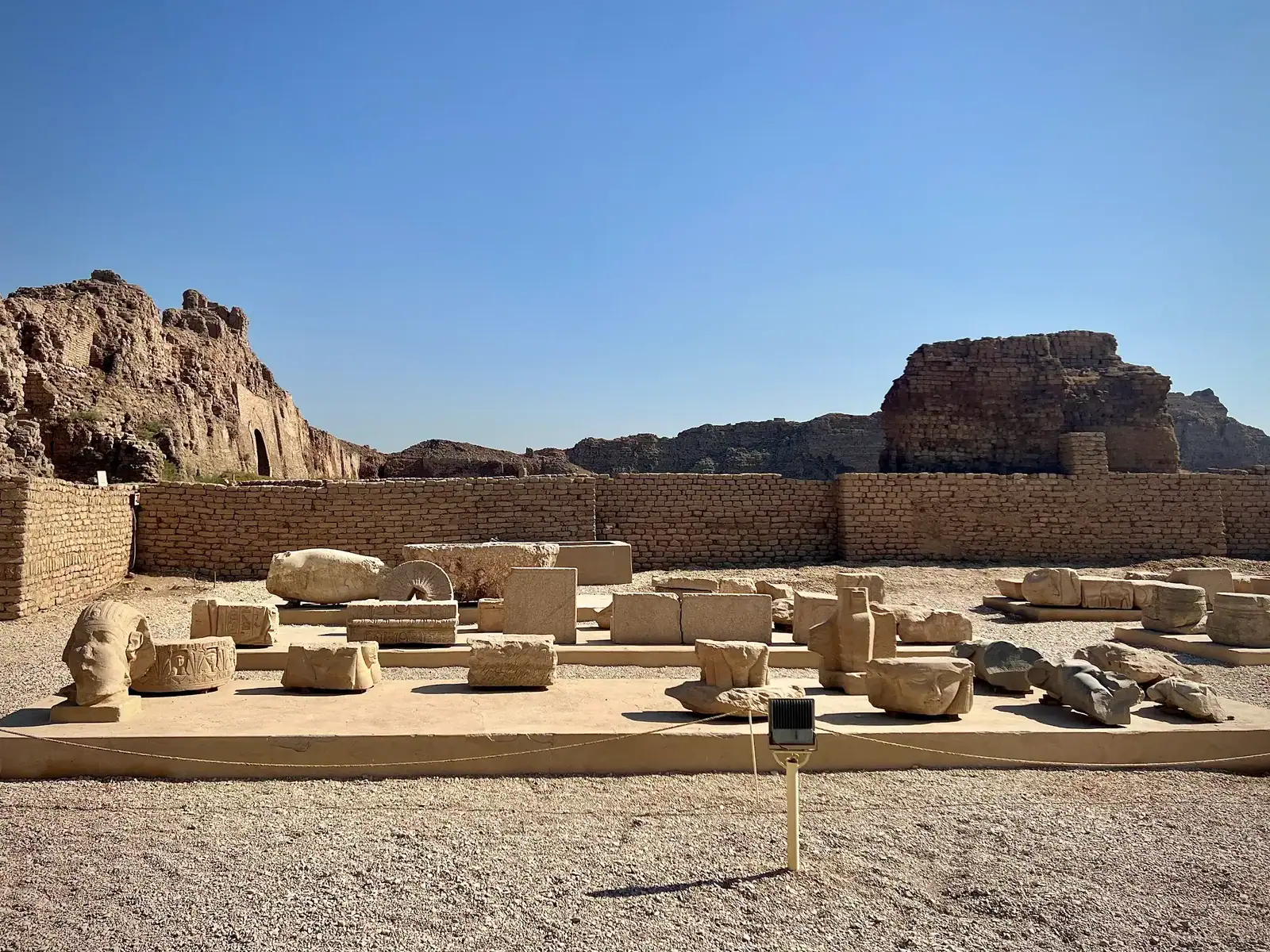
Situated on the west bank of the Nile River near Qena, roughly 60 kilometers north of Luxor, the Dendera Temple Complex stands as one of the best-preserved and visually stunning sanctuary grounds in all of Dendera Egypt. Spanning nearly 40,000 square meters encircled by an imposing ancient mudbrick enclosure wall, this sacred site served for millennia as the primary cult center for Hathor—the ancient Egyptian goddess of love, beauty, music, motherhood, and healing.
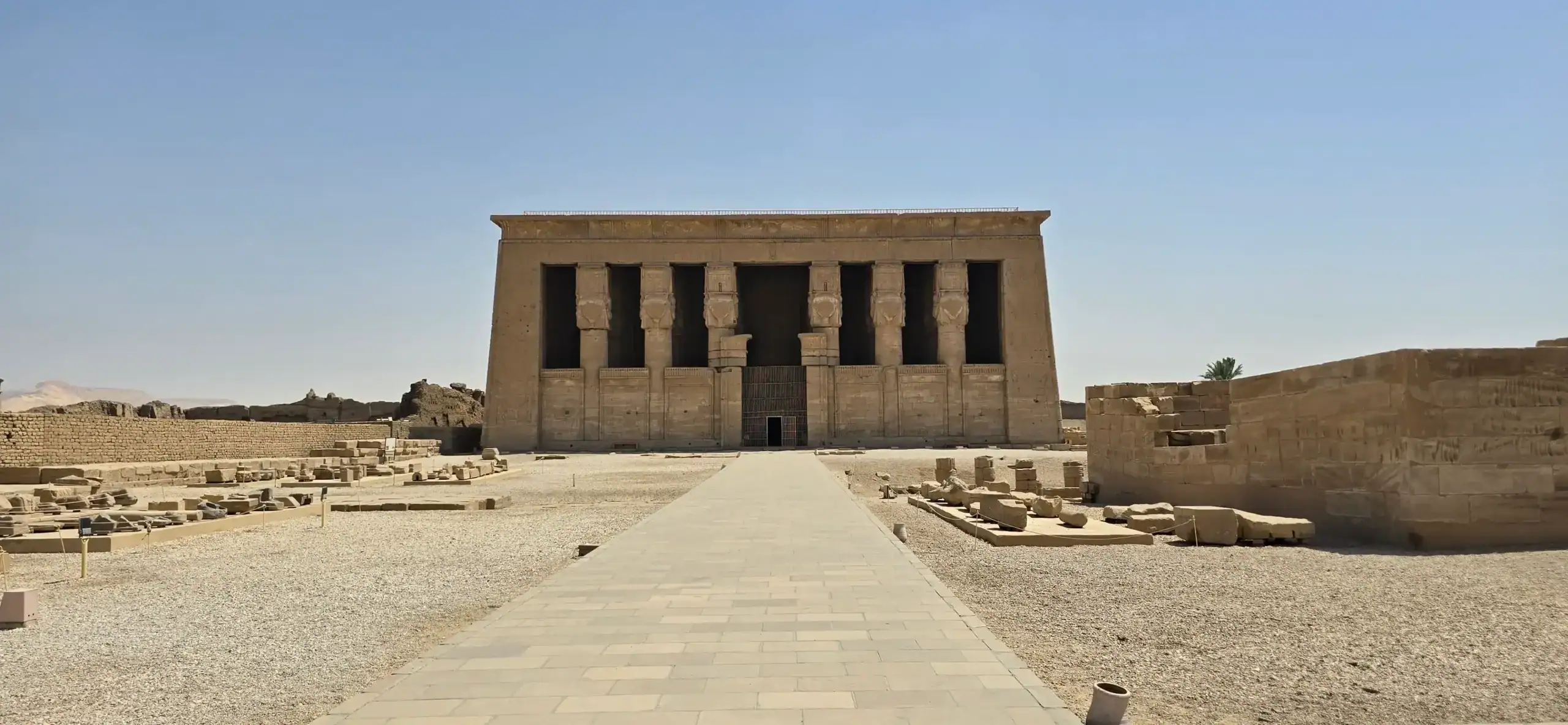
While religious activity at the site dates back to the Old Kingdom (c. 2250 BCE) under Pharaoh Pepi I, the majestic main structure seen today—the Temple of Hathor—was largely constructed during the Greco-Roman period (c. 54 BCE to 37 CE). Because it was buried under desert sands for centuries, the dendera temple retains its massive stone roofs, dark underground crypts, and vibrant astronomical ceiling frescoes that reveal brilliant shades of original Egyptian blue and turquoise. From the legendary Dendera zodiac to rare bas-reliefs of Queen Cleopatra VII, this complex offers an unparalleled glimpse into the twilight age of pharaonic civilization.
| Detail | Information |
| Official Name | Dendera Temple Complex (Ancient Egyptian: Iunet or Tentyra) |
| Primary Monument | Temple of Hathor (Hathor temple Dendera) |
| Location | Qena Governorate, Upper Egypt (~60–70 km north of Luxor) |
| Site Area | ~40,000 square meters enclosed by mudbrick walls |
| Construction Era | Old Kingdom foundations (c. 2250 BCE); main structures Ptolemaic & Roman (c. 54 BCE – 117 CE) |
| Primary Deity | Goddess Hathor (along with Horus of Edfu and Ihy) |
| Site Hours | 7:00 AM – 5:00 PM (Daily; winter/summer hours may vary slightly) |
| Best Time to Visit | October – April (Early morning or late afternoon) |
| Key Highlights | Astronomical Ceiling, Dendera Zodiac Replica, Crypts, Cleopatra VII Bas-Relief, Sanatorium |
Historical Timeline
c. 2250 BCE — Earliest sanctuary established under Pharaoh Pepi I.
c. 2055–1650 BCE — Middle Kingdom rulers expand the sacred site.
c. 1500 BCE — New Kingdom pharaohs renovate Hathor’s temple.
360–343 BCE — Nectanebo II builds the Mammisi (Birth House).
54 BCE — Construction of the Temple of Hathor begins.
30 BCE — Roman rulers continue expanding and decorating the temple.
1st Century CE — Roman emperors add gateways, chapels, and reliefs.
4th–6th Century CE — Parts of the temple become a Christian church.
1821 CE — Original Dendera Zodiac moved to the Louvre Museum.
19th–20th Century — Excavations uncover and restore the complex.
Today — Dendera remains one of Egypt’s best-preserved ancient temples.
Historical Background
Historical Background & Timeline
The history of Dendera Egypt spans over three thousand years of continuous religious veneration. Known in antiquity as Iunet or Tentyra, the city served as the capital of the sixth nome of Upper Egypt. The site held deep cosmic alignment: its primary north-south axis was oriented toward the pole star Alpha Draconis, while its secondary gates aligned with the helical rising of Sirius (Sothis), marking the ancient Egyptian New Year and the annual flooding of the Nile.
When Egypt became a Roman province following the death of Cleopatra VII in 30 BCE, Roman emperors such as Augustus, Tiberius, Nero, and Trajan continued funding the Hathor temple Dendera. They portrayed themselves in wall reliefs wearing traditional pharaonic crowns and offering gifts to Hathor. Thanks to centuries of desert sands sheltering the complex, its roofs, columns, and internal chambers remained structurally complete, preserving one of Egypt’s most intact ancient sanctuaries.

Explore the Wonders of Ancient Egypt
Book your visit to the Dendera Temple Complex and explore one of the world’s most iconic ancient landmarks.
What Makes It Extraordinary
What Makes the Temple of Hathor Extraordinary
01
Unrivaled Structural Preservation
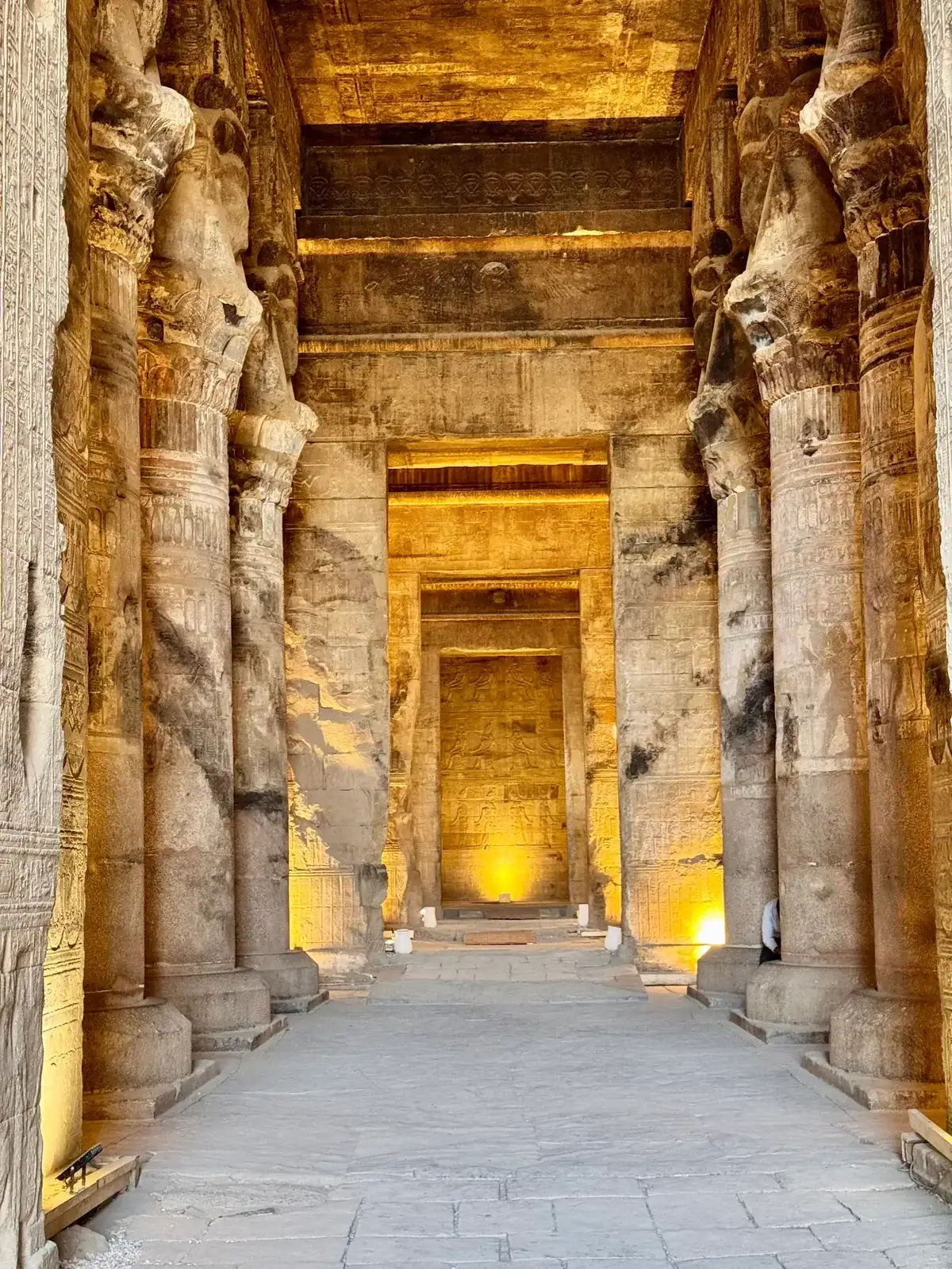
Unlike most ancient Egyptian temples whose roofs have collapsed and colors have faded, the dendera temple features a completely intact stone roof and enclosed inner chambers. Walking through its massive portal feels like stepping directly into the ancient world, as sunlight filters down through narrow roof slits into cool, echoing hypostyle halls.
02
The World-Famous Astronomical Ceiling
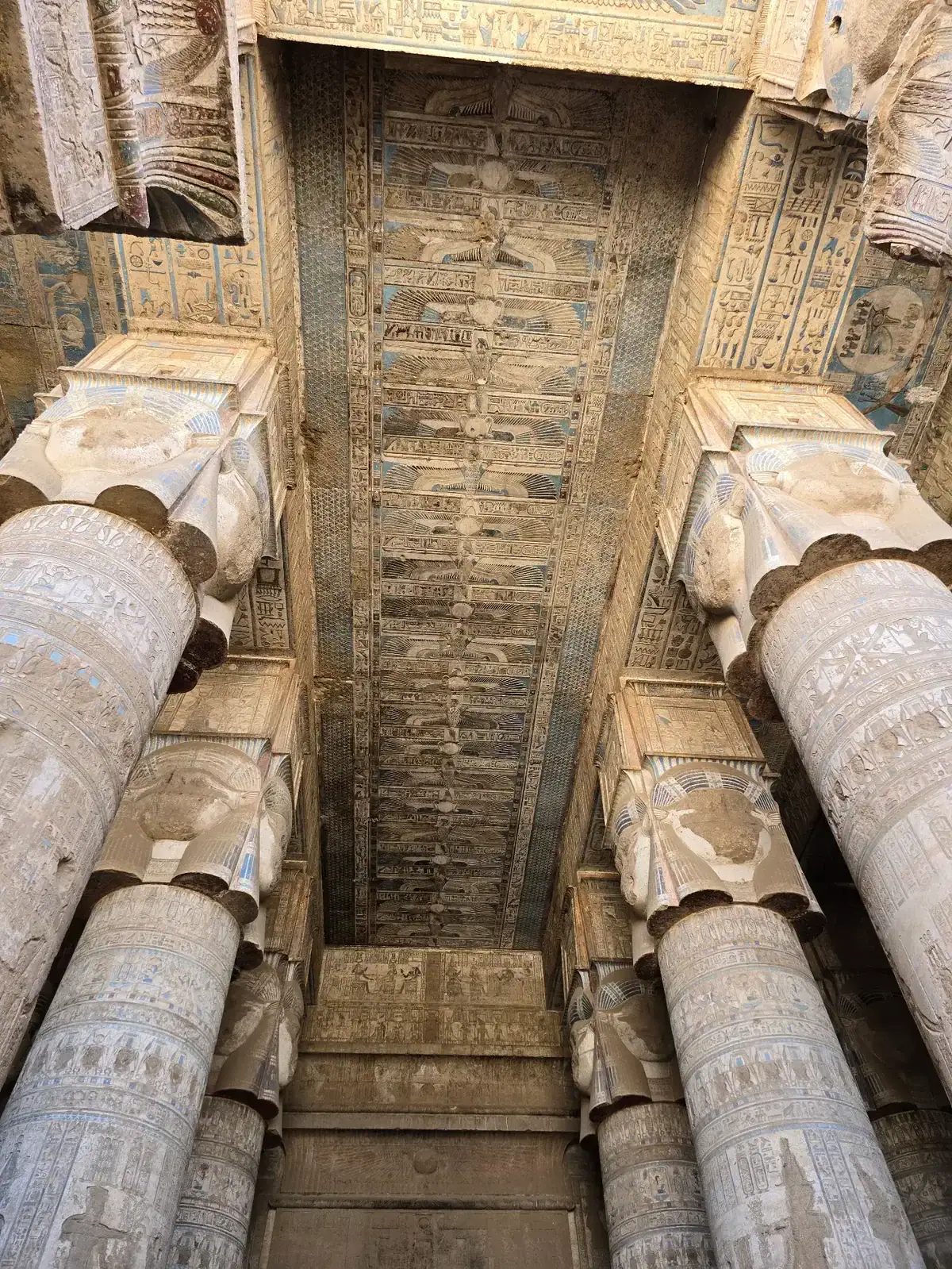
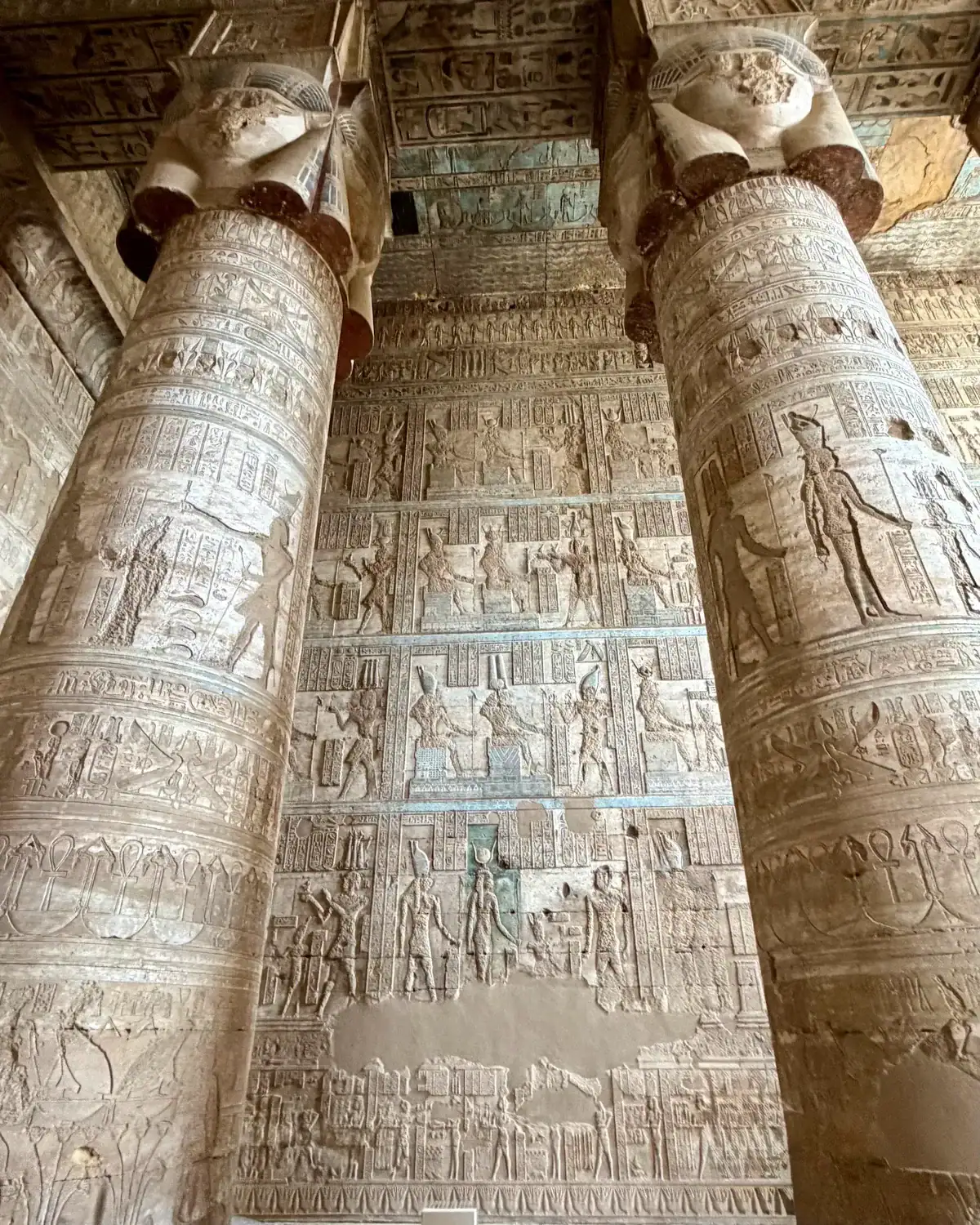
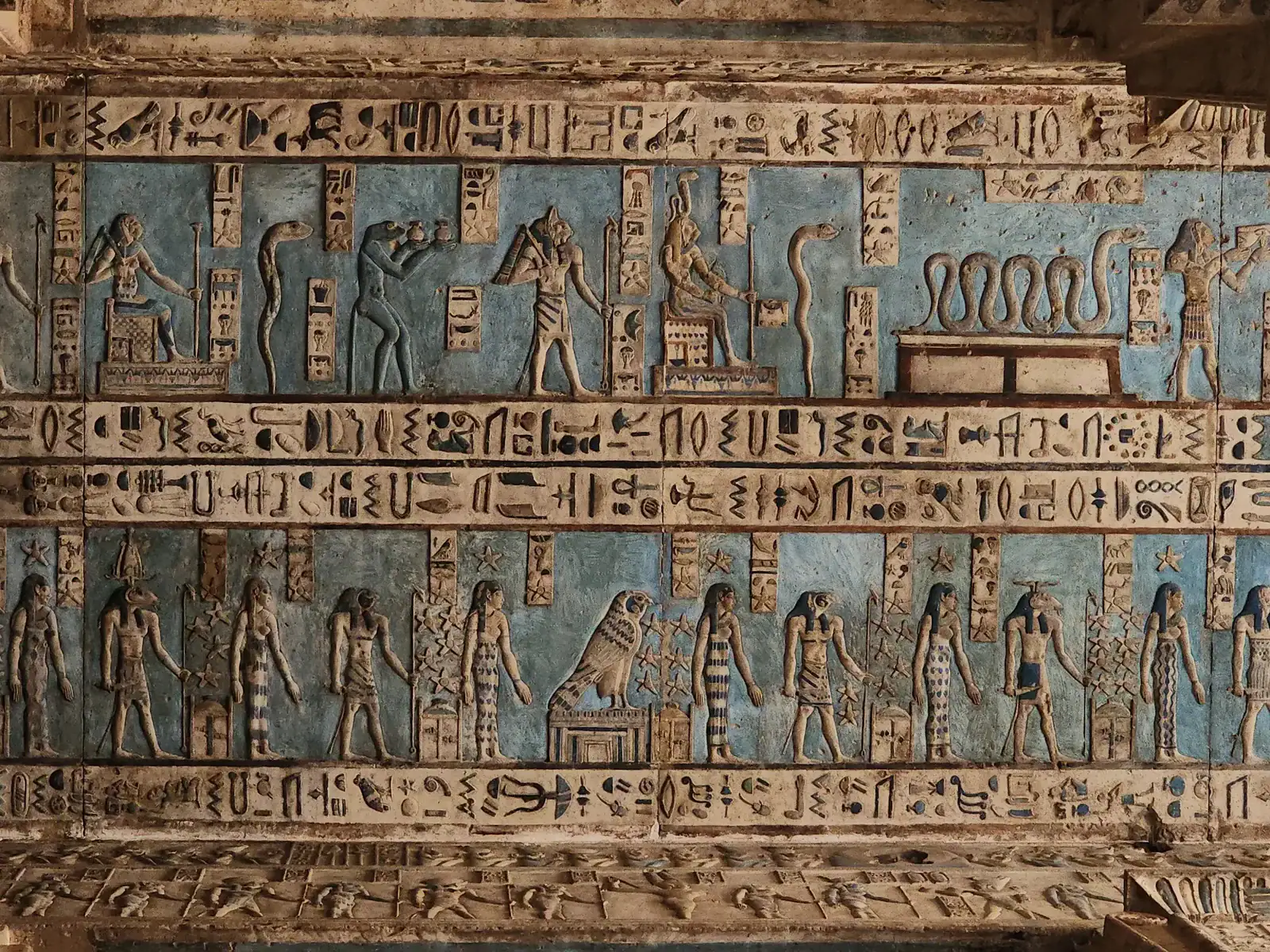
The ceiling of the Great Hypostyle Hall presents a breathtaking cosmic map. Intricately carved and painted in striking "Egyptian Blue," the ceiling depicts Nut (the sky goddess) swallowing the sun at night and giving birth to it at dawn, alongside decans, constellations, and personifications of the planets. Recent restoration work has removed soot from centuries of fires, restoring the vibrant original pigments to near-pristine condition.
03
The Iconic Dendera Zodiac
Located in a rooftop chapel dedicated to the resurrection of Osiris, the Dendera zodiac is one of antiquity's most famous celestial charts. It represents the 12 signs of the zodiac—including Taurus, Leo, and Scorpio—held up by sky deities. Although the original stone relief was removed to the Louvre Museum in 1821, an exact replica sits in its original rooftop setting.
04
Mysterious Underground Crypts & Reliefs
Beneath the floor of the main sanctuary lies a subterranean network of 12 narrow crypts. Used to store sacred statues and ritual paraphernalia, these hidden chambers feature immaculate low-relief carvings, including the famous and widely debated "Dendera Light" reliefs depicting Harsomtus emerging from a lotus blossom inside a protective snake bubble.


What to See & Experience
Explore the Dendera Temple Complex Experience
Visiting the Dendera Temple Complex offers an immersive architectural and spiritual journey. Here are the top attractions to explore within the complex grounds:
The Great Hypostyle Hall (Sistrum Hall): Supported by 24 massive stone columns topped with four-sided capital heads of the cow-eared goddess Hathor. The columns resemble sacred sistra (rattle instruments used in Hathor worship).
The Astronomical Ceiling: Look up inside the hypostyle hall to marvel at vivid sky-blue reliefs depicting the goddess Nut, solar barks, lunar cycles, and celestial deities traversing the cosmos.
The Rooftop Chapels & Dendera Zodiac: Ascend the gently sloping interior staircases—carved with reliefs of priests carrying statues in procession—to access the roof chapels. Here, explore the Osiris Chapel containing the famous Dendera zodiac map.
Subterranean Crypts: Descend through narrow stone openings into the cool underground crypts. The relief carvings here retain incredible precision, depicting Pharaoh Pepi I offering homage to Hathor.
Cleopatra VII & Caesarion Reliefs: Walk to the exterior rear southern wall of the Temple of Hathor to view massive, imposing bas-reliefs showing Queen Cleopatra VII alongside Caesarion (her son by Julius Caesar) making offerings to the gods—one of the few verified contemporary depictions of the famous queen.
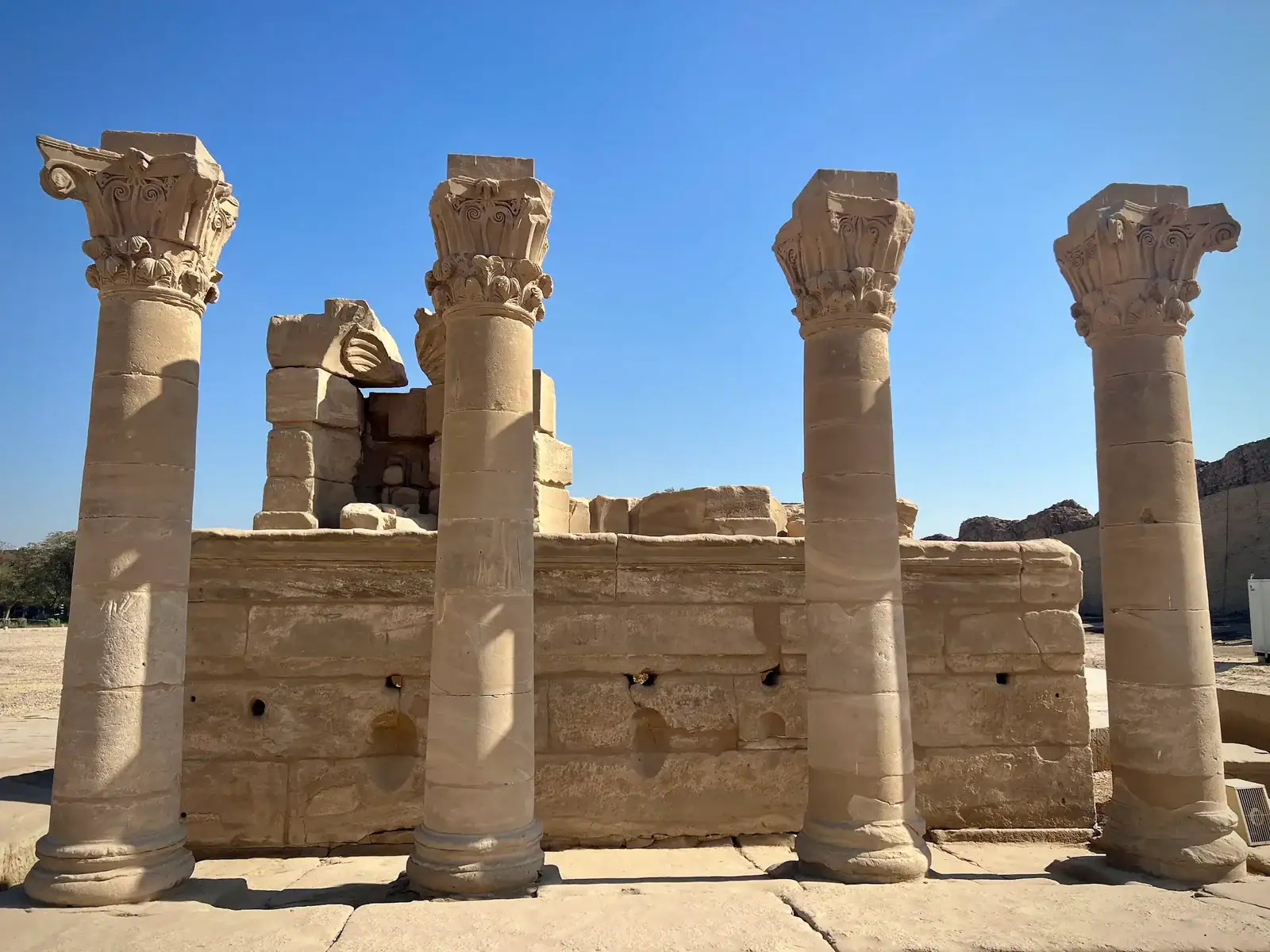
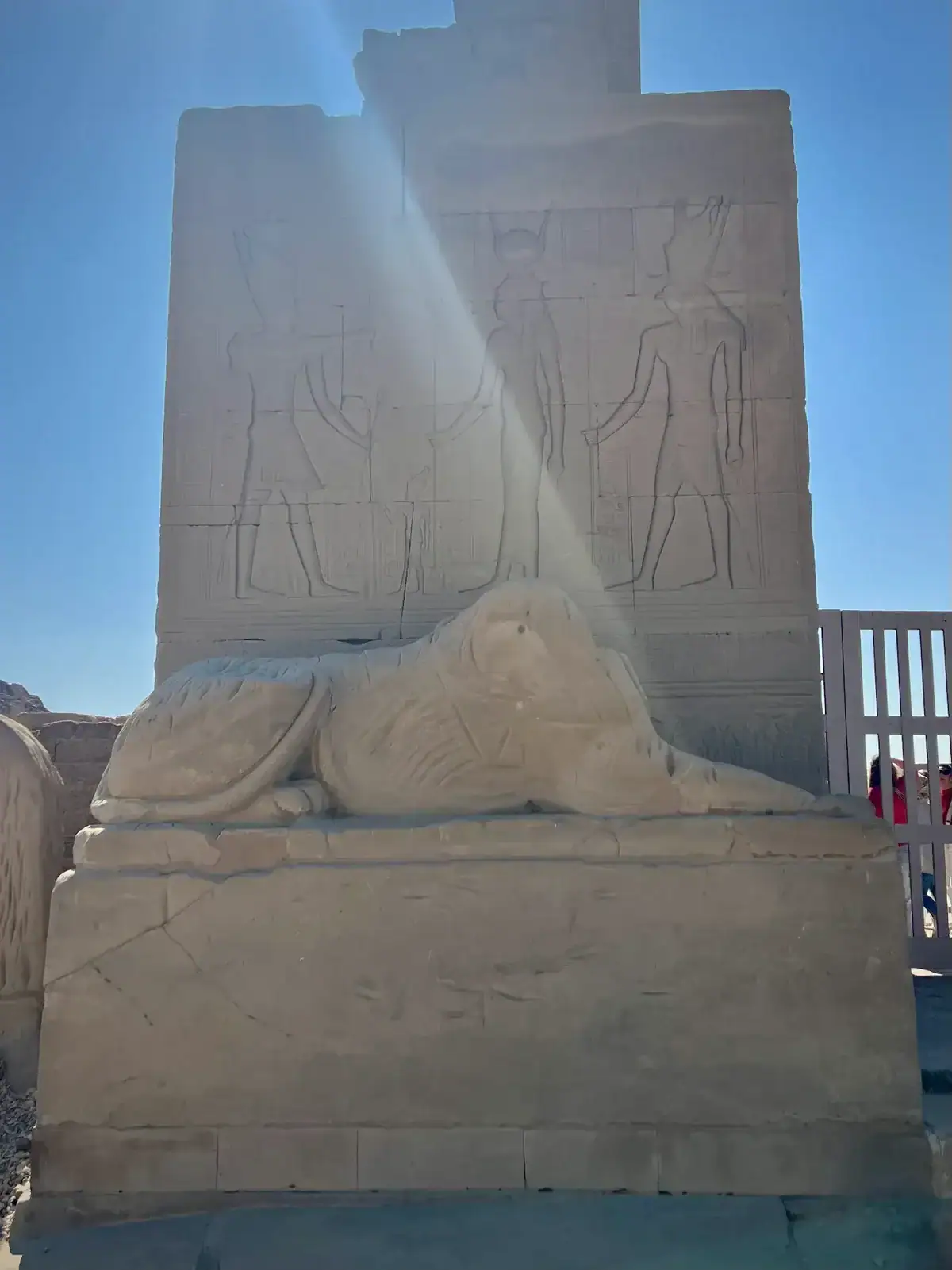
The Roman Mammisi (Birth House): Built during the reigns of Nero and Trajan, this elegant structure celebrated the divine birth of Ihy (son of Hathor and Horus), surrounded by colorful Bes columns protecting childbirth.
The Ancient Sanatorium: Explore the brick ruins of a unique ancient healing center where pilgrims visited to bathe in holy water or spend the night in sacred sleep chambers to receive diagnostic, healing dreams from Hathor.
The Sacred Lake: A deep, stone-lined rectangular basin surrounded by palm trees that once supplied holy water for temple purification rituals and daily operations.
Coptic Basilica: Positioned between the two mammisis, the site contains the remains of a 5th-century Christian church, showing how the temple complex adapted through the early Christian era.
Why Visit
Cultural & Historical Significance
One of Egypt’s Best-Preserved Temples: Unlike many ancient sites, the Dendera Temple retains original ceilings, colorful reliefs, and remarkably intact carvings, offering one of the most authentic temple experiences in Egypt.
Sacred Center of Hathor Worship: For over 2,000 years, Dendera served as the primary cult center of Hathor, the goddess of love, music, motherhood, healing, and joy, making it one of ancient Egypt’s most important religious destinations.
Home of the Famous Dendera Zodiac: The temple is renowned for the Dendera Zodiac, one of the world’s most celebrated ancient astronomical reliefs, showcasing the Egyptians’ advanced understanding of the heavens and religious symbolism.
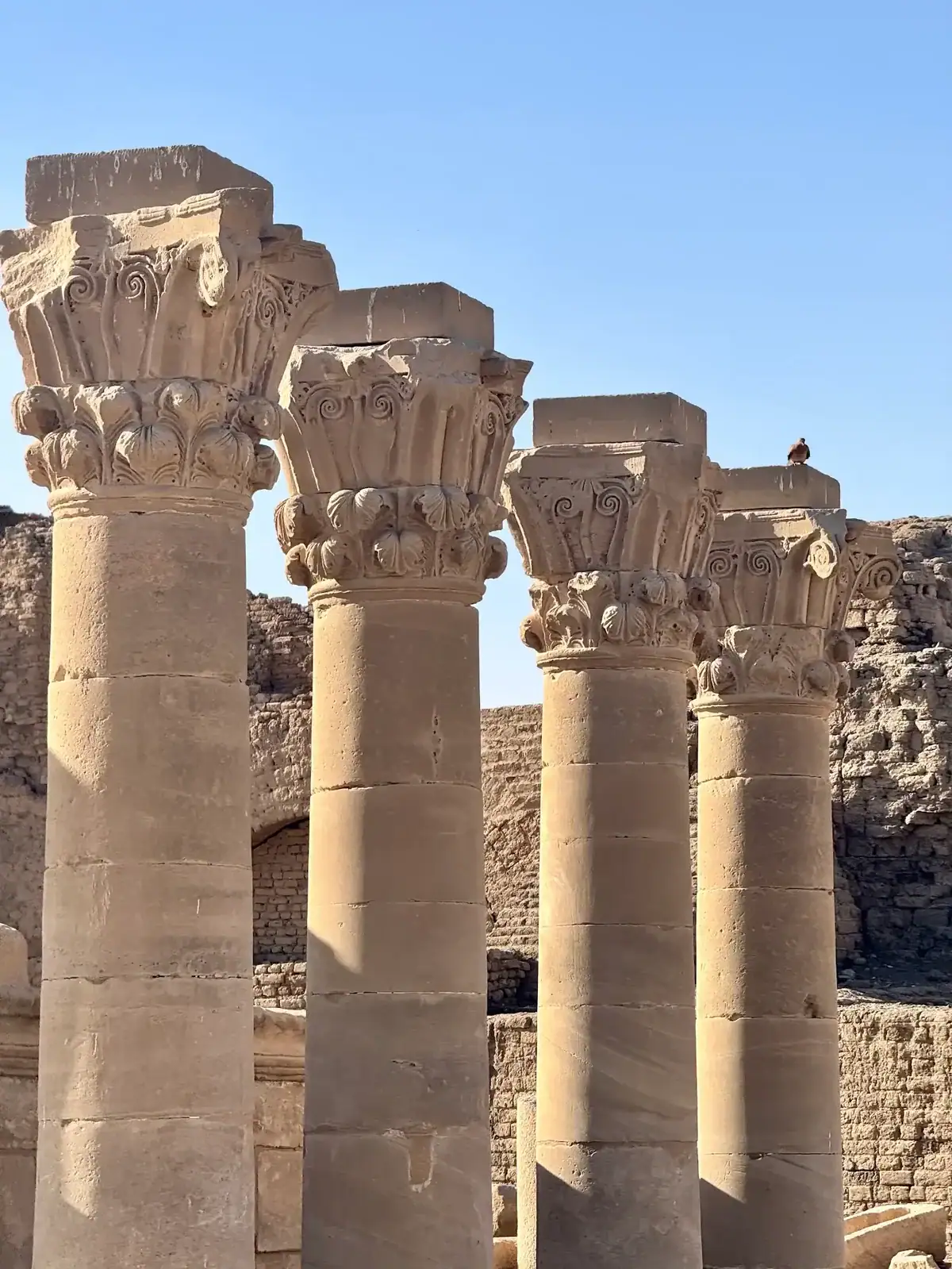
Exceptional Ancient Art & Architecture: Massive Hathor-headed columns, beautifully decorated ceilings, underground crypts, rooftop chapels, and detailed hieroglyphs make the complex a masterpiece of Ptolemaic and Roman Egyptian architecture.
Insight into Ancient Egyptian Beliefs: The temple’s reliefs illustrate religious ceremonies, festivals, mythology, healing rituals, and royal offerings, providing a fascinating glimpse into daily spiritual life in ancient Egypt.
A Perfect Day Trip from Luxor: Located just an hour north of Luxor, Dendera offers a quieter, less crowded alternative to Karnak and Luxor Temple, making it an excellent addition to any Nile cruise or luxury Egypt itinerary.

Explore the Wonders of Ancient Egypt
Book your visit to the Dendera Temple Complex and explore one of the world’s most iconic ancient landmarks.
Visitor Information
Location & Access
The Dendera Temple Complex is located on the west bank of the Nile in Qena Governorate, approximately 2.5 kilometers southeast of modern Dendera and 60 kilometers north of Luxor.
Getting There
From Luxor (By Private Car / Tour): A comfortable 1.15 to 1.5-hour drive through scenic Nile Valley countryside along the agricultural road.
Ticket Pricing
| Ticket Type | Price (EGP) | Approx. USD |
| Adult General Admission | EGP 300 | ~$6.00 |
| Student General Admission | EGP 150 | ~$3.00 |
| Crypt & Rooftop Access | May require small supplemental fee / check locally | — |
| Mobile Phone Photography | Free | Free |
Essential Tips
- Opening Hours: Open daily from 7:00 AM to 5:00 PM.
- Best Time: Visit early (7:30–9:00 AM) for cooler weather and fewer crowds.
- Flashlight: Use a flashlight or phone light when exploring the crypts.
- Footwear: Wear comfortable closed-toe shoes for uneven stone steps.
- Hydration: Bring bottled water, especially during warmer months.
- Combine Your Visit: Pair Dendera with Abydos Temple for a full-day trip from Luxor.
FAQs
Frequently Asked Questions About the Dendera Temple Complex
Where is the original Dendera Zodiac?
It is displayed in the Louvre Museum in Paris (removed in 1821). An exact replica sits on the rooftop of the Temple of Hathor today.
What are the "Dendera Light" reliefs?
They represent Egyptian mythology—the god Harsomtus emerging from a lotus blossom inside a lotus-snake bubble—not ancient electrical technology.
How far is it from Luxor and how do I get there?
It is 60 km (1.25 hours) north of Luxor. Accessible via private car, organized day tour (often combined with Abydos), or select Nile cruises.
Can you access the crypts and roof?
Yes. Visitors can climb the interior staircases to explore rooftop chapels and descend into narrow subterranean crypts.
Why are the ceiling colors so vibrant?
Centuries of desert sand and black soot protected the paint. Recent professional cleaning revealed the original, brilliant Egyptian Blue pigments.
How much time is needed for a visit?
Plan for 2 to 3 hours to see the main Hathor Temple, astronomical ceiling, crypts, roof, Cleopatra reliefs, and Roman Mammisi.
Plan Your Visit
Ready to Step Inside Egypt's Royal History?
Book your cruise or tour package to ensure seamless entry, expert guidance, and the most meaningful experience at the last surviving Wonder of the Ancient World.