
Edfu Temple (Temple of Horus)
The Temple at a Glance
The Best-Preserved Ancient Temple in Egypt
Located in the town of Edfu on the west bank of the Nile between Luxor and Aswan, the Edfu Temple is one of the most impressive and complete monuments of ancient Egypt. Dedicated to Horus, the falcon-headed god of kingship, protection, and divine power, the temple is widely regarded as the finest surviving example of Ptolemaic temple architecture in Egypt. Construction began in 237 BCE under Ptolemy III and continued for nearly 180 years before its completion in 57 BCE.
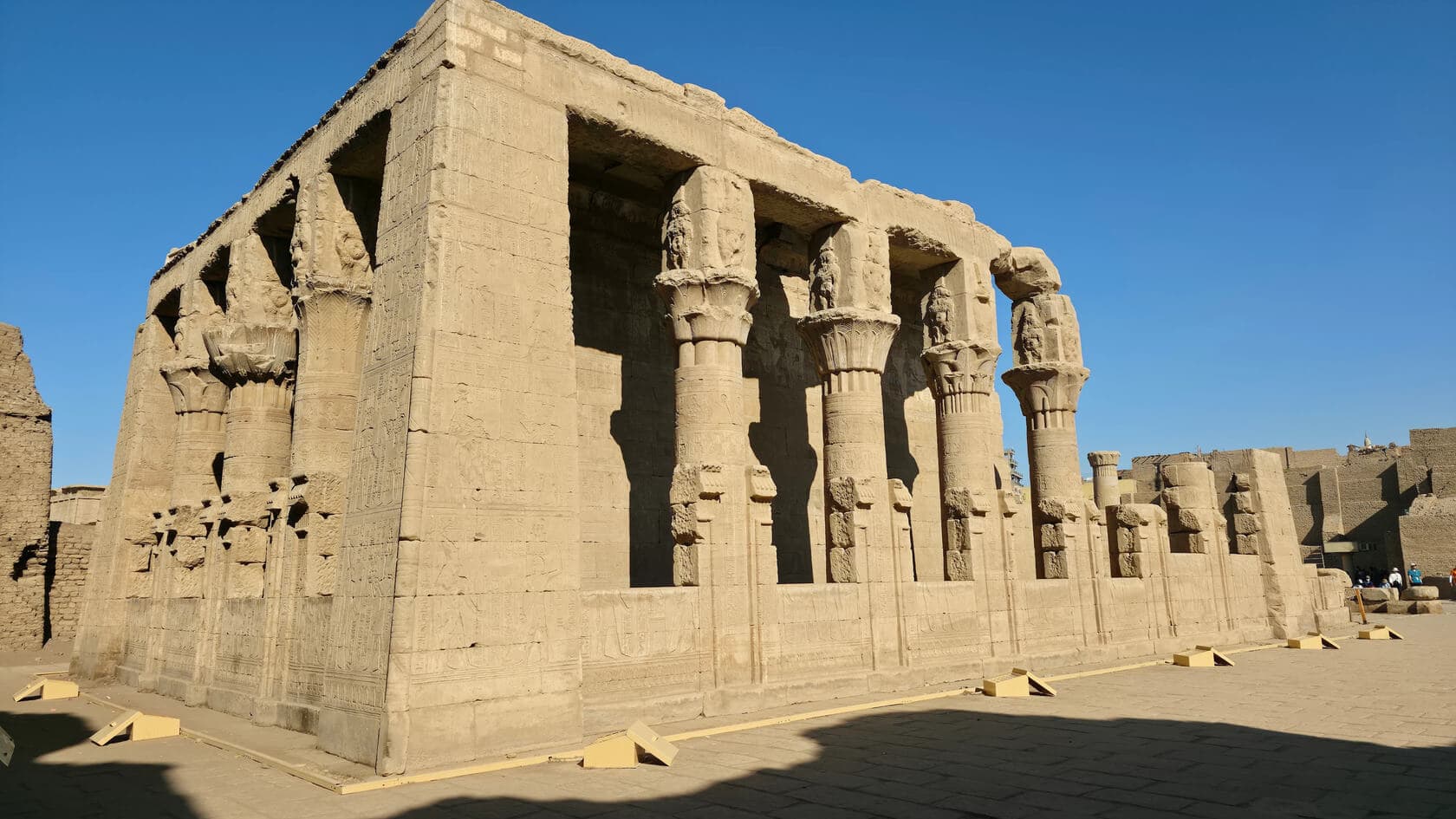
Unlike many Egyptian temples that suffered extensive damage over time, the Temple of Horus remained buried beneath layers of sand and settlement debris for centuries. This natural protection preserved its towering pylons, roof, columns, reliefs, and inscriptions with extraordinary detail, allowing modern visitors to experience an ancient Egyptian temple much as it appeared over 2,000 years ago.
| Official Name | Temple of Horus at Edfu |
|---|---|
| Location | Edfu, Aswan Governorate, Egypt |
| Built | 237–57 BCE |
| Dedicated To | Horus of Behdet |
| Dynasty | Ptolemaic Kingdom |
| Construction Material | Sandstone |
| Main Pylon Height | Approximately 36 meters |
| Site Hours | Generally 6:00 AM – 5:00 PM |
| Best Time to Visit | October – April |
| Famous For | Best-preserved temple in Egypt |
Historical Timeline
c. 3000 BCE — Early Sacred Site
New Kingdom Period (c. 1550–1070 BCE)
237 BCE — Construction Begins
142 BCE — First Dedication Ceremony
70 BCE — Pylon and Courtyard Completed
57 BCE — Temple Officially Completed
1860 CE — Rediscovered by Auguste Mariette
Modern Era — Ongoing Conservation
Historical Background
Historical Background & Timeline
The Temple of Horus was constructed during the Ptolemaic Period, when Egypt was ruled by descendants of Ptolemy, one of Alexander the Great’s generals. Although the rulers were of Greek origin, they embraced traditional Egyptian religious practices and commissioned temples that followed classical Pharaonic architectural traditions.
The site was chosen because ancient Egyptians believed Edfu was the legendary location where Horus defeated Seth, the god associated with chaos and disorder. This mythological victory symbolized the triumph of order over chaos and became one of the central themes carved throughout the temple.
Throughout its history, the temple served not only as a religious sanctuary but also as a center of administration, education, ritual activity, and regional economic life. Elaborate inscriptions record religious ceremonies, temple construction details, sacred festivals, and theological beliefs, making Edfu one of the most important sources of information about ancient Egyptian religion.
Explore the Wonders of Ancient Egypt
Book your visit to the Edfu Temple and explore one of the world’s most iconic ancient landmarks.
What Makes It Extraordinary
What Makes Edfu Temple Extraordinary
01
The Best-Preserved Ancient Temple in Egypt
Edfu Temple is widely considered the most complete ancient Egyptian temple still standing. Because it remained buried beneath sand and settlement debris for centuries, much of its original architecture survived intact, including the roof, columns, halls, sanctuaries, and decorative reliefs. Visitors can experience a level of preservation rarely found elsewhere in Egypt.
02
Monumental Pylon Gateway
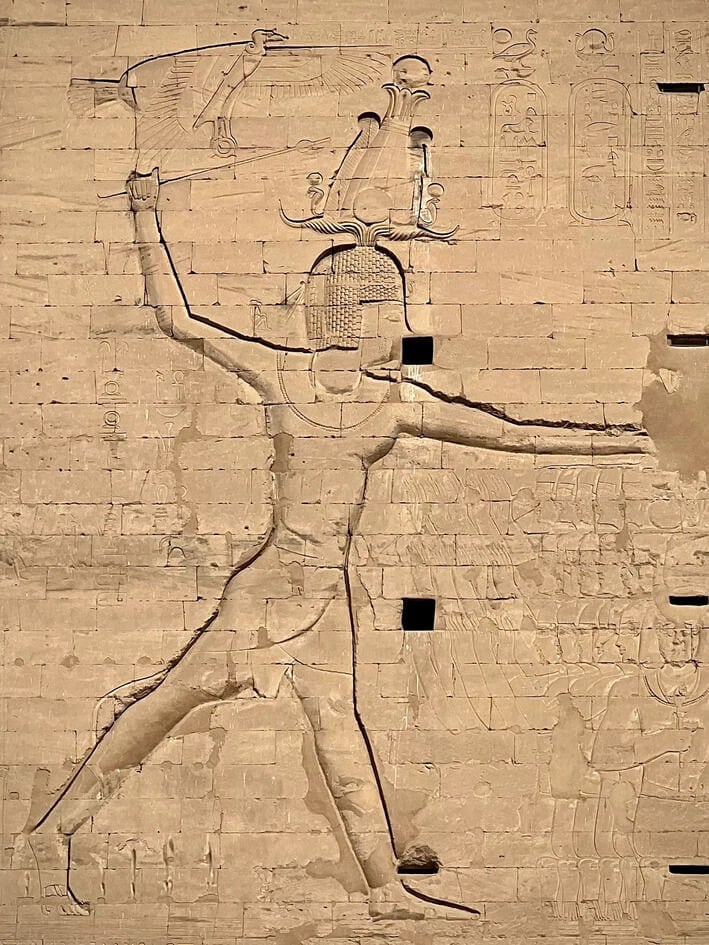
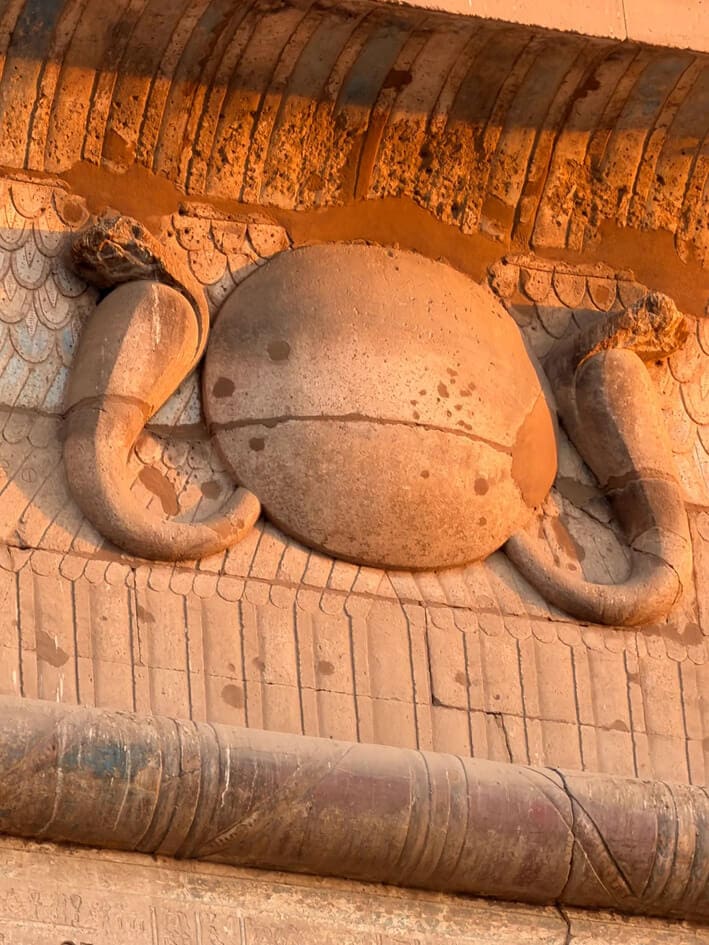
The temple's enormous entrance pylon rises approximately 36 meters above the surrounding landscape. Its walls display dramatic reliefs of Ptolemy XII presenting offerings to the gods and defeating Egypt's enemies under the protection of Horus. These carvings remain among the finest examples of Ptolemaic monumental art.
03
Extraordinary Mythological Inscriptions
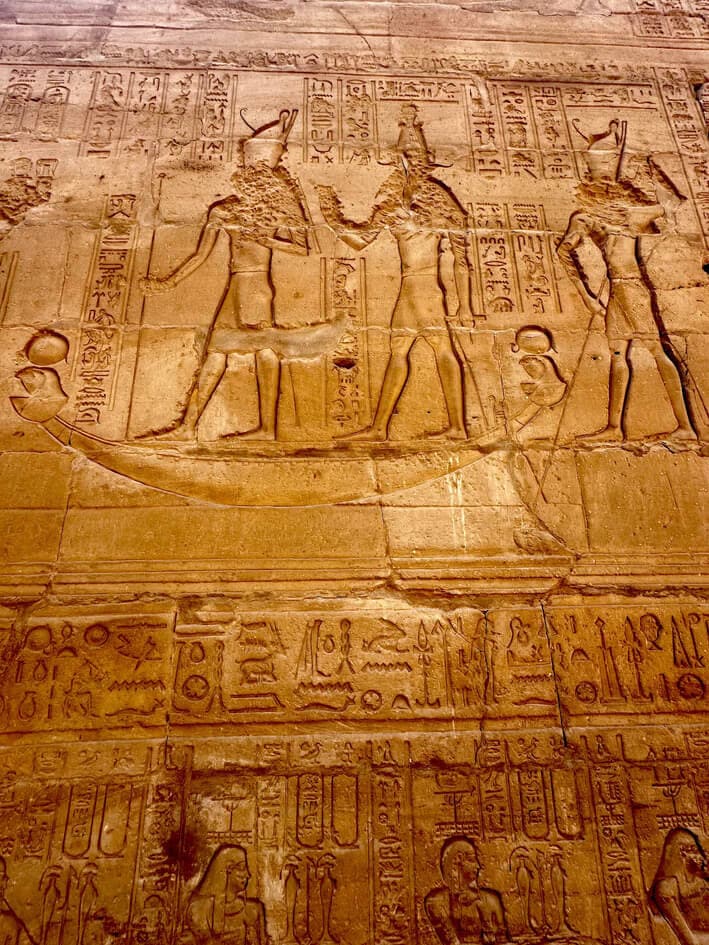
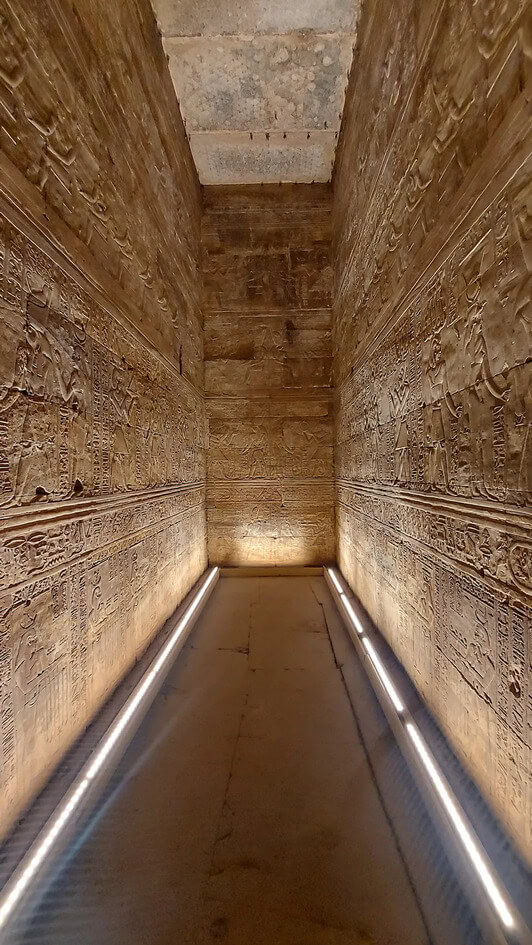
The walls of the Horus temple contain thousands of hieroglyphic inscriptions documenting rituals, festivals, myths, and temple ceremonies. Particularly important are the scenes depicting the sacred conflict between Horus and Seth, often called the "Sacred Drama," which provides valuable insight into ancient Egyptian religious beliefs.
04
A Masterpiece of Ptolemaic Architecture
Covering more than 7,000 square meters and stretching over 140 meters in length, Edfu Temple represents the pinnacle of Ptolemaic temple design. Massive sandstone walls, towering columns, ceremonial halls, hidden chambers, and carefully aligned sacred spaces demonstrate the remarkable engineering achievements of ancient builders.
What to See & Experience
Explore the Edfu Temple (Temple of Horus) Experience
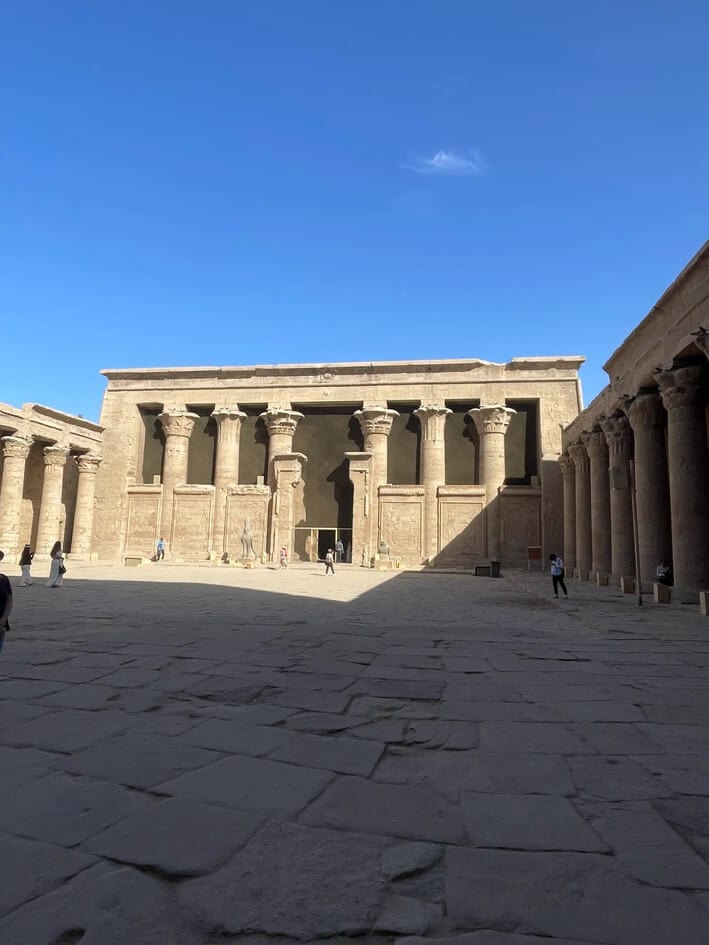
The Grand Entrance Pylon: Your visit begins at the colossal entrance gateway flanked by reliefs of Ptolemaic rulers and divine figures. The scale of the pylon immediately conveys the power and grandeur of ancient Egyptian religion.
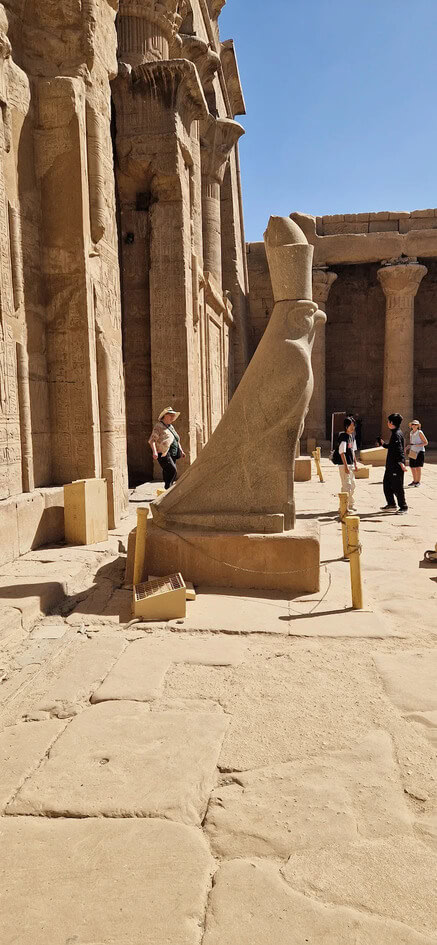
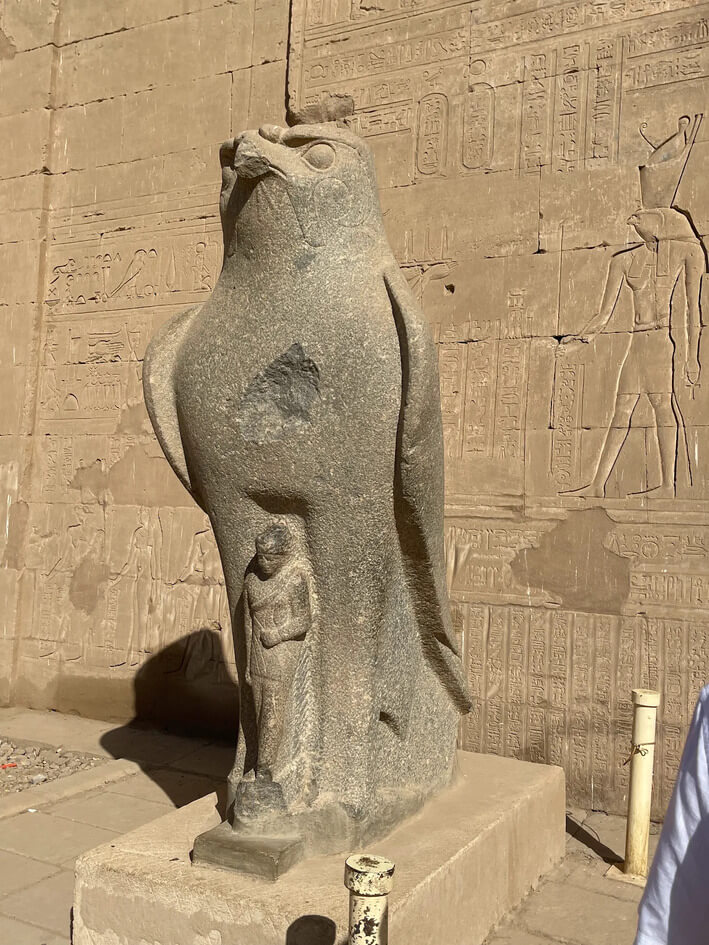
Black Granite Falcon Statues: Standing guard before the entrance are impressive black granite statues of Horus. These iconic falcon figures have become among the most photographed features of Edfu Temple and symbolize divine kingship and protection.
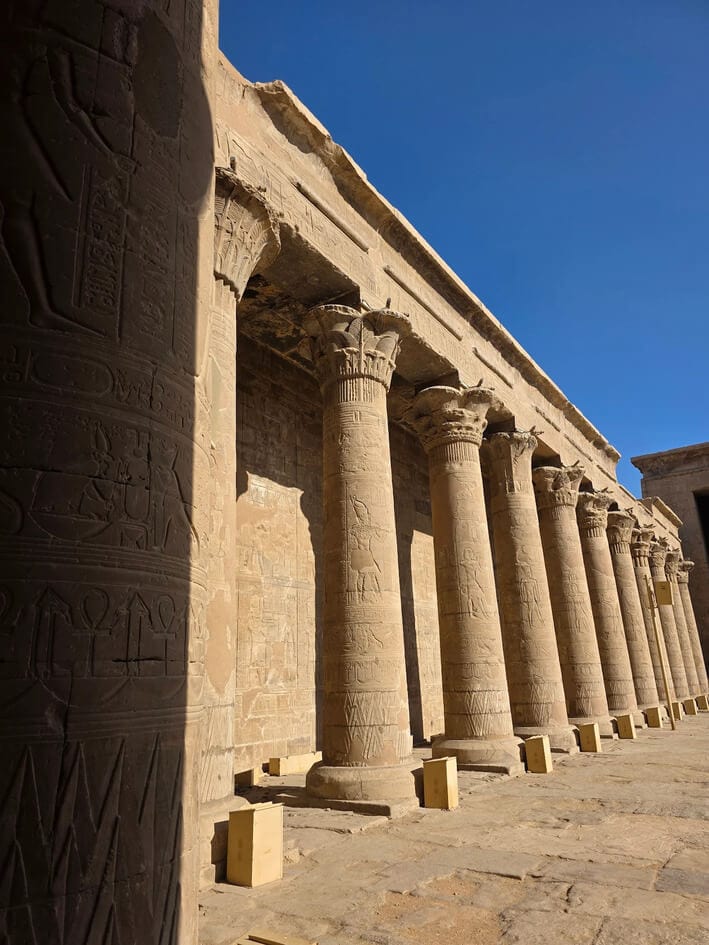
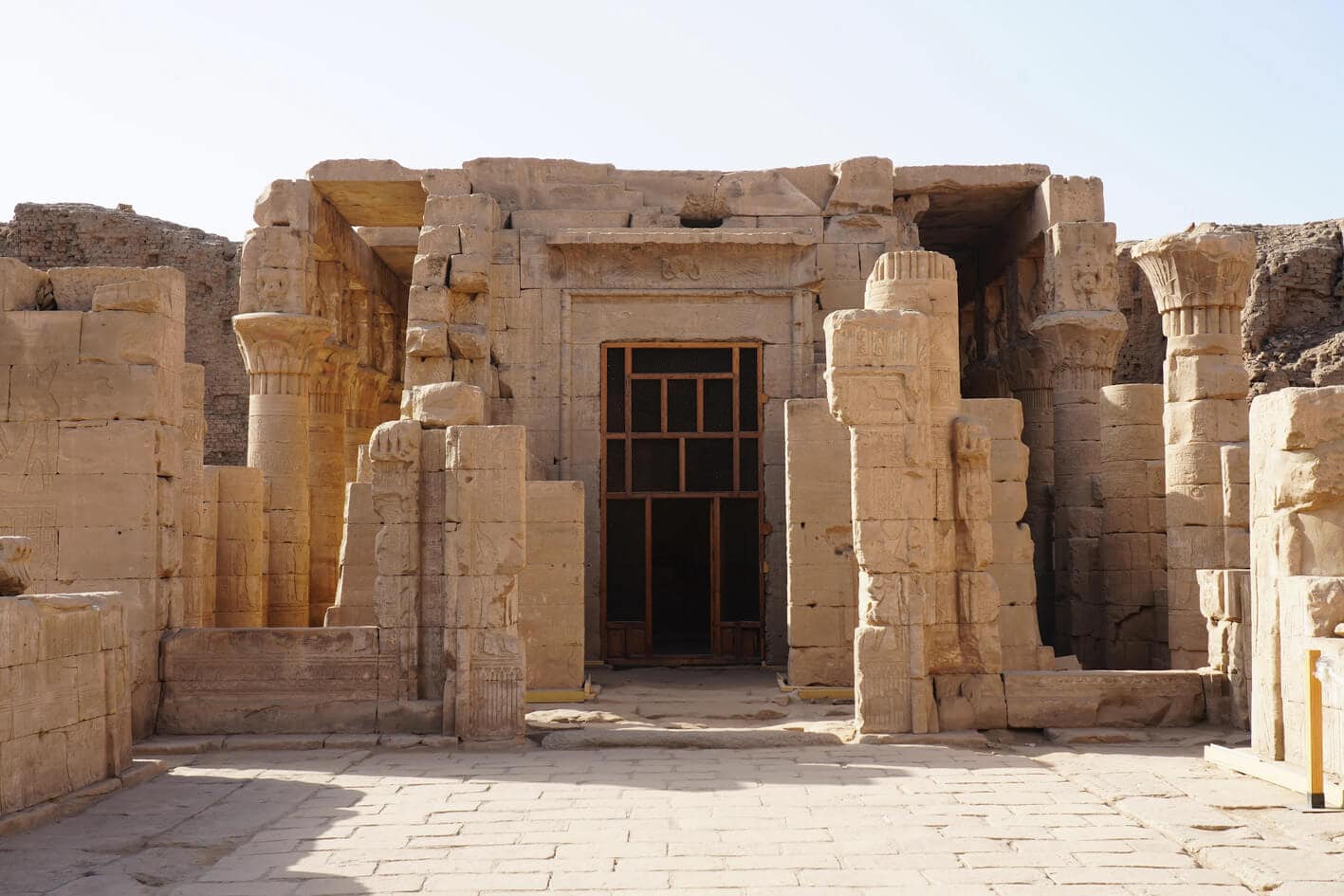
The Peristyle Court: This large open-air courtyard was once accessible to ordinary worshippers bringing offerings to the gods. Surrounded by elegant columns with floral capitals, it creates one of the most beautiful spaces within the complex.
The Hypostyle Halls: Beyond the courtyard lie two magnificent hypostyle halls filled with towering columns and richly carved walls. The reliefs illustrate religious ceremonies, offerings, temple rituals, and the divine authority of the king.
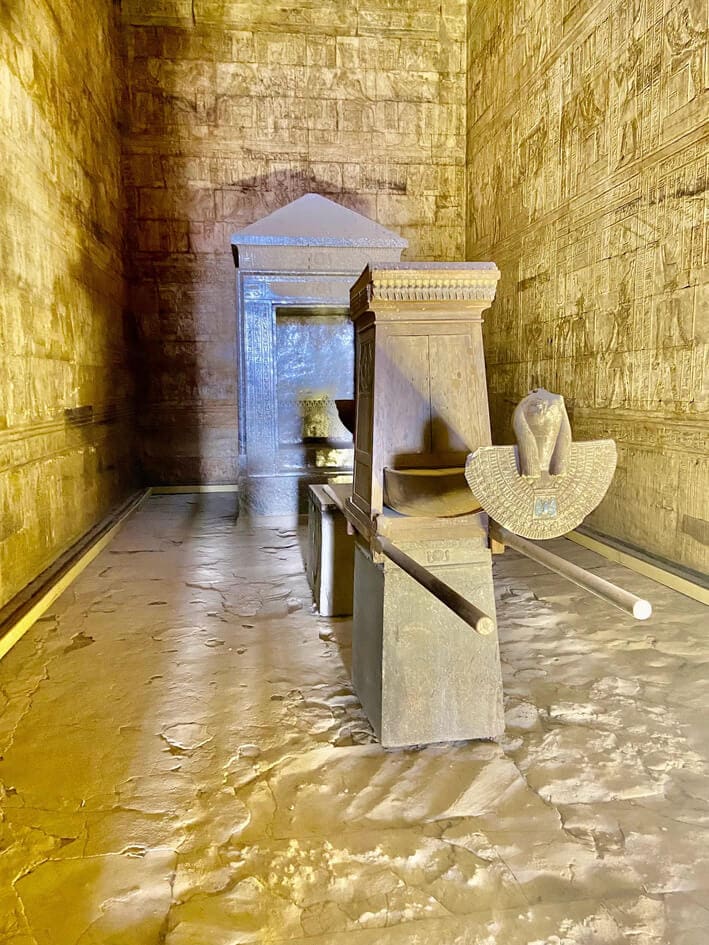
The Sanctuary of Horus: At the heart of the temple lies the sacred sanctuary, where the cult statue of Horus was once housed. This was the holiest space in the complex and accessible only to priests and the pharaoh.
The Granite Shrine of Nectanebo II: One of the oldest surviving objects in the temple is a black granite shrine dating to the reign of Nectanebo II, predating the Ptolemaic structure itself. It remains one of the most significant artifacts within the sanctuary.
Roof Access and Upper Chambers: Certain areas reveal stairways and chambers used during festivals and ceremonial processions. These spaces offer insight into the functioning of an ancient Egyptian temple beyond its public areas.
Festival and Sacred Marriage Traditions: The temple was the setting for the annual Festival of the Beautiful Meeting, during which the goddess Hathor traveled from Dendera to unite ceremonially with Horus. This sacred celebration attracted pilgrims from across Egypt and reinforced the divine order of the cosmos.
Why Visit
Cultural & Historical Significance
The Sacred Home of Horus: For centuries, Edfu served as one of the most important religious centers in Upper Egypt. Horus was considered the protector of the pharaoh and a symbol of legitimate kingship, making his temple a place of immense political and spiritual significance.
A Window into Ancient Egyptian Religion: Few monuments preserve ancient Egyptian theology as completely as Edfu Temple. Its inscriptions document rituals, festivals, myths, sacred architecture, and religious symbolism that might otherwise have been lost to history.
Evidence of Cultural Continuity: Although built under Greek rulers, the temple closely follows traditional Egyptian architectural and religious models. It demonstrates how Egyptian culture remained vibrant and influential during the Ptolemaic era.
One of Egypt’s Most Important Archaeological Resources: Researchers continue to study the temple’s inscriptions to better understand ancient language, mythology, architecture, and ceremonial practices. New conservation work has even revealed traces of the temple’s original vivid colors, providing fresh insight into how these monuments once appeared.
A Highlight of Every Nile Cruise: Today, Edfu Temple is one of the most visited attractions between Luxor and Aswan and remains a centerpiece of nearly every luxury Nile cruise itinerary. Its combination of preservation, history, and monumental architecture makes it an essential stop for travelers exploring ancient Egypt.
Explore the Wonders of Ancient Egypt
Book your visit to the Edfu Temple and explore one of the world’s most iconic ancient landmarks.
Visitor Information
Location & Access
Location: Edfu, Aswan Governorate, Egypt, on the west bank of the Nile River. The temple lies approximately 100 km south of Luxor and 105 km north of Aswan, making it one of the most convenient stops on Nile cruise routes.
Getting There
- Nile cruise from Luxor or Aswan
- Private guided tour
- Train to Edfu followed by a short transfer
- Taxi or private vehicle from nearby cities
Ticket Pricing
Approximate foreign visitor admission:
- Adult: EGP 550
- Student: EGP 275
Prices are subject to change by the Egyptian Ministry of Tourism and Antiquities
Essential Tips
- Daily: Approximately 6:00 AM – 5:00 PM (hours may vary seasonally).
- Visit early morning before cruise crowds arrive.
- Hire a guide to understand the detailed mythology and inscriptions.
- Allow 1–2 hours for a complete exploration.
- Bring water, sunscreen, and a hat.
- Carry a camera; the temple offers exceptional photography opportunities.
- Combine Edfu with Kom Ombo for a full day of Nile Valley exploration.
FAQs
Frequently Asked Questions About the Edfu Temple
What is Edfu Temple famous for?
Edfu Temple is famous for being the best-preserved ancient Egyptian temple. Dedicated to Horus, the falcon-headed god, it features remarkably intact pylons, columns, sanctuaries, and hieroglyphic inscriptions dating to the Ptolemaic period.
Who built the Temple of Horus at Edfu?
The temple was built by the Ptolemaic rulers of Egypt. Construction began under Ptolemy III Euergetes I in 237 BCE and was completed in 57 BCE during the reign of Ptolemy XII.
Can visitors go inside Edfu Temple?
Yes. Visitors can explore much of the temple complex, including the Peristyle Court, Hypostyle Halls, inner chambers, and the Sanctuary of Horus. Many original carvings and inscriptions are still clearly visible throughout the site.
How old is Edfu Temple?
The current temple is over 2,000 years old. Construction started in 237 BCE and took approximately 180 years to complete, making it one of the finest surviving monuments from the Ptolemaic Kingdom.
Where is Edfu Temple located?
Edfu Temple is located in the town of Edfu in Upper Egypt, on the west bank of the Nile River between Luxor and Aswan. It is a popular stop on Nile River cruises traveling between the two cities.
When is the best time to visit Edfu Temple?
The best time to visit Edfu Temple is between October and April when temperatures are cooler. Early morning visits are especially recommended for comfortable sightseeing, better lighting for photography, and fewer crowds.
Plan Your Visit
Ready to Step Inside Egypt's Royal History?
Book your cruise or tour package to ensure seamless entry, expert guidance, and the most meaningful experience at the last surviving Wonder of the Ancient World.