
Karnak Temple
The Temple at a Glance
The World's Largest Ancient Religious Complex
More than a temple, Karnak is an entire sacred city — a vast open-air museum of pylons, obelisks, sanctuaries, and statues built by over 30 pharaohs across 2,000 years. Dedicated to the Theban triad of Amun, Mut, and Khonsu, the Karnak complex is the greatest religious structure ever raised in the ancient world.
| Official Name | Karnak Temple Complex (Ipet-Isut — “The Most Select of Places”) |
| Location | East Bank of the Nile, Luxor Governorate, Egypt |
| Built | c. 2000 BCE – 30 BCE (Middle Kingdom through Ptolemaic Period) |
| Total Area | ~247 acres (100 hectares) |
| Site Hours | 6:00 AM – 5:00 PM (Daily) |
| Best Time | October – April |
Historical Timeline
c. 2000 BCE — Middle Kingdom Origins
c. 1550–1070 BCE — New Kingdom Zenith
c. 1350 BCE — The Opet Festival
c. 1279–1213 BCE — The Age of Ramses II
332 BCE — Greek & Ptolemaic Additions
1979 — UNESCO World Heritage Recognition
Ongoing — Archaeological Discovery
Historical Background
Historical Background & Timeline
The Karnak Temple complex was developed over nearly 2,000 years, beginning during Egypt’s Middle Kingdom around 2000 BCE and reaching its peak during the New Kingdom period between 1550–1070 BCE. Located in ancient Thebes — modern-day Luxor — Karnak became the largest religious center in Egypt and was primarily dedicated to Amun-Ra, the king of the gods. The complex symbolized royal authority, divine power, and the spiritual heart of the Egyptian empire.
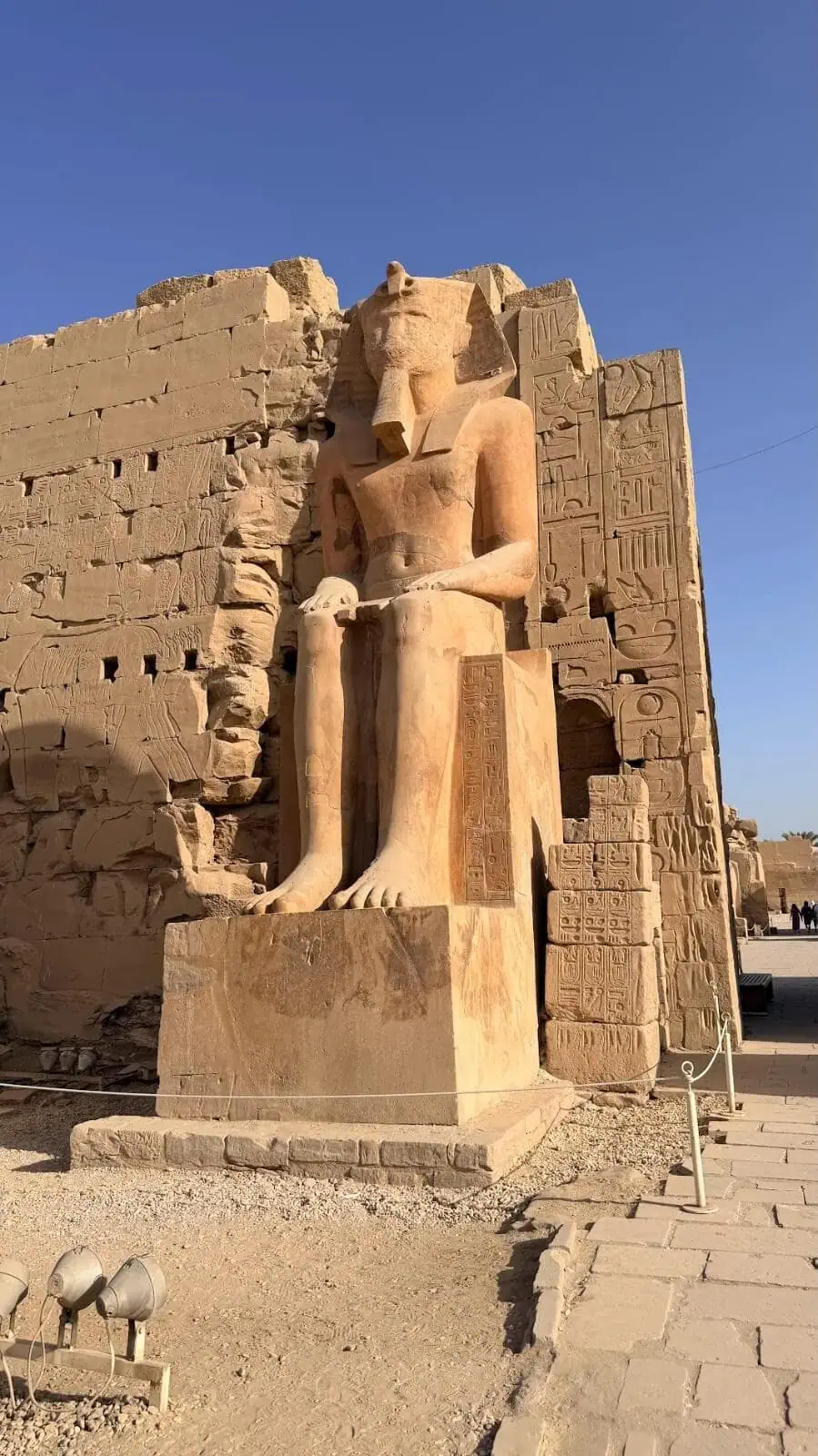
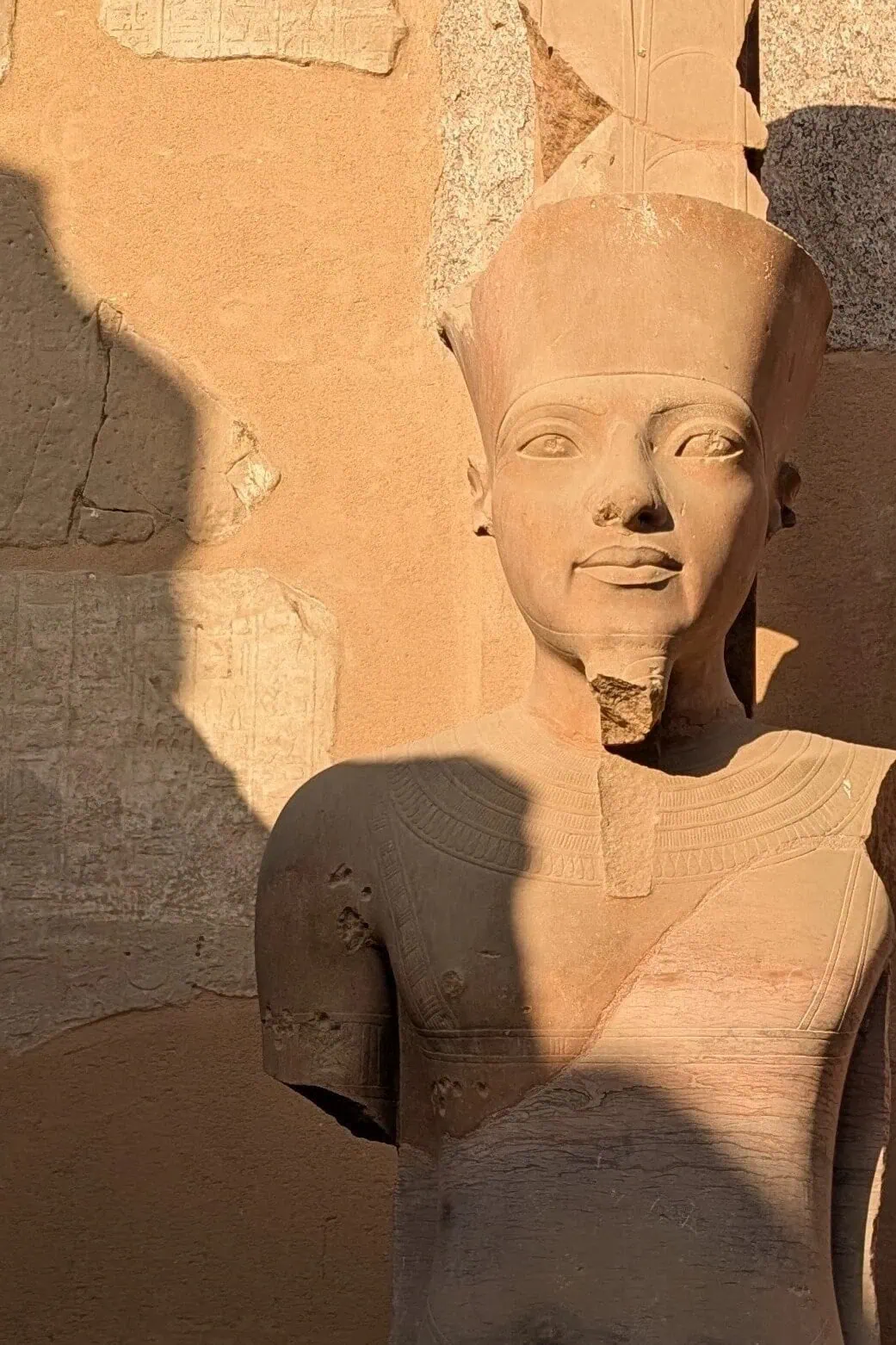
Unlike monuments built by a single ruler, the vast Karnak complex was expanded by generations of pharaohs including Hatshepsut, Thutmose III, Seti I, and Ramses II. They added monumental pylons, obelisks, sanctuaries, statues, and ceremonial halls that reflected the religious and political ambitions of ancient Egypt.
At the center of the site stood the magnificent temple of Amun, one of the wealthiest and most influential religious institutions in the ancient world. The complex also played a major role in religious festivals such as the Opet Festival, when sacred statues of the gods traveled between Karnak and Luxor Temple in grand ceremonial processions.
Over centuries, earthquakes, erosion, invasions, and shifting sands damaged parts of Karnak Egypt, yet much of its monumental architecture survives today, including the Great Hypostyle Hall, sacred lake, colossal statues, and towering obelisks. In 1979, Karnak became part of the UNESCO World Heritage Site of Ancient Thebes due to its extraordinary historical and cultural significance.

Explore the Wonders of Ancient Egypt
Book your visit to the Karnak Temple and explore one of the world’s most iconic ancient landmarks.
What Makes It Extraordinary
What Makes Karnak Temple Extraordinary
01
The Largest Religious Complex Ever Built
The Karnak complex covers about 247 acres and is the largest religious site ever built in ancient Egypt. Expanded by over 30 pharaohs across nearly 2,000 years, it includes massive temples, pylons, and courtyards, making it feel like an entire sacred city rather than a single temple.
02
The Great Hypostyle Hall
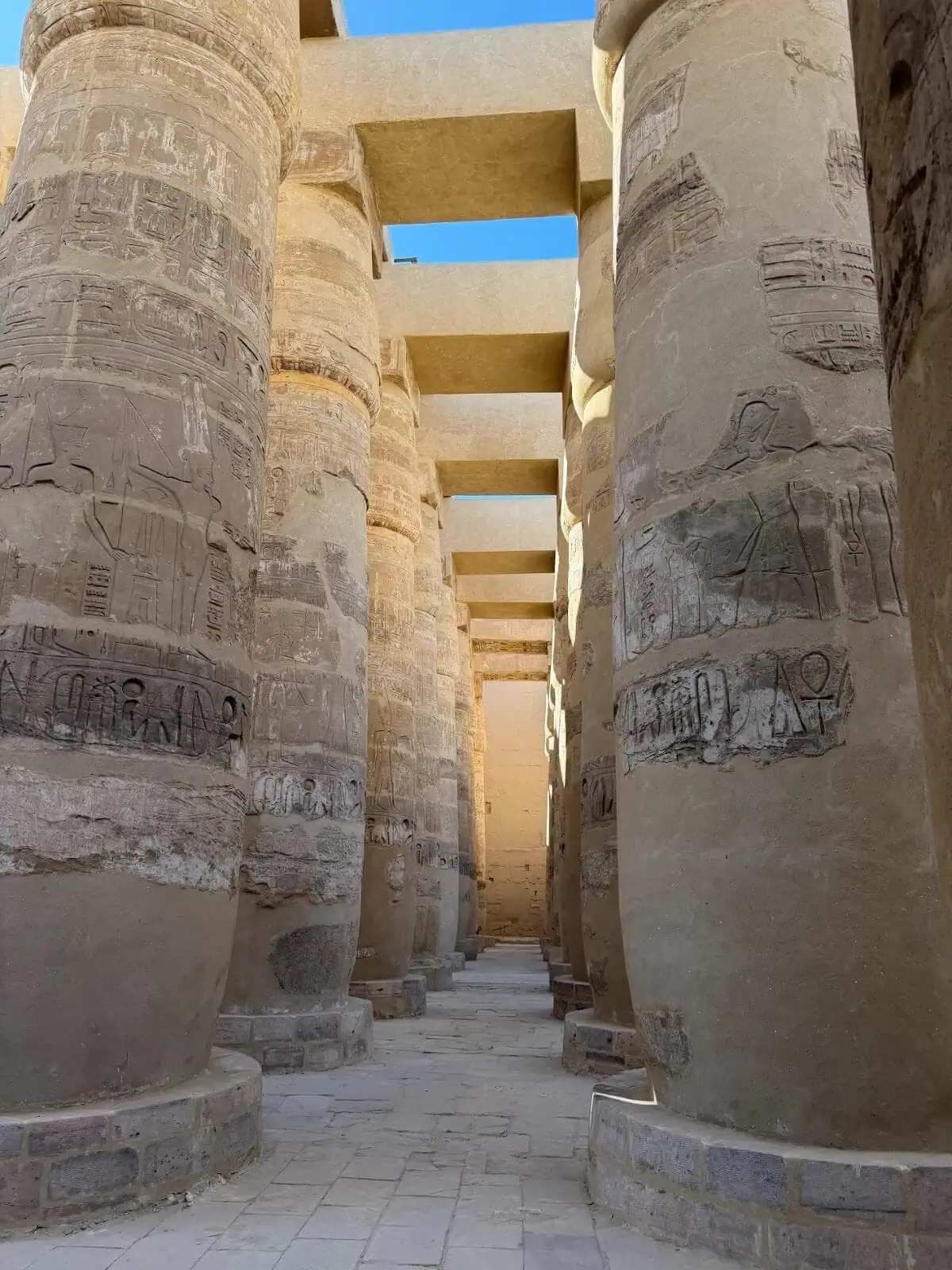
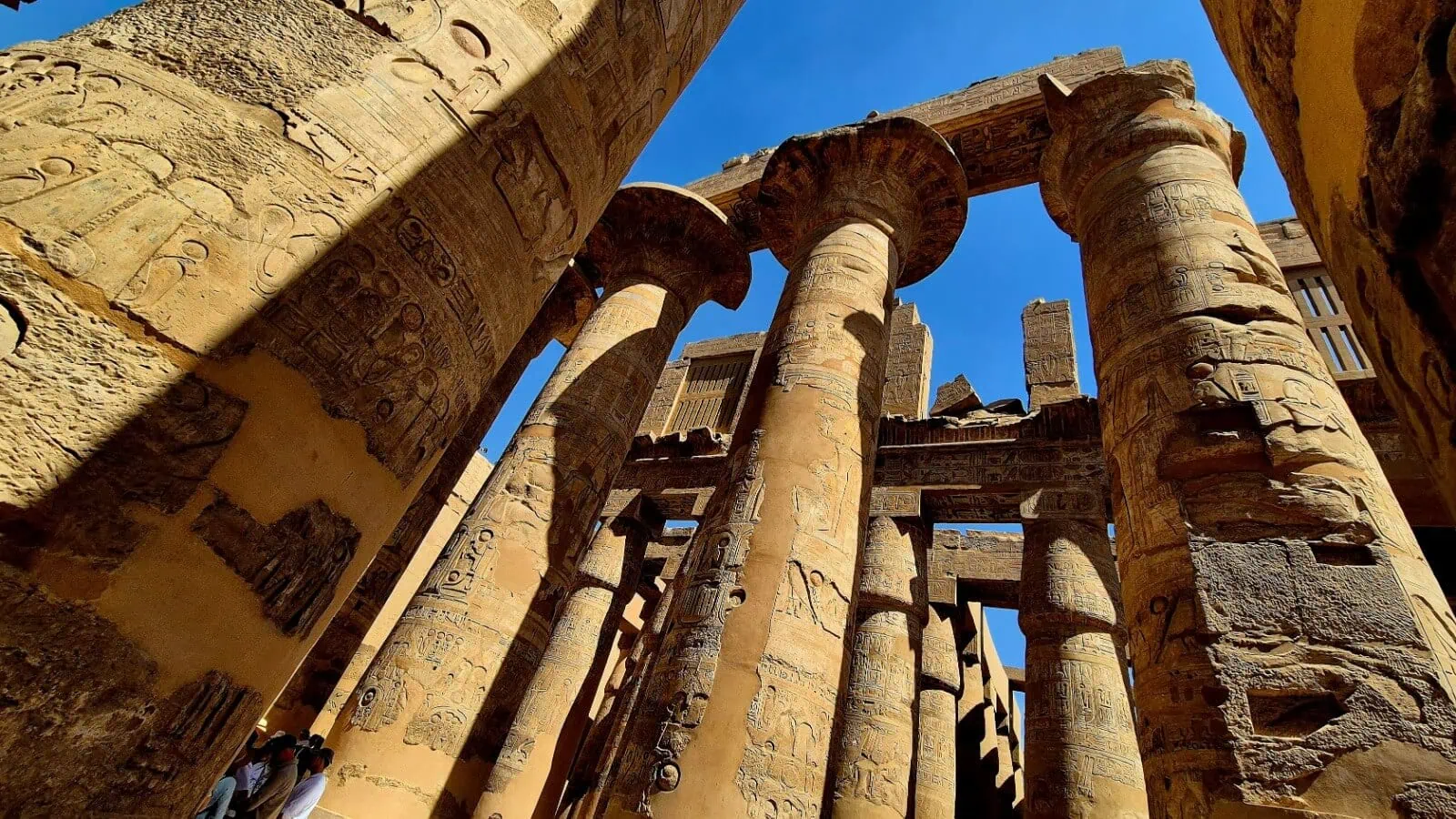
The Great Hypostyle Hall is a masterpiece of ancient engineering, featuring 134 massive sandstone columns spread across 5,000 square metres. The tallest columns reach around 21 metres, creating a dramatic, forest-like stone interior filled with carved hieroglyphs.
03
The Avenue of Sphinxes
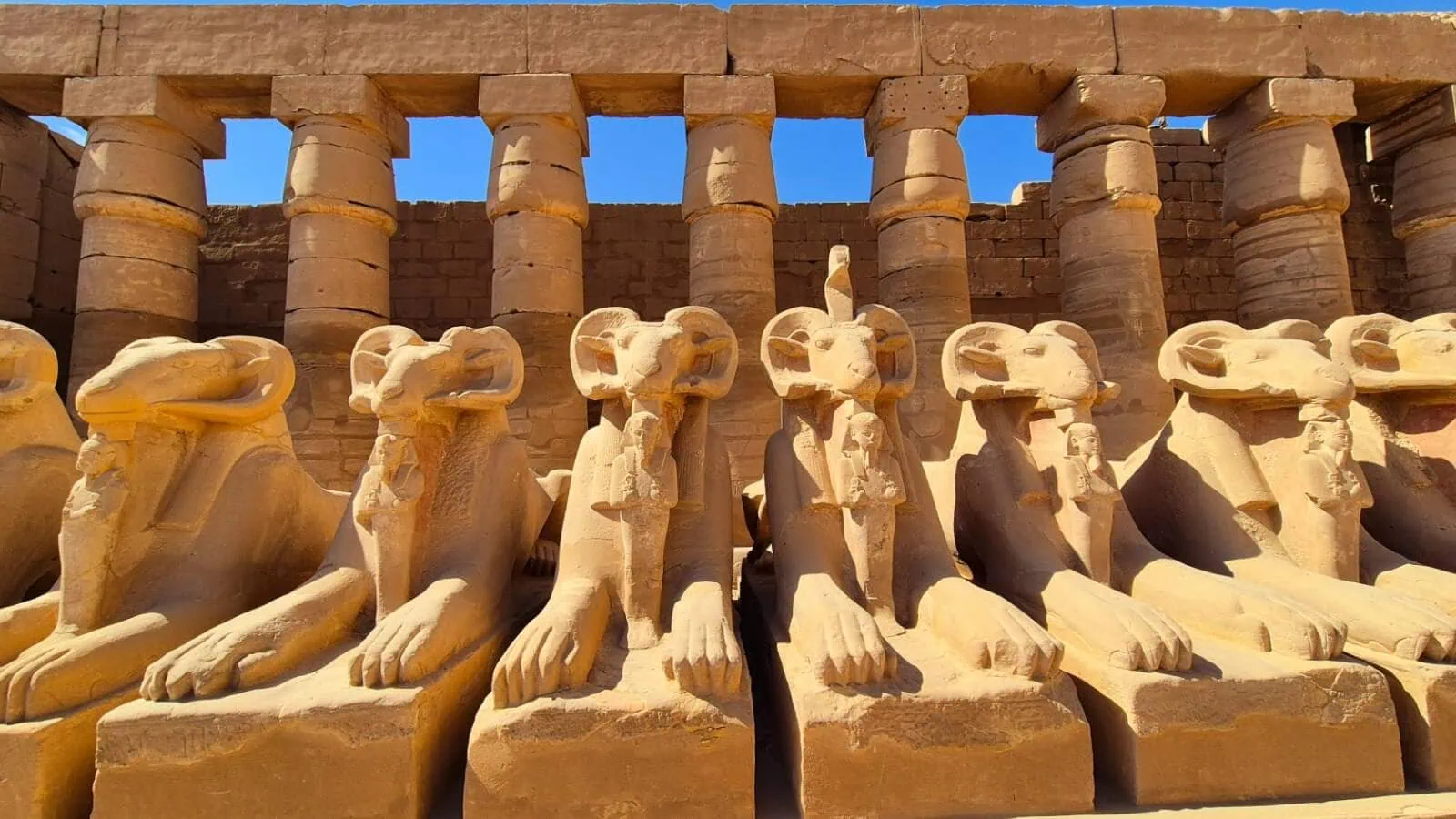
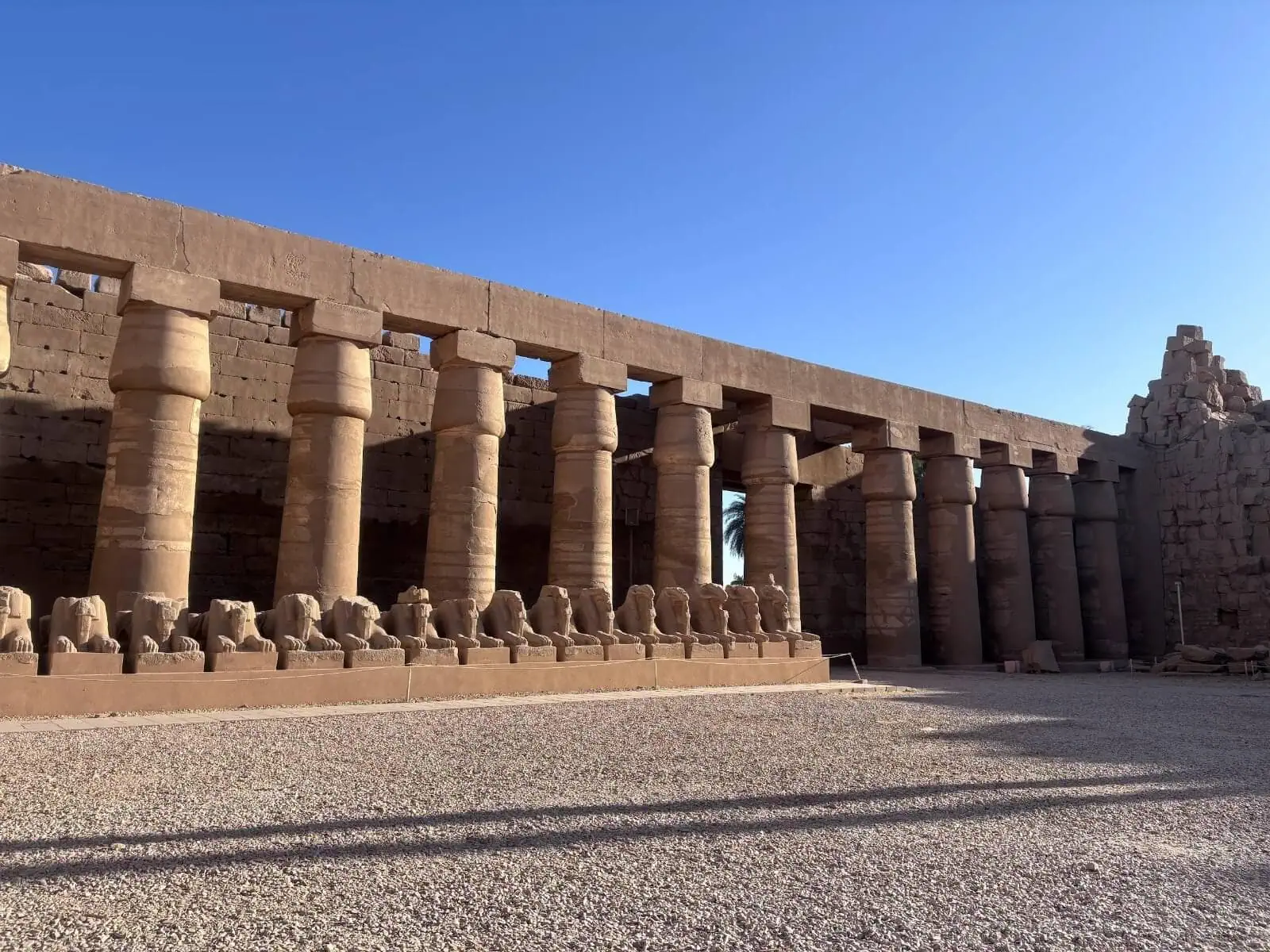
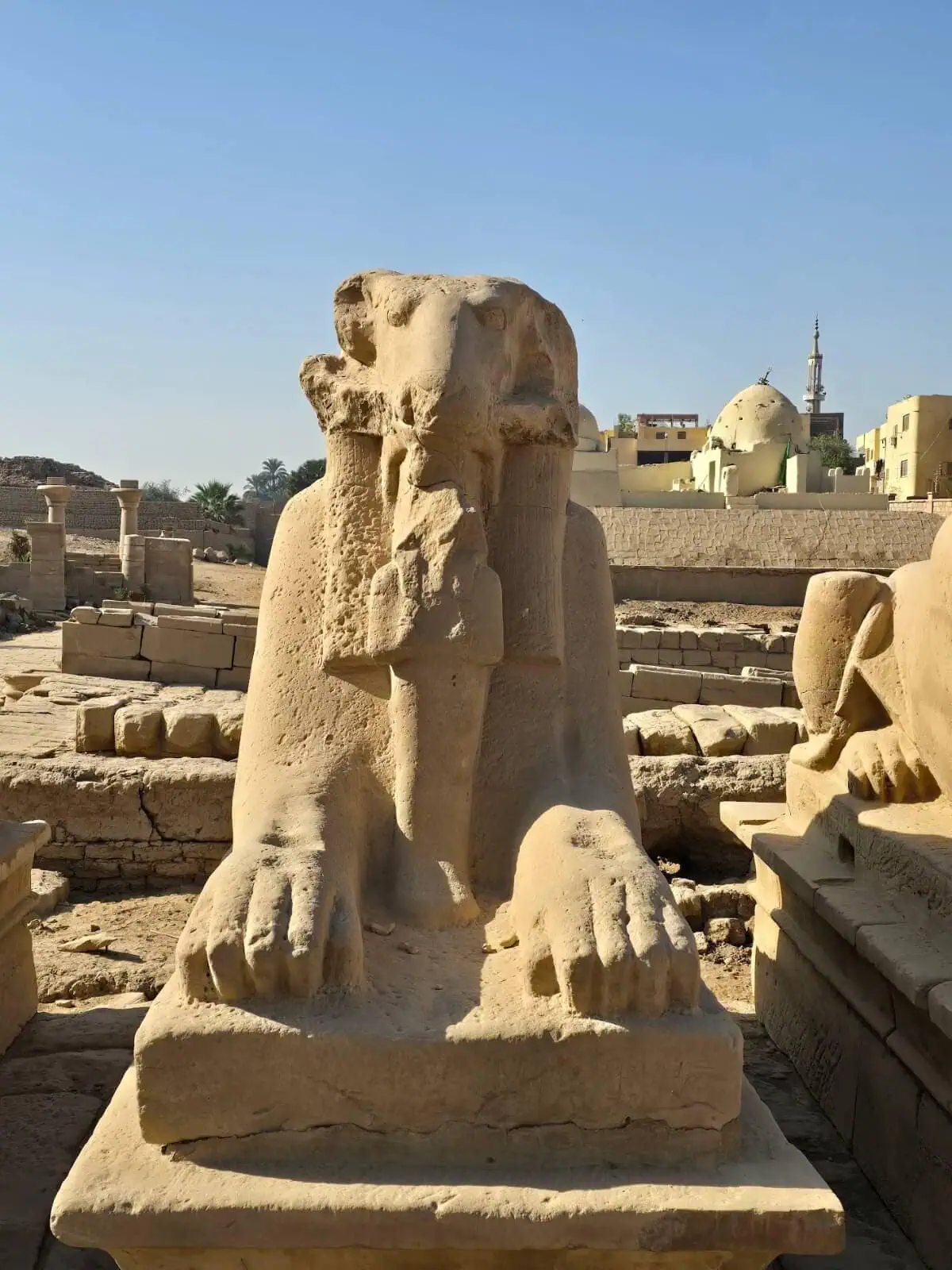
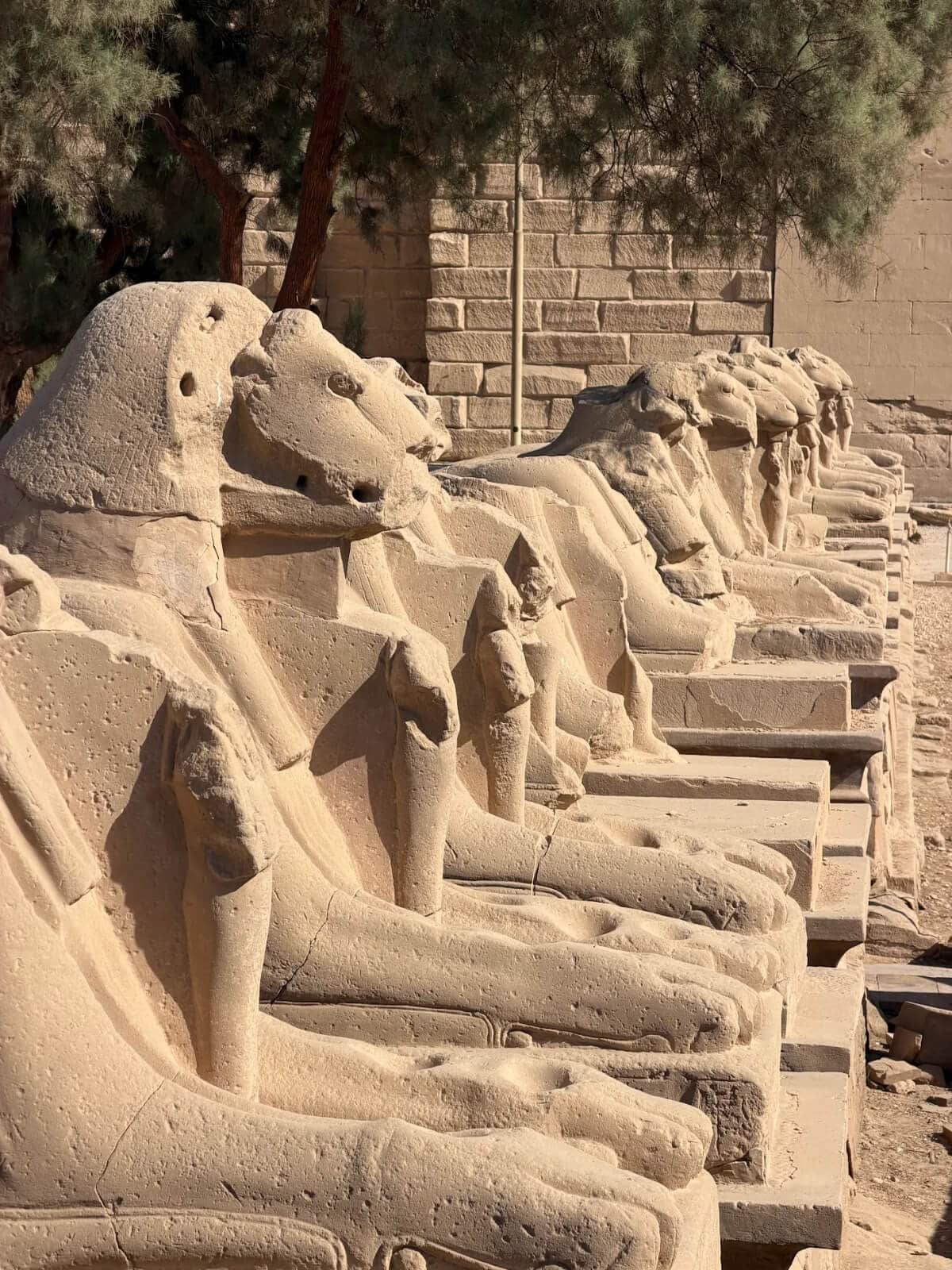
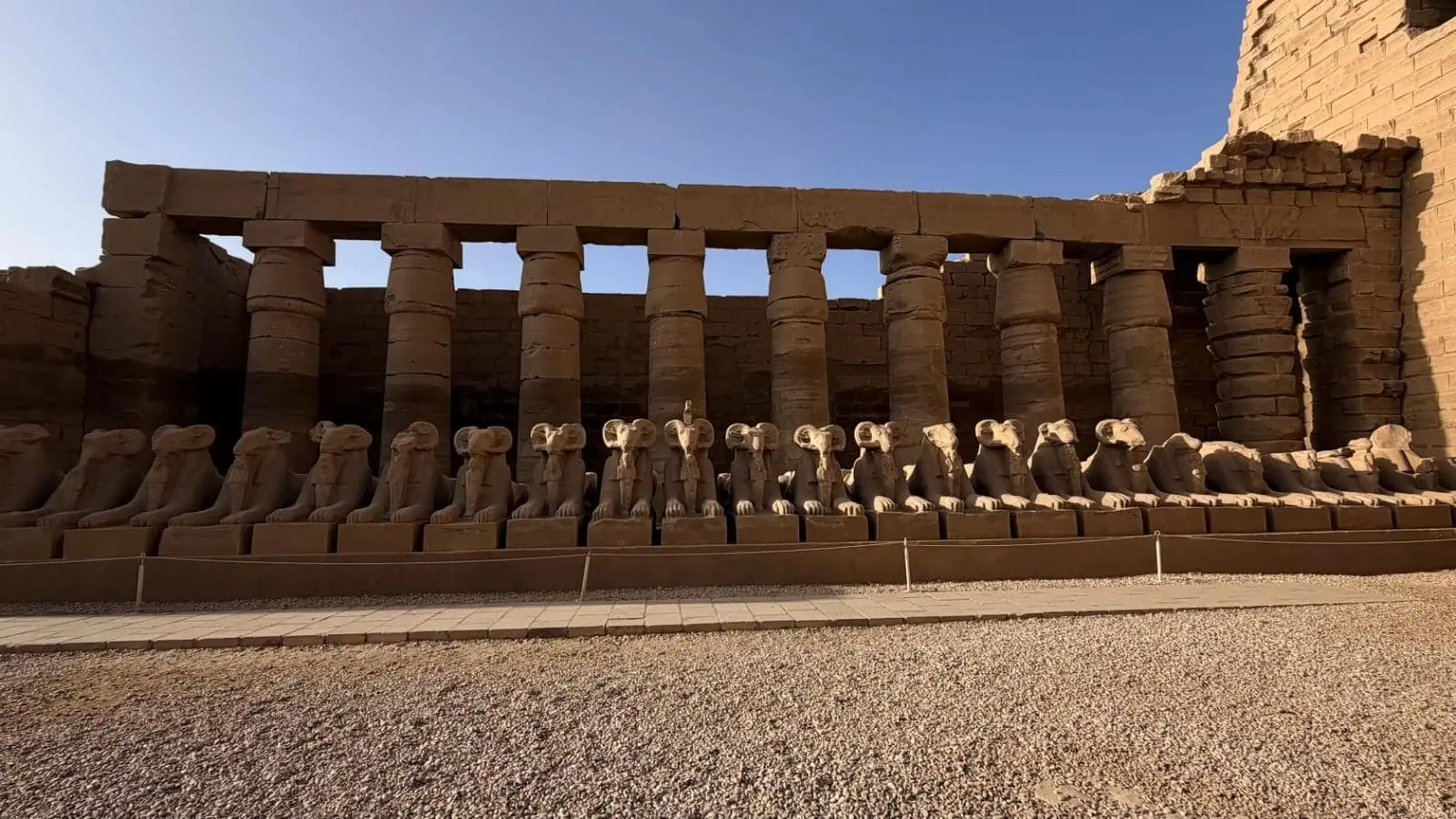
A ceremonial road lined with ram-headed sphinxes once connected Karnak to Luxor Temple. Stretching nearly three kilometres, it was used in major religious processions like the Opet Festival and remains one of the site’s most iconic features.
04
A Living Record of History
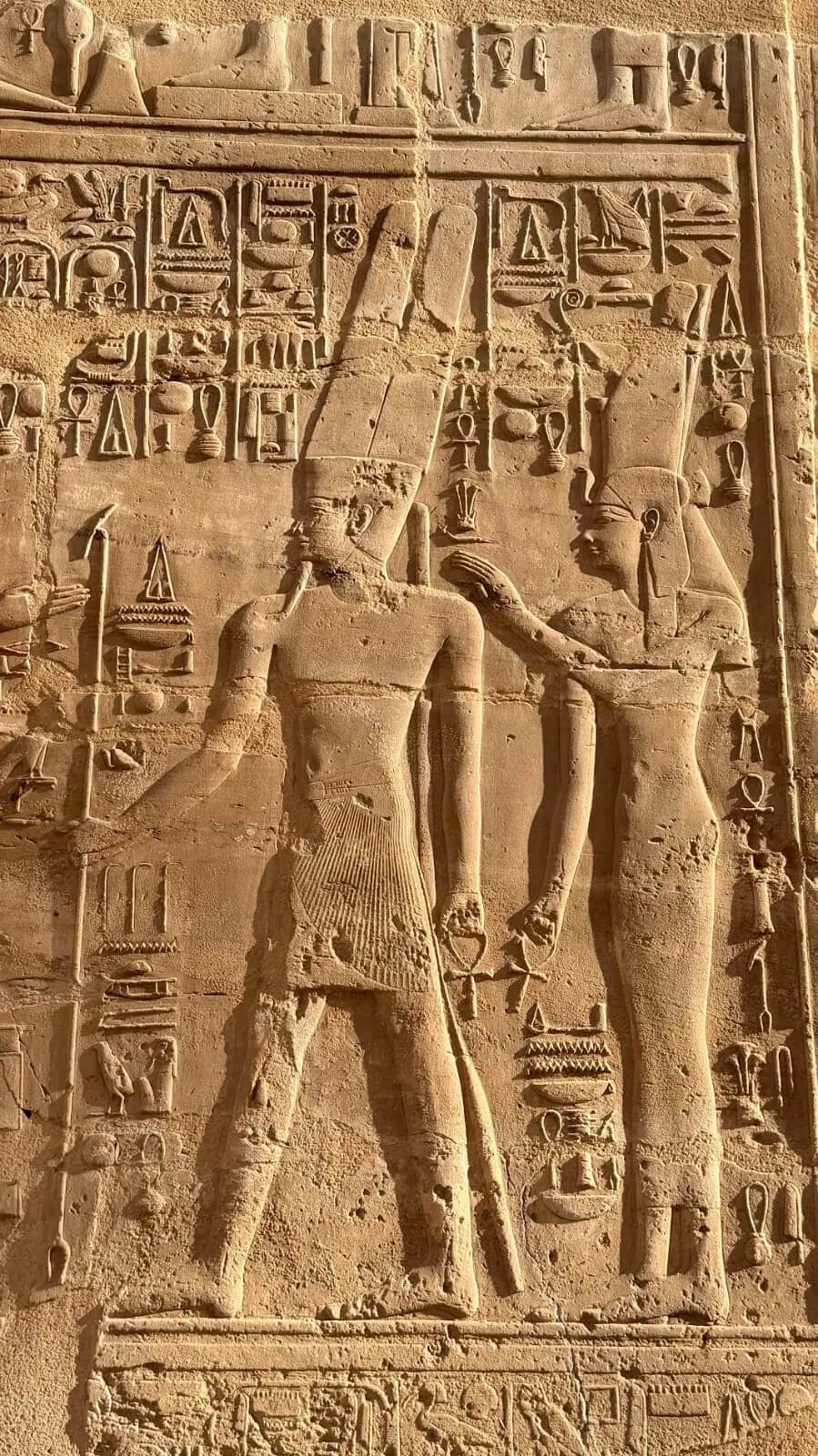
Karnak preserves over 2,000 years of inscriptions, from military victories to religious rituals. Built and expanded by many dynasties, it serves as a monumental stone archive of ancient Egyptian civilization.


What to See & Experience
Explore the Karnak Temple Experience
A visit to the Karnak complex is never a single experience. Here is what to explore across this extraordinary site:
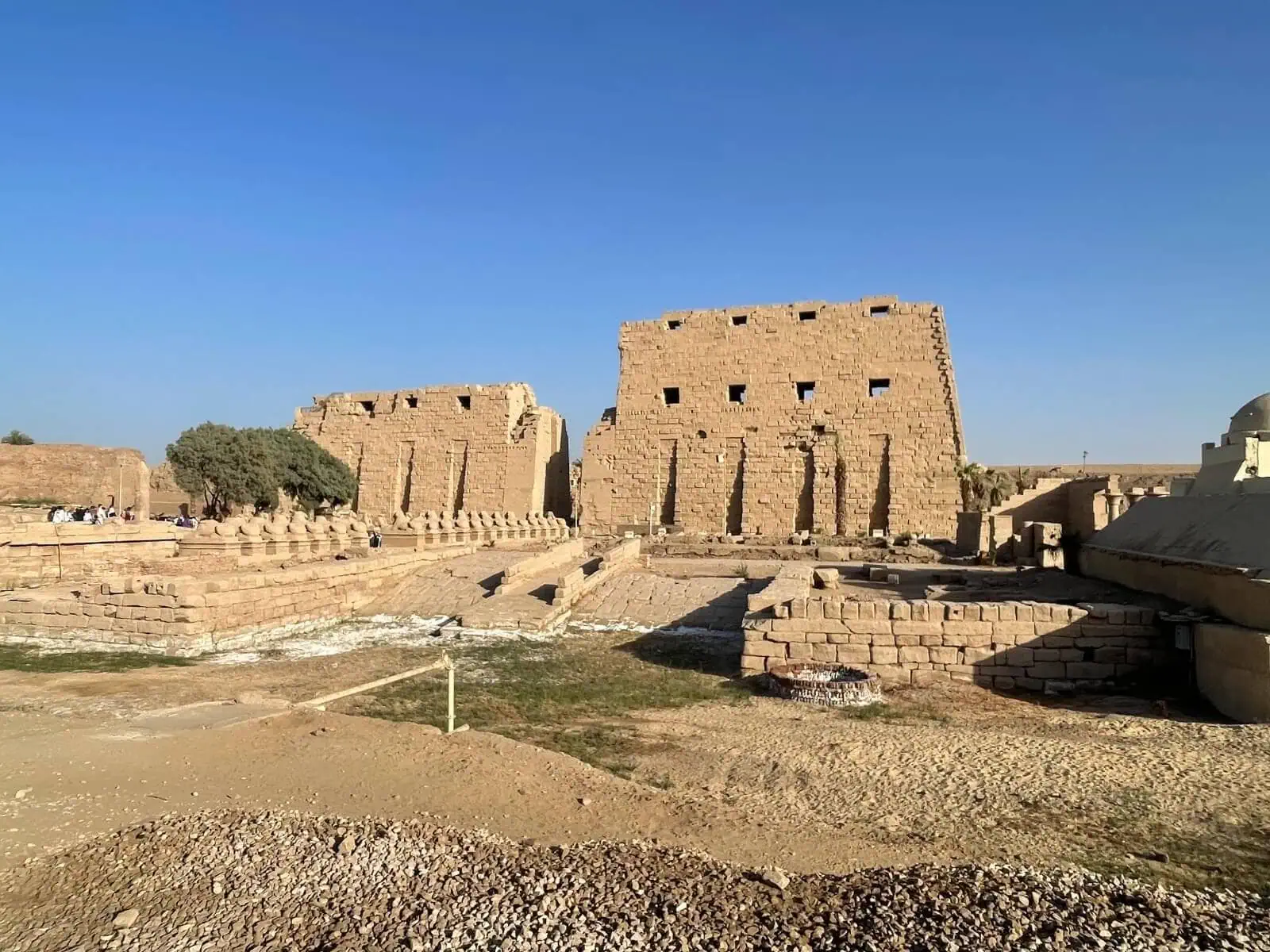
The First Pylon & Grand Entrance The monumental first pylon — standing at roughly 30 metres tall and over 100 metres wide — marks the threshold between the mortal and divine worlds. Unfinished at the time of its abandonment, its raw stone surfaces offer a rare glimpse into ancient Egyptian construction methods. Pass through and feel the scale shift entirely around you.
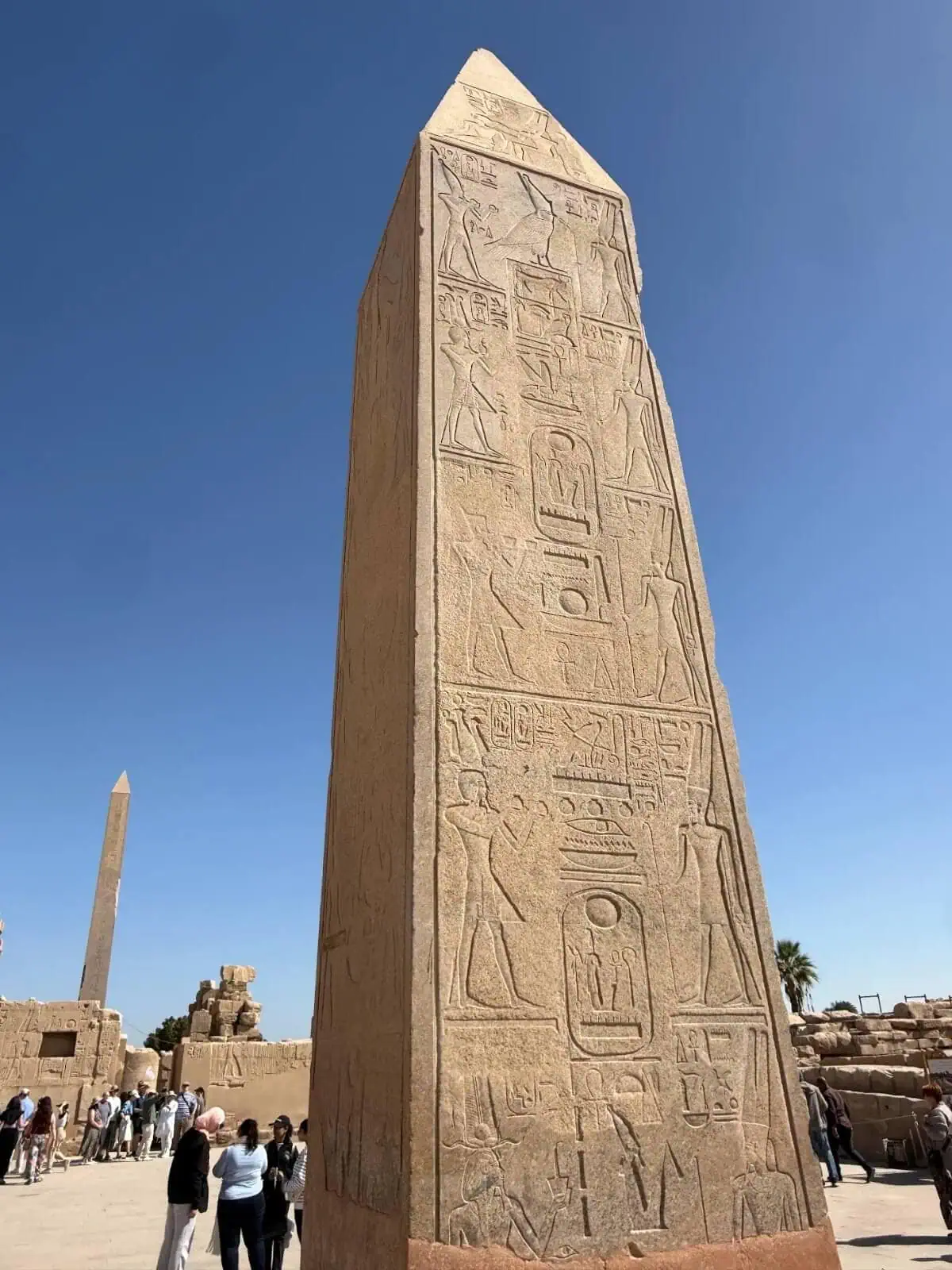
The Obelisks of Hatshepsut & Thutmose I Two of ancient Egypt’s most remarkable obelisks rise within the Karnak complex. The standing obelisk of Queen Hatshepsut reaches approximately 29 metres — one of the tallest surviving ancient obelisks in the world. Carved from a single piece of pink Aswan granite and once capped in electrum (a gold-silver alloy), it was designed to catch and reflect the first light of the rising sun.
The Sacred Lake The Sacred Lake is one of the most atmospheric corners of the entire complex. Measuring approximately 120 by 77 metres and lined with ancient stone steps, it was used by the temple priests for ritual purification before entering the sanctuary. Today it remains filled with water, a serene and reflective counterpoint to the grandeur of the surrounding stone.
The White Chapel of Senusret I Tucked within the open-air museum at Karnak, the White Chapel is one of the oldest and most beautifully preserved structures in Egypt. Built in the Middle Kingdom around 1971 BCE, its elegant limestone pillars are covered in finely detailed reliefs of astonishing quality. It was dismantled by a later pharaoh and its blocks used as fill — only reassembled in the 20th century by archaeologists.
The Sound & Light Show As darkness falls over Karnak, the complex takes on an entirely different character. The nightly Sound and Light Show illuminates the pylons, columns, and statues with dramatic lighting while narrating the story of ancient Thebes. Shows run in multiple languages and offer an unforgettable perspective on the scale and grandeur of the site.
Why Visit
Cultural & Historical Significance
Few places on Earth carry the weight of meaning that the Karnak complex holds. It is simultaneously a religious sanctuary, a political statement, a treasury, an astronomical instrument, and a living archive of 2,000 years of Egyptian civilisation.
The Home of Amun — King of the Gods Karnak was the earthly house of Amun-Ra, the supreme deity of the Egyptian pantheon during the New Kingdom. This was not a place where ordinary Egyptians came to pray; it was a divine residence maintained by a vast priestly class. The wealth concentrated at Karnak rivalled that of the pharaoh himself, with temple estates controlling land, livestock, and labour across Egypt.
Where Pharaonic Power Was Made Visible Every pharaoh who added a pylon, hall, or obelisk at Karnak was making a political statement as much as a religious one. To build at Karnak was to align oneself with Amun and to demonstrate the divine legitimacy of royal rule. The walls of the Hypostyle Hall record military campaigns, treaty negotiations, and coronation rituals — Karnak served as both temple and state archive.
An Astronomical and Cosmological Marvel The alignment of Karnak’s central axis to the setting sun of the winter solstice was not accidental. Ancient Egyptian architects designed the complex to channel solar light into the sanctuary at precise moments of the sacred calendar. The temple was not only a monument to the gods — it was a cosmic instrument calibrated to the movement of the heavens.
A Cornerstone of World Heritage Inscribed as part of the Ancient Thebes UNESCO World Heritage Site in 1979, Karnak is recognised as one of humanity’s greatest cultural treasures. It attracts millions of visitors annually, and ongoing excavations continue to reveal new statues, chapels, and inscriptions — proof that Karnak’s story is still being told.
A Bridge Between Past and Present In Arabic, “Karnak” means “fortified village” — an apt description for a complex so vast it functioned as its own self-contained world. Today it remains one of the most visited monuments in Egypt, drawing travellers, scholars, and seekers of the ancient world from every corner of the globe. To walk through Karnak is to walk through the entire history of pharaonic Egypt in a single afternoon.

Explore the Wonders of Ancient Egypt
Book your visit to the Karnak Temple and explore one of the world’s most iconic ancient landmarks.
Visitor Information
Location & Access
Karnak Temple is located in the Karnak district of Luxor on the east bank of the Nile River, approximately 3 km north of Luxor Temple.
Getting There
10–15 minutes by taxi from central Luxor Easily accessible from Nile cruise itineraries Horse carriages and guided tours are also common transportation options
Ticket Pricing
| Foreign Adult Entry | EGP 600 (~$12) |
| Foreign Student Entry | EGP 300 (~$6) |
| Sound & Light Show (Adult) | ~$15 USD |
| Sound & Light Show (Child 6–12) | ~$8 USD |
| Luxor Pass (Standard) | $130 USD — covers most East & West Bank sites for 5 days |
| Luxor Pass (Premium) | $250 USD — includes all sites including special tombs |
Essential Tips
- Typically open daily from: 6:00 AM – 5:30 PM
- Wear lightweight clothing, sunscreen, sunglasses, and comfortable walking shoes.
- Bring water, especially during summer months.
- Allow at least 3–4 hours to properly explore the Karnak complex.
- Photography is allowed in most outdoor areas.
FAQs
Frequently Asked Questions About Karnak Temple
What is Karnak Temple famous for?
Karnak Temple is famous for being the largest religious complex ever built in ancient Egypt, especially its Great Hypostyle Hall with 134 massive columns.
Where is Karnak Temple located?
Karnak Temple is located in Luxor on the east bank of the Nile River in southern Egypt.
Who built Karnak Temple?
Many pharaohs contributed to Karnak over nearly 2,000 years, including Hatshepsut, Seti I, Ramses II, and Thutmose III.
Can you go inside Karnak Temple?
Yes. Visitors can walk through most sections of the Karnak complex, including major courtyards, halls, temples, and the Sacred Lake.
How long should you spend at Karnak Temple?
Most visitors spend around 3–4 hours exploring the site, though history enthusiasts may spend longer.
When is the best time to visit Karnak Temple?
The best time to visit is between October and April when temperatures are cooler and more comfortable for walking outdoors.
Plan Your Visit
Ready to Step Inside Egypt's Royal History?
Book your cruise or tour package to ensure seamless entry, expert guidance, and the most meaningful experience at the last surviving Wonder of the Ancient World.