
Luxor Temple
The Temple at a Glance
Where Pharaohs Were Reborn
Rising magnificently from the east bank of the Nile, Luxor Temple is one of the most complete and breathtaking ancient monuments in Egypt. Built around 1400 BCE in the heart of what was once the great city of Thebes, this towering sandstone complex was not merely a house of worship — it was the sacred stage where Egyptian kingship was renewed, where pharaohs were symbolically reborn as living gods. Today, visitors from every corner of the world come to walk its colonnaded halls, stand before its colossal statues, and witness its dramatic illumination after dark.
| Detail | Information |
|---|---|
| Official Name | Luxor Temple (Ipet-resyt — “The Southern Sanctuary”) |
| Location | Corniche al-Nil, Luxor City, Luxor Governorate, Egypt |
| Built | c. 1392 BCE (Amenhotep III); expanded c. 1279 BCE (Ramesses II) |
| Dedicated To | Theban Triad: Amun, Mut, and Khonsu |
| Site Hours | 6:00 AM – 7:00 PM (Daily) |
| Best Time | October – April |
| UNESCO Status | World Heritage Site since 1979 (Ancient Thebes & its Necropolis) |
Historical Timeline
- c. 1392 BCE — Amenhotep III begins construction
- c. 1279 BCE — Ramesses II expands with the Great Pylon and forecourt
- c. 323 BCE —Alexander the Great restores inner sanctuaries; a granite shrine to him is added
- 1st–4th century CE — Romans incorporate the temple into a military fortress
- 6th century CE — Coptic Christians convert portions into a church
- 13th century CE — The Mosque of Abu Haggag is built within the temple complex
- 1979 — UNESCO World Heritage Site designation
- 2021 — The Avenue of Sphinxes officially reopened after decades of excavation
Historical Background
From the New Kingdom to the Present Day
Luxor Temple was founded around 1392 BCE during Egypt’s prosperous New Kingdom period, under Pharaoh Amenhotep III — one of ancient Egypt’s most ambitious builders. Amenhotep III commissioned the core structure in honor of the Theban Triad: Amun, the king of the gods; his consort Mut; and their son Khonsu. The temple was built primarily using Nubian sandstone quarried from the region of Upper Egypt.
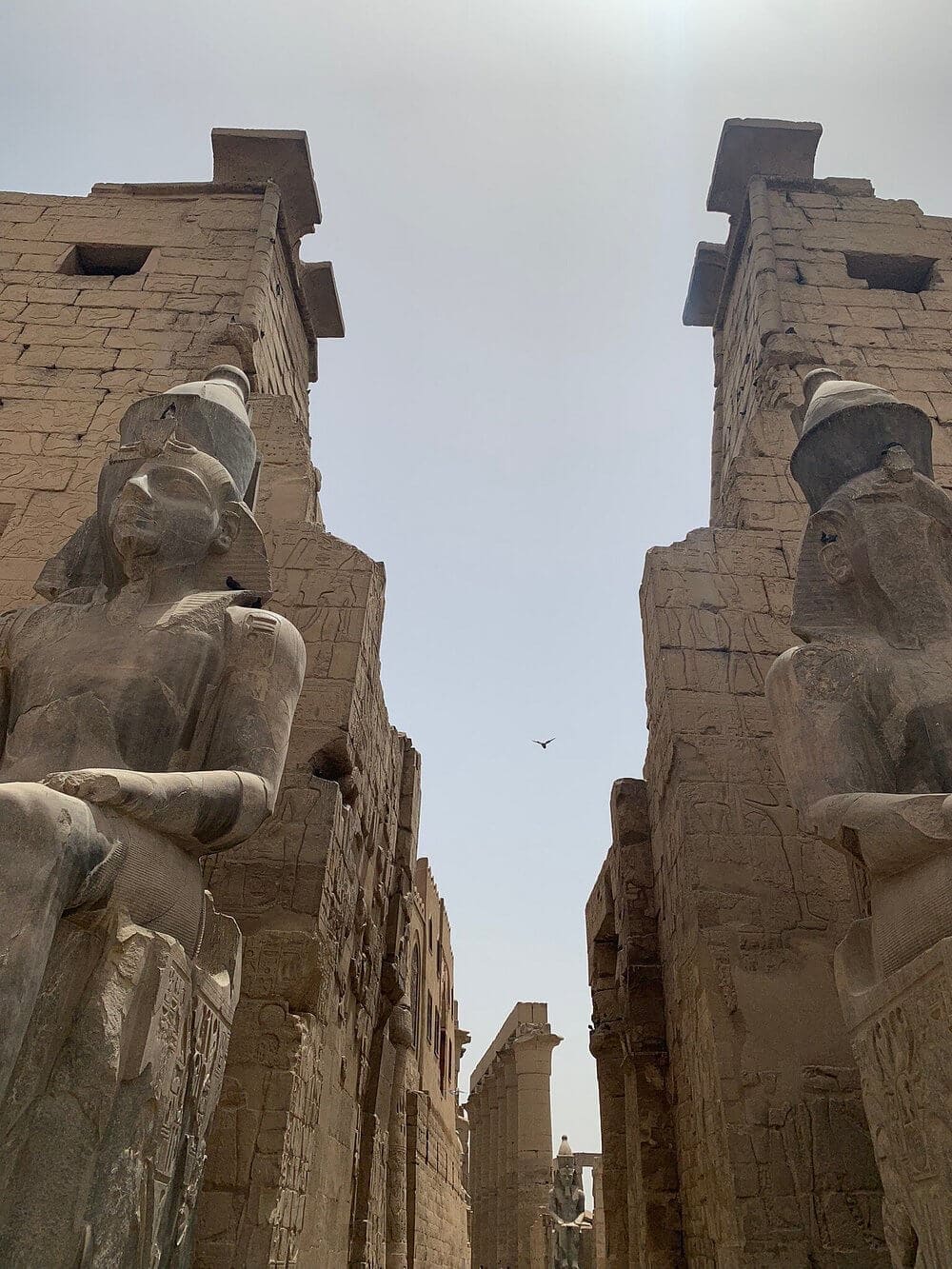
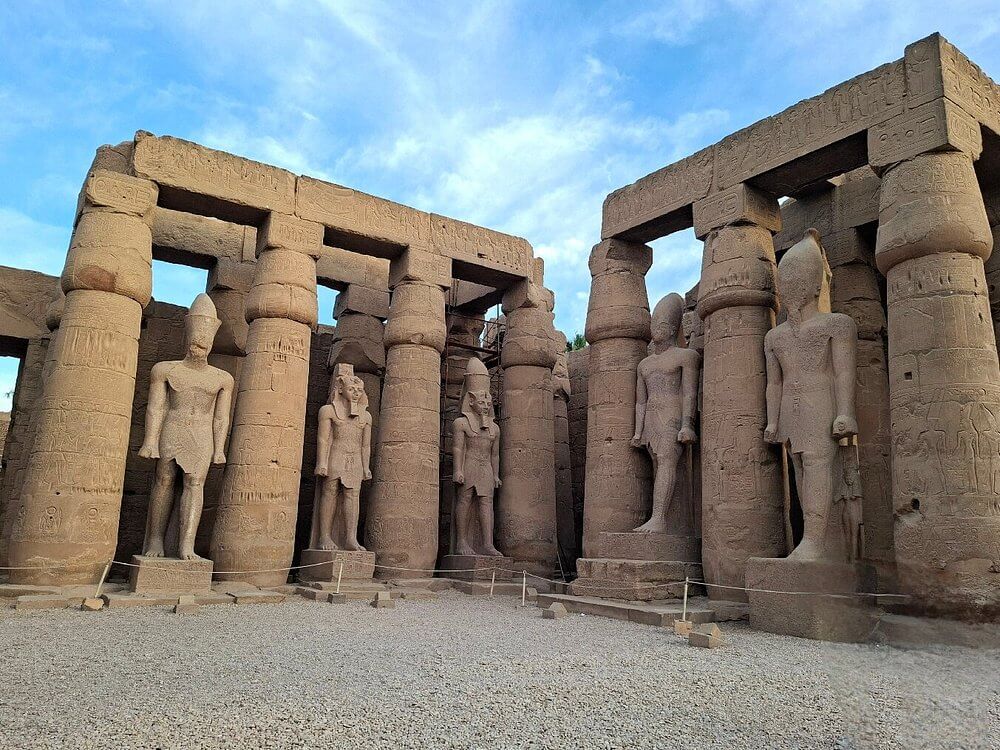
Construction continued under Tutankhamun and Horemheb, who added columns and statues. The greatest expansion came roughly a century later under Ramesses II (1279–1213 BCE), who added the monumental First Pylon, a grand forecourt, towering obelisks, and colossal statues of himself — elements that define the temple’s dramatic entrance today.
Unlike most Egyptian temples built to honor a specific deity, Luxor Temple had a unique and central function: it was the site of the annual Opet Festival, the most important religious celebration in Thebes, during which the pharaoh’s divine connection to Amun was ceremonially renewed, reinforcing his right to rule as a living god on Earth.
The temple’s story did not end with the pharaohs. Over the centuries it served as a Roman military fortress, a Coptic Christian church, and eventually incorporated an active Islamic mosque — the Mosque of Abu Haggag — within its ancient walls, a structure still in use today. In 1979, Luxor Temple was recognized as part of the UNESCO World Heritage Site of Ancient Thebes and its Necropolis.
Explore the Wonders of Ancient Egypt
Book your visit to the Luxor Temple and explore one of the world’s most iconic ancient landmarks.
What Makes It Extraordinary
What Makes Luxor Temple Extraordinary
01
The Temple of Royal Rebirth
Unlike most Egyptian temples dedicated primarily to a god, Luxor Temple was created to renew the divine power of the pharaoh. During the Opet Festival, the ruler symbolically united with Amun and emerged spiritually reborn as Egypt’s living king.
02
3,500 Years of Continuous Worship
Few monuments on Earth have remained sacred for so long. Luxor Temple served ancient Egyptian, Roman, Christian, and Islamic communities across more than three millennia. The Abu Haggag Mosque, built within the temple complex, still functions today.
03
The Legendary Avenue of Sphinxes
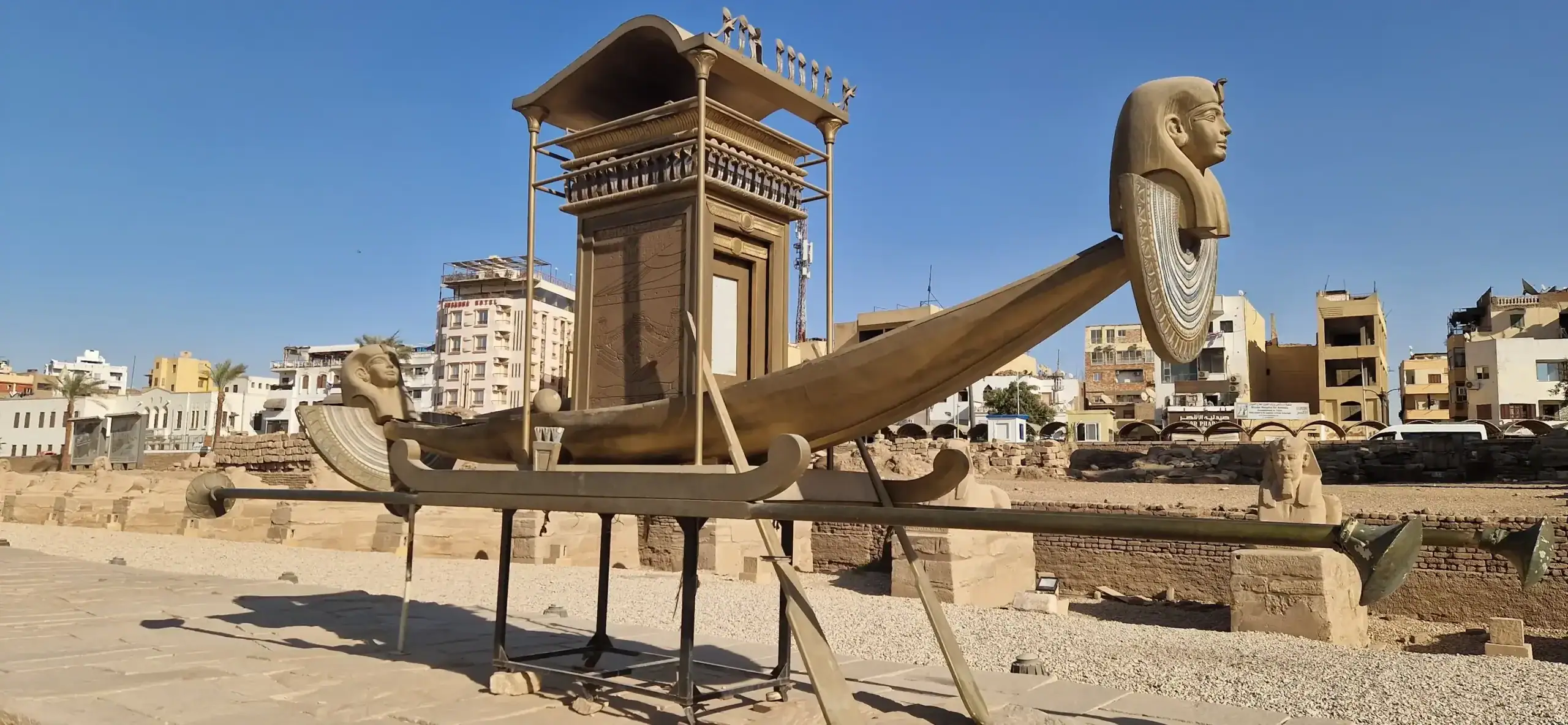
Luxor Temple connects to Karnak Temple through the famous Avenue of Sphinxes, a ceremonial road lined with hundreds of statues. Ancient priests once carried sacred boats along this route during grand religious festivals.
04
One of Egypt’s Best Night Experiences
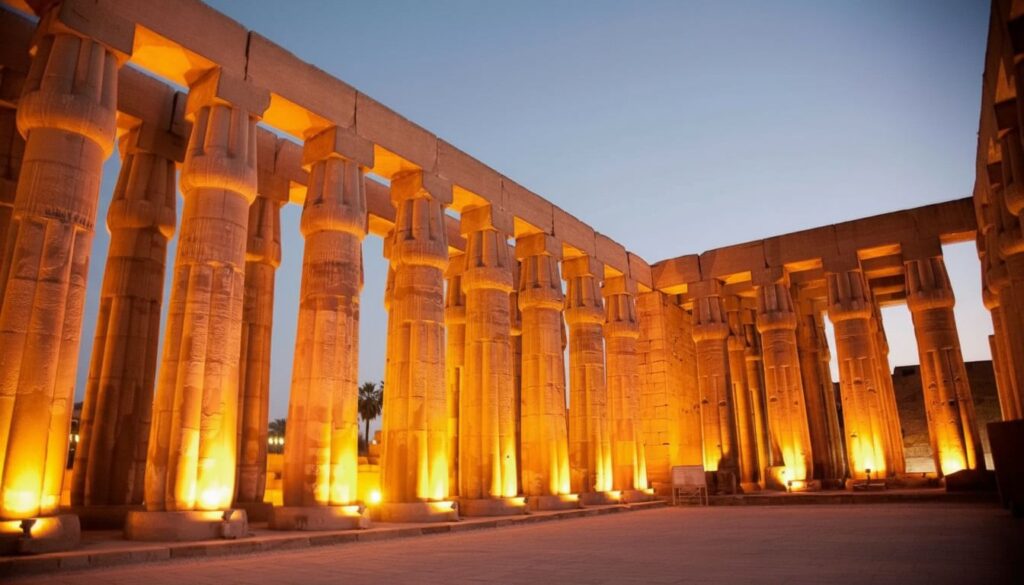
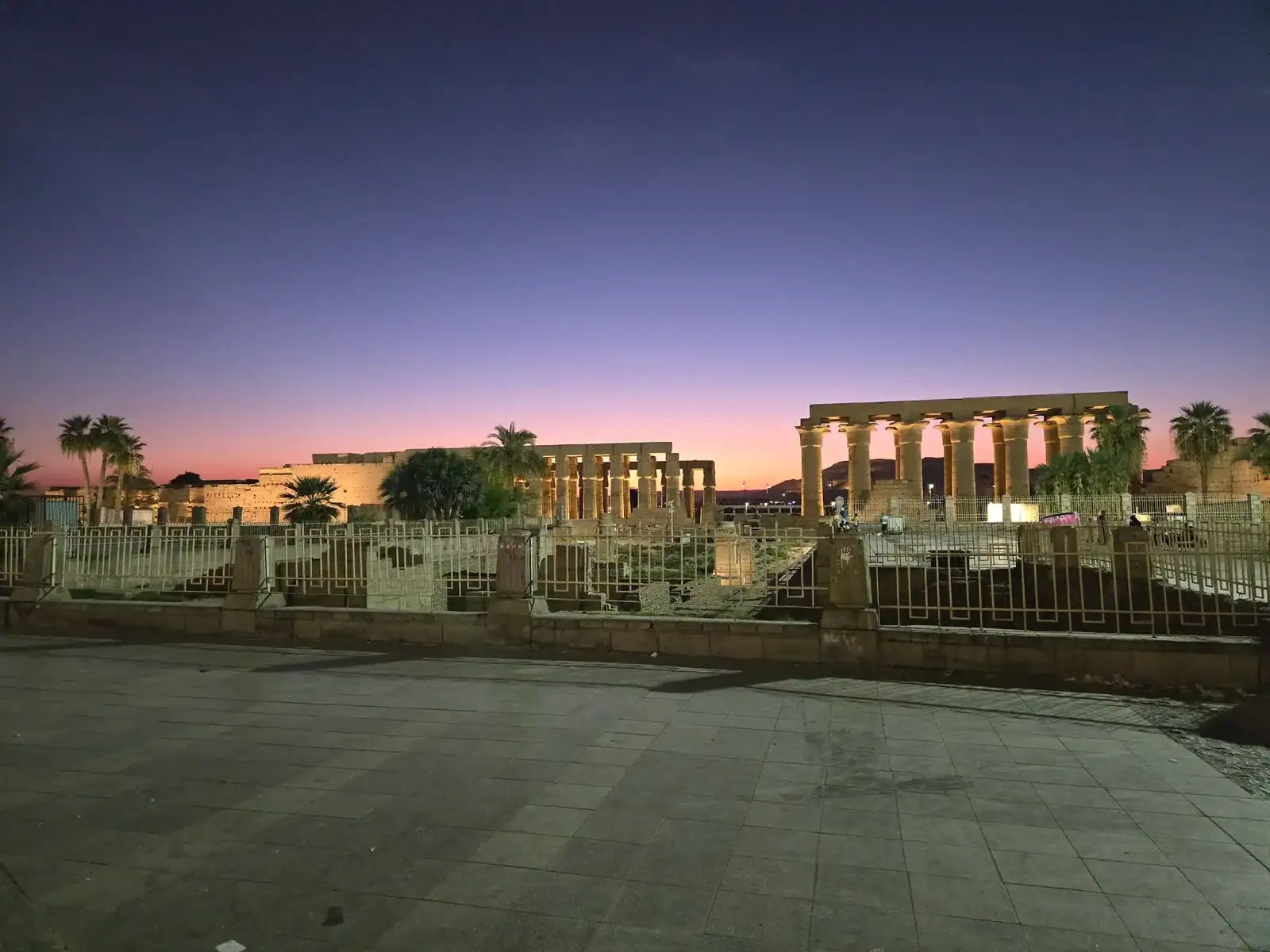
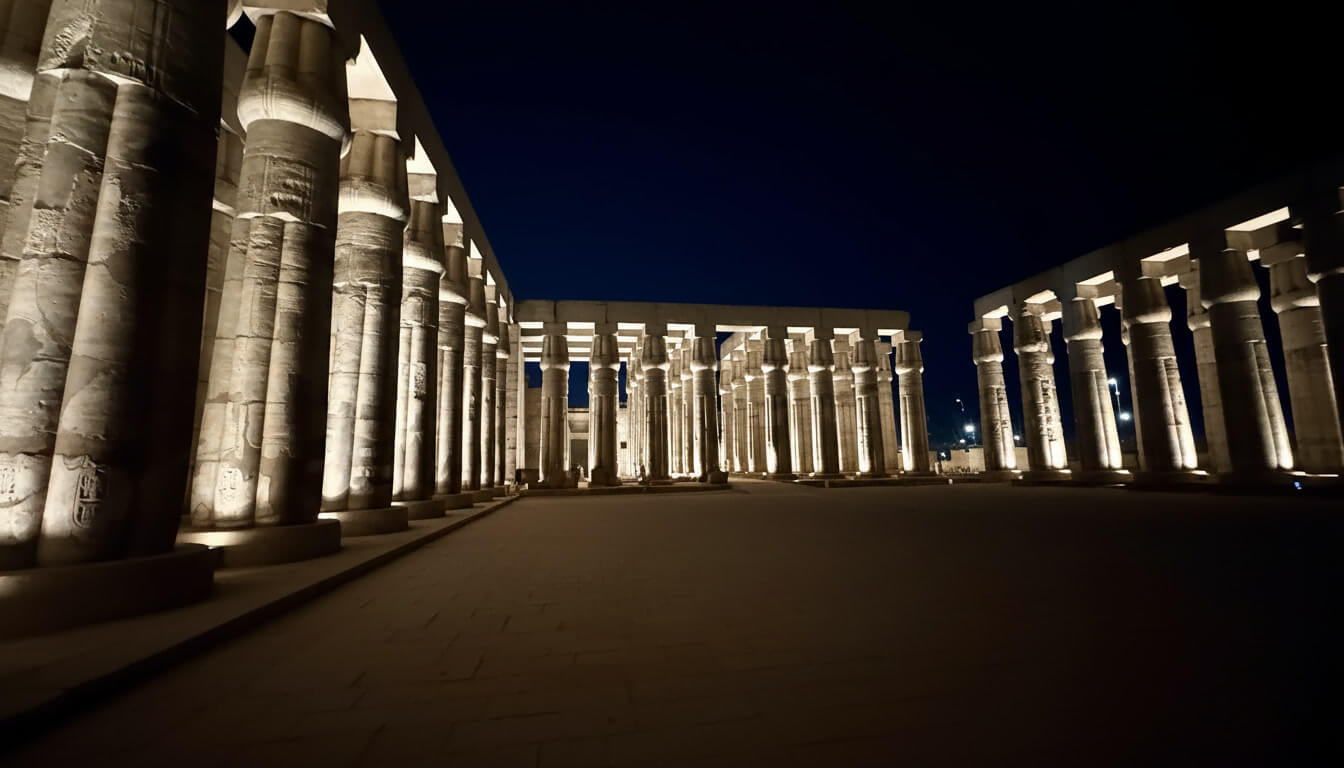
Luxor Temple at night is one of the most atmospheric sights in Egypt. Golden lighting illuminates the colossal statues, towering columns, and carved reliefs, creating a dramatic and unforgettable experience after sunset.


What to See & Experience
Explore the Great Sphinx Experience
Inside Luxor Temple— A visit to Luxor Temple unfolds across a series of grand architectural spaces, each telling a different chapter of its long story.
The First Pylon & Forecourt of Ramesses II — Enter through the massive entrance gateway built by Ramesses II, originally flanked by six colossal statues and two obelisks. Only one obelisk remains on site today; its twin has stood in the Place de la Concorde in Paris since 1833. The forecourt beyond is lined with 32 towering columns and decorated with vivid battle reliefs.
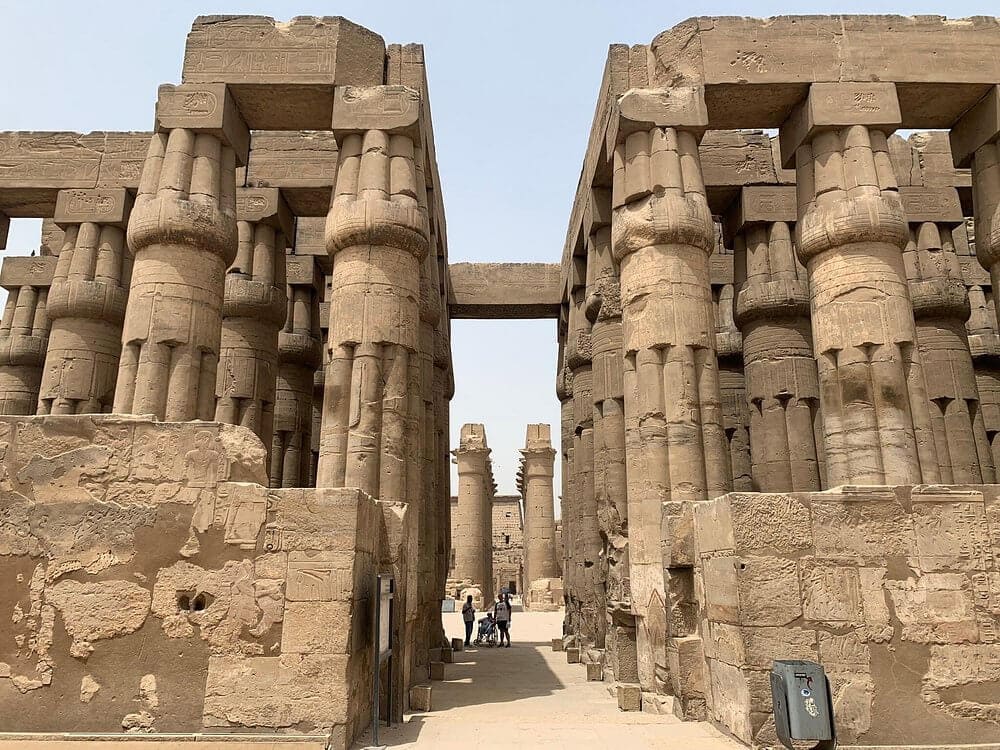
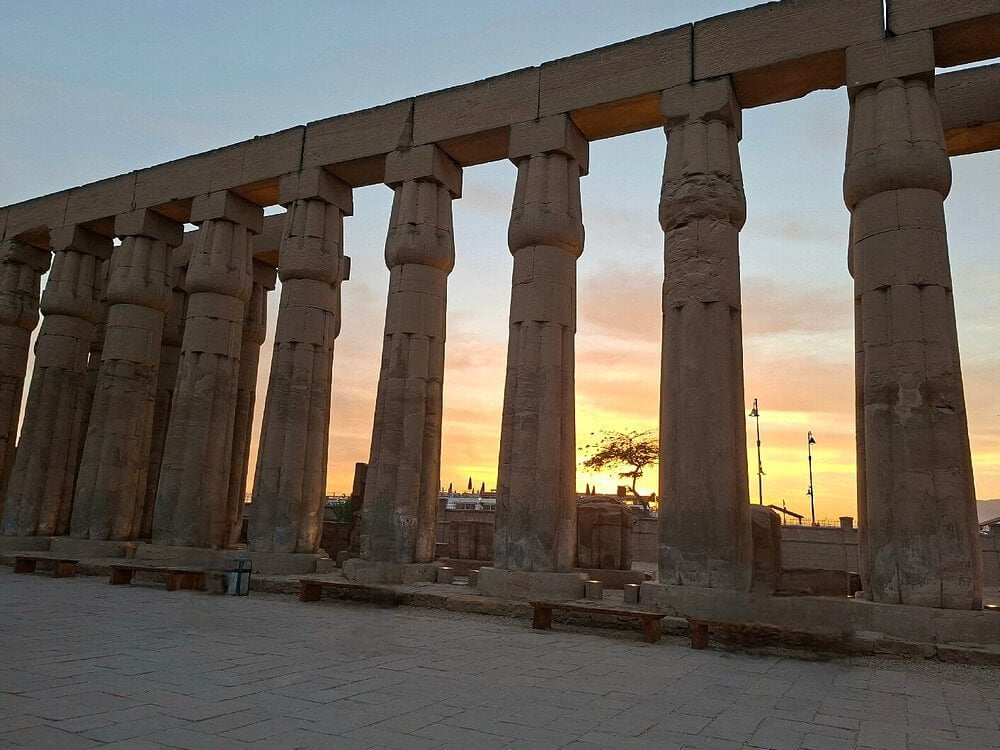
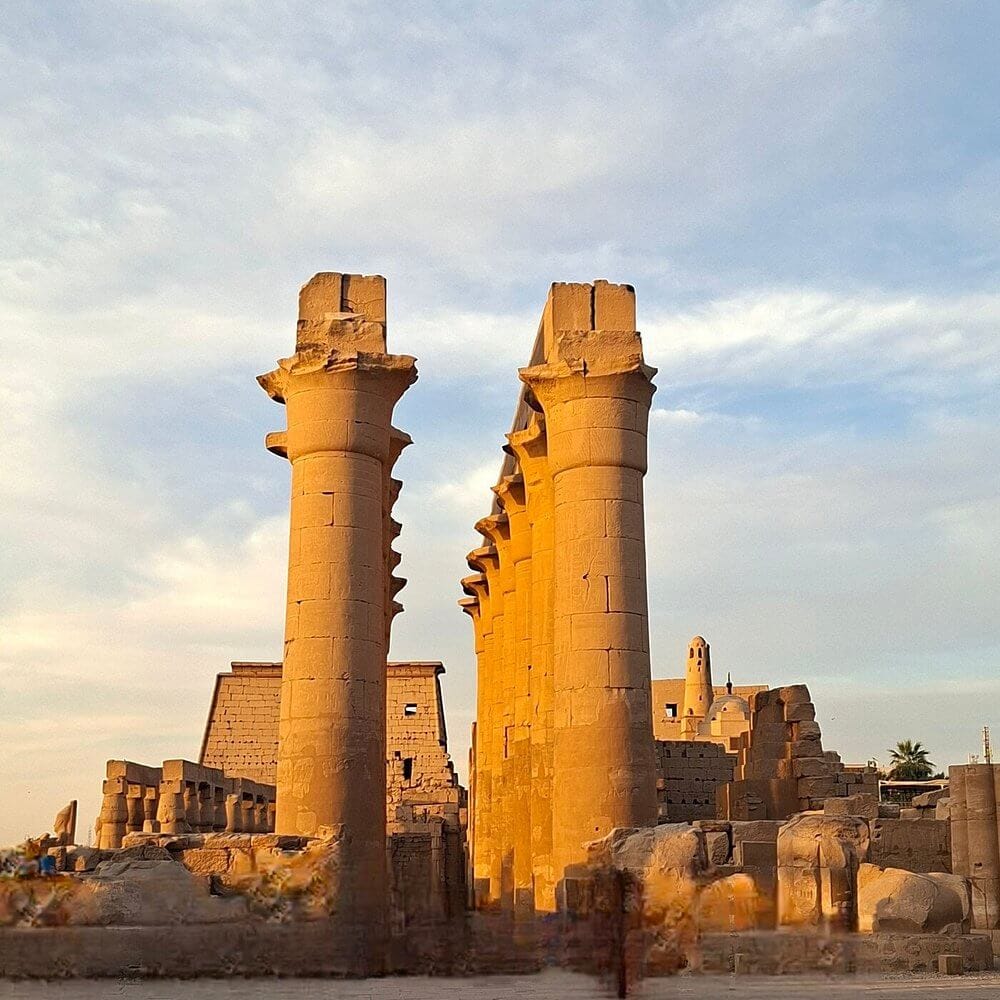
The Great Colonnade of Amenhotep III — Pass through a breathtaking corridor of 14 soaring papyrus-bud columns, each standing over 16 meters tall. The walls are carved with scenes from the Opet Festival, showing the procession of gods and pharaohs along the Nile. These reliefs are among the finest examples of New Kingdom artistry in existence.
The Courtyard of Amenhotep III — A grand peristyle court enclosed by double rows of elegant open-flower papyrus columns. This was the ceremonial heart of the temple, where large gatherings took place during festivals. The preserved stonework here is remarkable.
The Birth Room (Hypostyle Hall) — Deeper within the temple, an inner chamber features bas-reliefs depicting the divine conception and birth of Amenhotep III — a theological statement presenting the pharaoh as the son of Amun himself, born of a god. This imagery was central to the theology of divine kingship.
The Inner Sanctuary & Alexander the Great’s Shrine — The innermost chambers, redesigned during the Ptolemaic era, include a granite shrine dedicated to Alexander the Great — one of the few monuments in Egypt bearing Alexander’s name and image in the style of an Egyptian pharaoh.
The Mosque of Abu Haggag — Perched visibly above the ancient courtyard walls, this active 13th-century mosque offers a living reminder of the temple’s extraordinary continuity. Its annual festival, the mawlid of Abu al-Haggag, features boat processions through the streets of Luxor that many scholars believe echo the ancient Opet Festival river processions.
The Avenue of Sphinxes — Begin or end your visit by walking a section of the fully restored 2.7-kilometer processional road connecting Luxor Temple to Karnak Temple — lined with hundreds of sphinxes and one of the most dramatic archaeological walks in Egypt.
Why Visit
Cultural & Historical Significance
A Monument That Belongs to All of History
Luxor Temple is not simply an impressive ruin. It is a monument that has remained alive — culturally, spiritually, and architecturally — through every major chapter of human civilization in the Nile Valley.
The Birthplace of Divine Kingship: The Opet Festival, centered on Luxor Temple, was among the most important expressions of Egyptian statecraft and religion. By enacting the pharaoh’s ritual union with Amun within its halls, the temple was the engine of royal legitimacy — the place where earthly authority and divine power were made one.
A Symbol of Thebes at Its Height: As the capital of Egypt during the New Kingdom’s golden age, Thebes was the most powerful city in the ancient world. Luxor Temple stood at its heart, serving as both a political and religious center for the empire that stretched from Nubia to Syria.
An Unbroken Thread Across Civilizations: The presence of a Roman fort, a Coptic church, and a working Islamic mosque — all layered within and above a pharaonic temple — makes Luxor Temple one of the most remarkable examples of historical and religious continuity anywhere on Earth. It is a monument where 3,500 years of faith overlap in a single space.
A UNESCO Treasure of Global Significance: Recognized as part of the Ancient Thebes UNESCO World Heritage Site since 1979, Luxor Temple draws millions of visitors each year and continues to be studied by archaeologists, Egyptologists, and historians who are still uncovering new discoveries within and around its precincts.
An Unforgettable Sensory Experience: Beyond its historical weight, Luxor Temple simply astonishes the senses — especially at night, when its illuminated columns rise against the dark Egyptian sky and the ancient carvings seem to breathe again in the warm light.

Explore the Wonders of Ancient Egypt
Book your visit to the Luxor Temple and explore one of the world’s most iconic ancient landmarks.
Visitor Information
Location & Access
Luxor Temple is located on the Nile Corniche in central Luxor on the East Bank of the Nile, about 670 km south of Cairo. The temple is easily reached on foot, by taxi, tuk-tuk, or horse carriage.
Getting There
Luxor International Airport is around 6 km away. Visitors can also arrive via overnight train from Cairo or scenic Nile cruises from Aswan.
Ticket Pricing
| Category | Price |
|---|---|
| Foreign Adult | EGP 500 (~$10) |
| Foreign Student | EGP 250 (~$5) |
| Egyptian Adult | EGP 40 |
| Egyptian Student | EGP 20 |
Essential Tips
- Arrive early in the morning (6:00–7:00 AM).
- VVisit at sunset or night for the best atmosphere and lighting.
- Dress modestly, especially near the Abu Haggag Mosque.
- Carry cash in Egyptian Pounds for tickets and small purchases.
- Allow 2–3 hours and combine with Karnak Temple and the Avenue of Sphinxes.
- Photography is allowed throughout most of the temple complex.
FAQs
Frequently Asked Questions About Luxor Temple
Who built Luxor Temple?
The temple was primarily built by Pharaoh Amenhotep III during the 18th Dynasty and later expanded by Ramses II.
What was Luxor Temple used for?
It served mainly as a ceremonial center for the Opet Festival and rituals connected to royal rebirth and divine kingship.
Is Luxor Temple dedicated to Amun?
Yes. The temple was associated with the Theban Triad — Amun, Mut, and Khonsu — making it an important Amun temple in ancient Egypt.
Can you visit Luxor Temple at night?
Yes. Evening visits are extremely popular because the illuminated columns and statues create a spectacular atmosphere.
How long should you spend at Luxor Temple?
Most visitors spend between 1.5 and 3 hours exploring the site.
What is the best time to visit Luxor Temple Egypt?
The best period is from October to April when temperatures are cooler and more comfortable for sightseeing.
Plan Your Visit
Ready to Step Inside Egypt's Royal History?
Book your cruise or tour package to ensure seamless entry, expert guidance, and the most meaningful experience at the last surviving Wonder of the Ancient World.