
Pyramids of Giza
The Pyramids at a Glance
The Last Surviving Wonder of the Ancient World
Rising dramatically from the edge of the Sahara Desert just outside Cairo, the Pyramids of Giza are among the most iconic landmarks in human history. Built over 4,500 years ago as eternal resting places for Egypt’s most powerful pharaohs, the pyramid complex Giza encompasses three monumental pyramids, the legendary Great Sphinx, several smaller subsidiary pyramids, funerary temples, and an ancient workers’ village. Together, they form the world’s most enduring testament to ancient ingenuity, royal ambition, and spiritual belief.
| Detail | Information |
|---|---|
| Official Name | Giza Pyramid Complex (Giza Necropolis) |
| Location | Giza Plateau, Egypt (13–15 km southwest of Cairo) |
| Built | c. 2600–2500 BCE (Fourth Dynasty, Old Kingdom) |
| Three Main Pyramids | Khufu, Khafre, Menkaure |
| Site Hours | 7:00 AM – 5:00 PM (Daily) |
| Best Time to Visit | October – April |
| UNESCO Status | World Heritage Site since 1979 |
| Annual Visitors | Over 14 million |
Historical Timeline
c. 2600 BCE — Khufu’s Great Pyramid construction begins (~20 years).
c. 2570 BCE — Khafre Pyramid and Great Sphinx built.
c. 2510 BCE — Menkaure Pyramid completed with queen pyramids.
450 BCE — Herodotus documents the pyramids.
820 CE — Al-Ma’mun opens Great Pyramid interior.
1979 — Giza Plateau becomes UNESCO World Heritage Site.
2013 — Diary of Merer papyri reveal construction details.
2015–Present — ScanPyramids detects hidden pyramid voids.
Historical Background
Historical Background & Timeline
The Pyramids of Giza were built during Egypt’s Fourth Dynasty (c. 2600–2500 BCE), a “golden age” of pyramid construction under Pharaohs Khufu, Khafre, and Menkaure, who created monumental tomb complexes on the same plateau.
Egyptian pyramid design evolved from earlier mastabas and the Step Pyramid of Djoser, with Pharaoh Sneferu refining smooth-sided pyramid construction that led directly to Giza’s final form.
The Great Pyramid of Khufu, the largest, took around 20–27 years to build with an estimated 20,000–30,000 skilled workers, not slaves, who lived in organized settlements and received care and rations.
Khafre built the second pyramid and the Great Sphinx, while Menkaure completed the smallest pyramid using granite and limestone around 2510 BCE.
Despite erosion and loss of casing stones over time, the core structures remain intact, and the site was declared a UNESCO World Heritage Site in 1979 for its outstanding universal value.

Explore the Wonders of Ancient Egypt
Book your visit to the Pyramids of Giza and explore one of the world’s most iconic ancient landmarks.
What Makes It Extraordinary
What Makes the Pyramids of Giza Extraordinary
01
Only Surviving Ancient Wonder
The Giza pyramids are the last remaining wonder of the original Seven Wonders of the Ancient World. Unlike the others lost to time, they have survived over 4,500 years of wars, earthquakes, and civilizations, making them one of history’s most irreplaceable monuments.
02
Extraordinary Scale and Precision
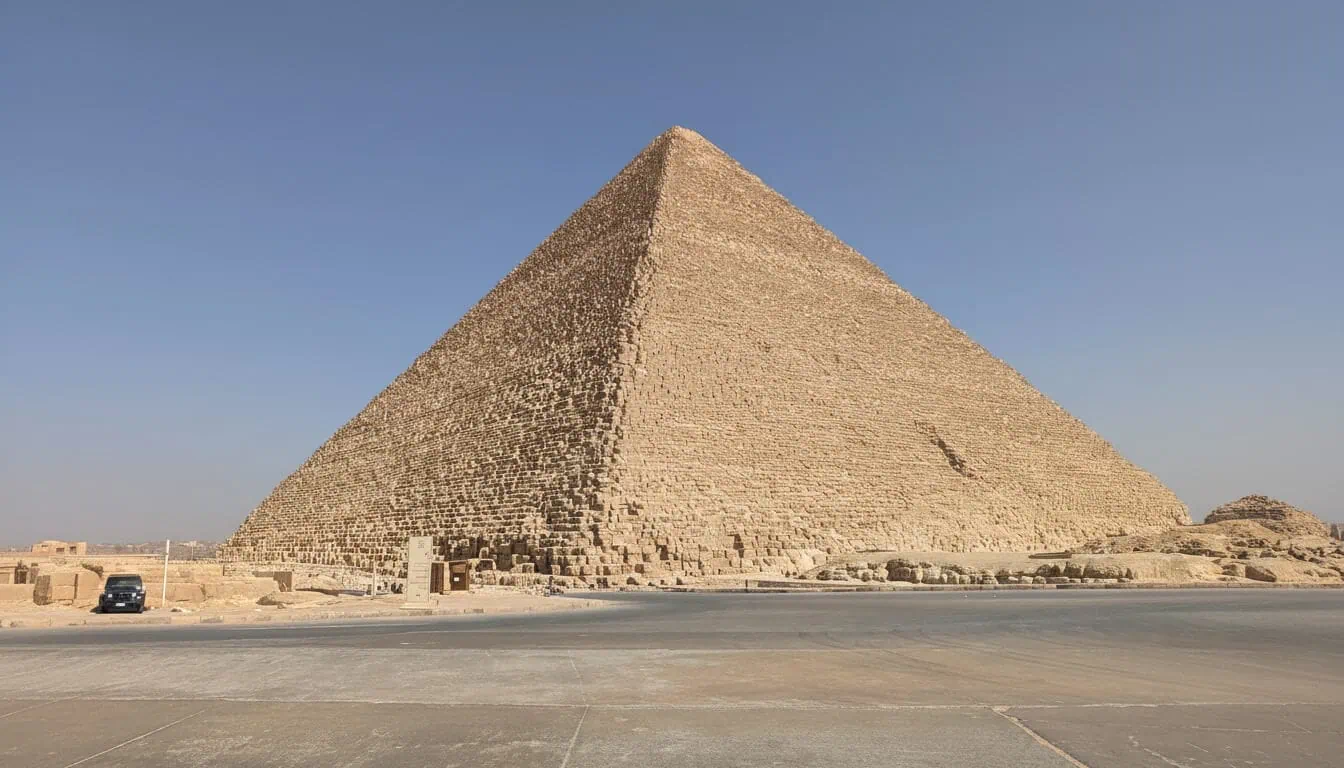
The Great Pyramid of Khufu rises to 146.5 meters and was built with about 2.3 million stone blocks. Its near-perfect alignment with the cardinal directions and precise leveling still challenge modern engineering understanding.
03
Three Royal Pyramids Together
The Giza Plateau uniquely contains three royal pyramids: Khufu, Khafre, and Menkaure. Each complex includes temples and structures, forming a complete ancient necropolis in one unified landscape.
04
Sacred Cosmic Architecture
The pyramids were designed with deep religious meaning, symbolizing the sun’s rays and the pharaoh’s journey to the afterlife. Their alignments with stars and solstice light reflect ancient Egypt’s cosmic worldview.


What to See & Experience
Explore the Pyramids of Giza Experience
A visit to the Giza pyramids reveals a vast archaeological landscape far beyond the iconic structures themselves.
Great Pyramid of Khufu — Stand at the base of the largest pyramid ever built and experience its massive scale, with opportunities to view its original limestone core and exterior from all sides.
Inside Khufu Pyramid — Enter narrow corridors leading to the Grand Gallery and King’s Chamber, where Khufu’s granite sarcophagus remains; access is limited and not suitable for claustrophobic visitors.
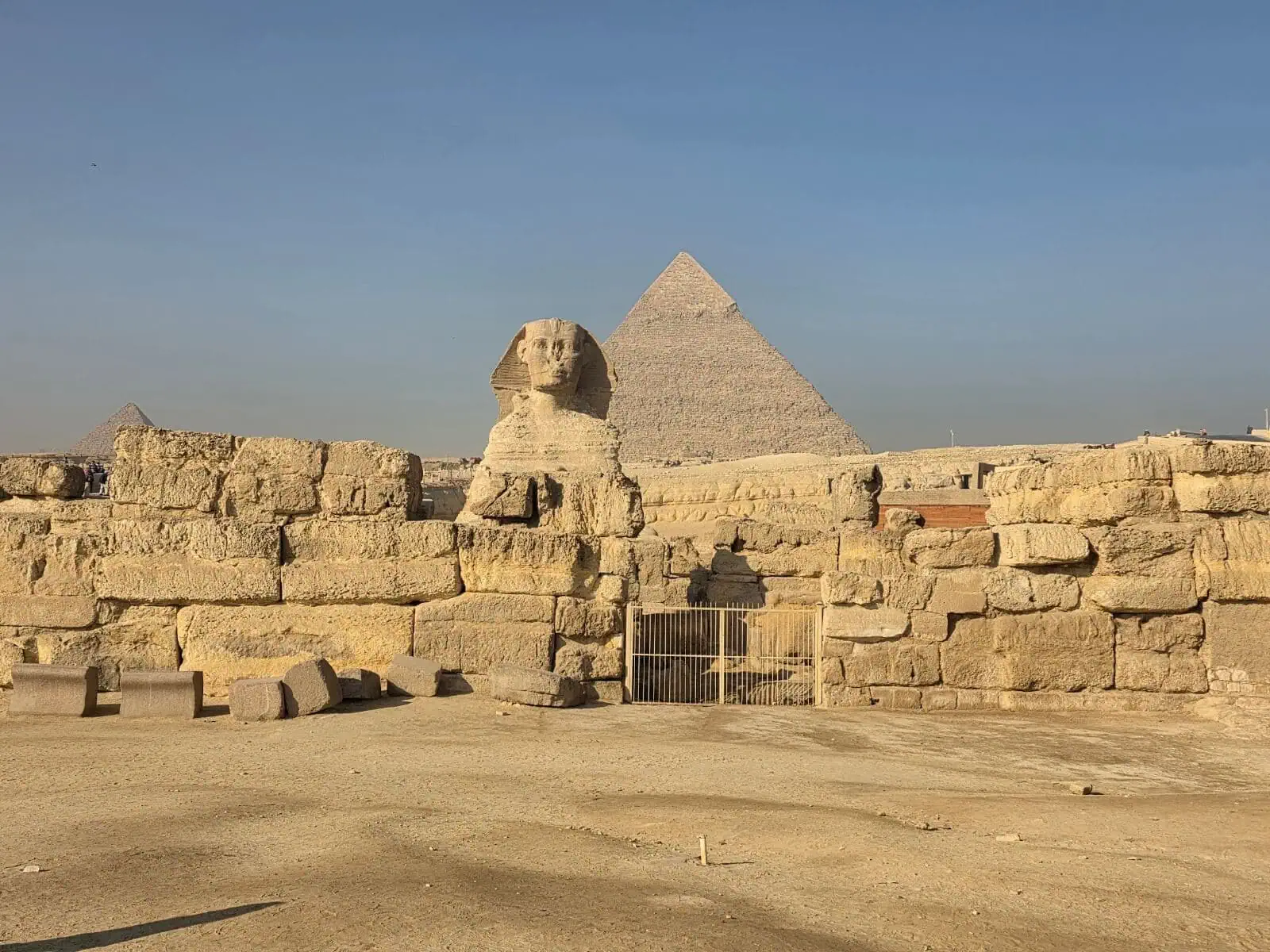
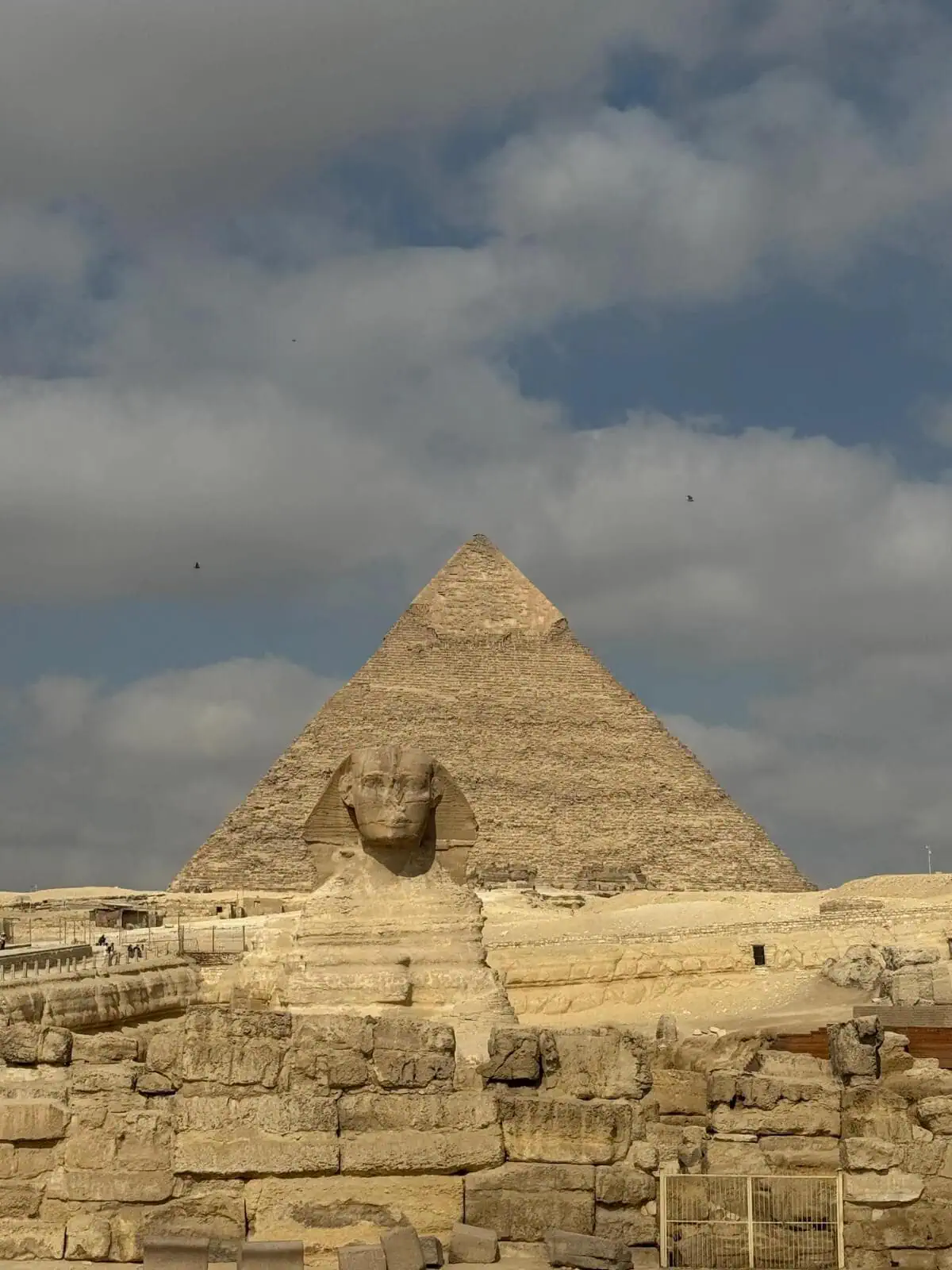
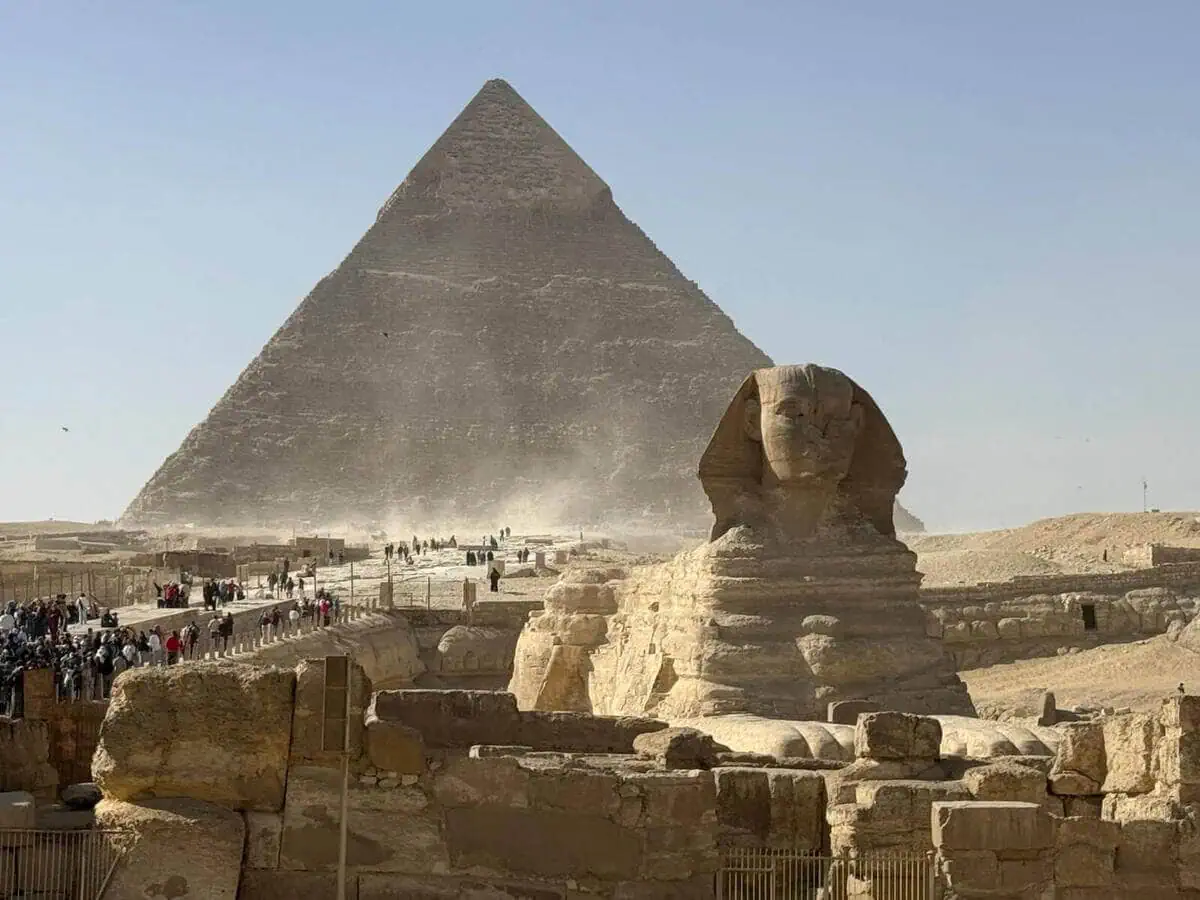
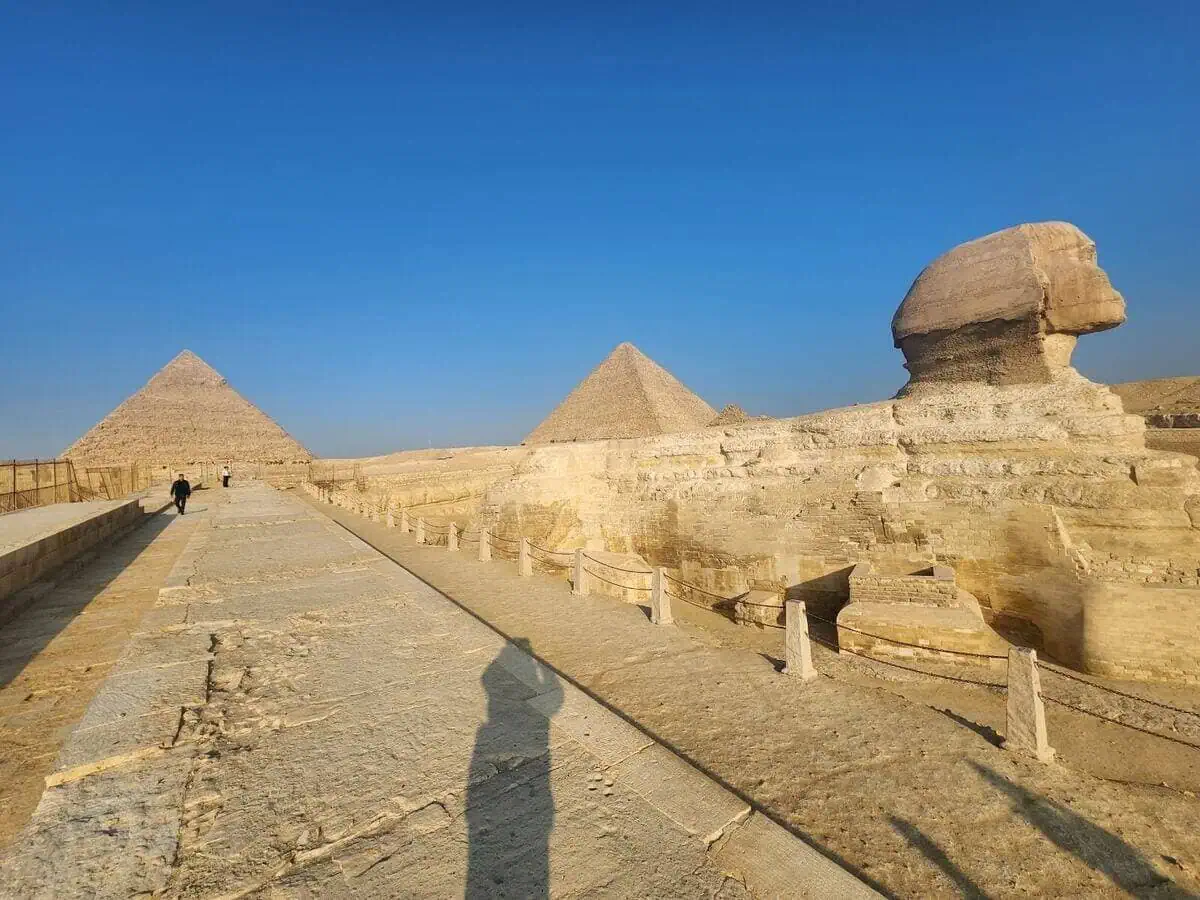
Pyramid of Khafre — The only pyramid still retaining parts of its original casing at the top, offering the closest glimpse of how the pyramids once appeared fully polished.
Great Sphinx — A colossal limestone statue (73 m long) believed to represent Khafre, guarding the necropolis and facing the rising sun for over 4,000 years.
Pyramid of Menkaure — The smallest pyramid, built with granite and limestone, featuring queen pyramids and a more accessible, intimate scale.
Khufu Ship / Grand Egyptian Museum — The reconstructed solar boat of Khufu is displayed at the nearby museum, showcasing ancient funerary beliefs and craftsmanship.
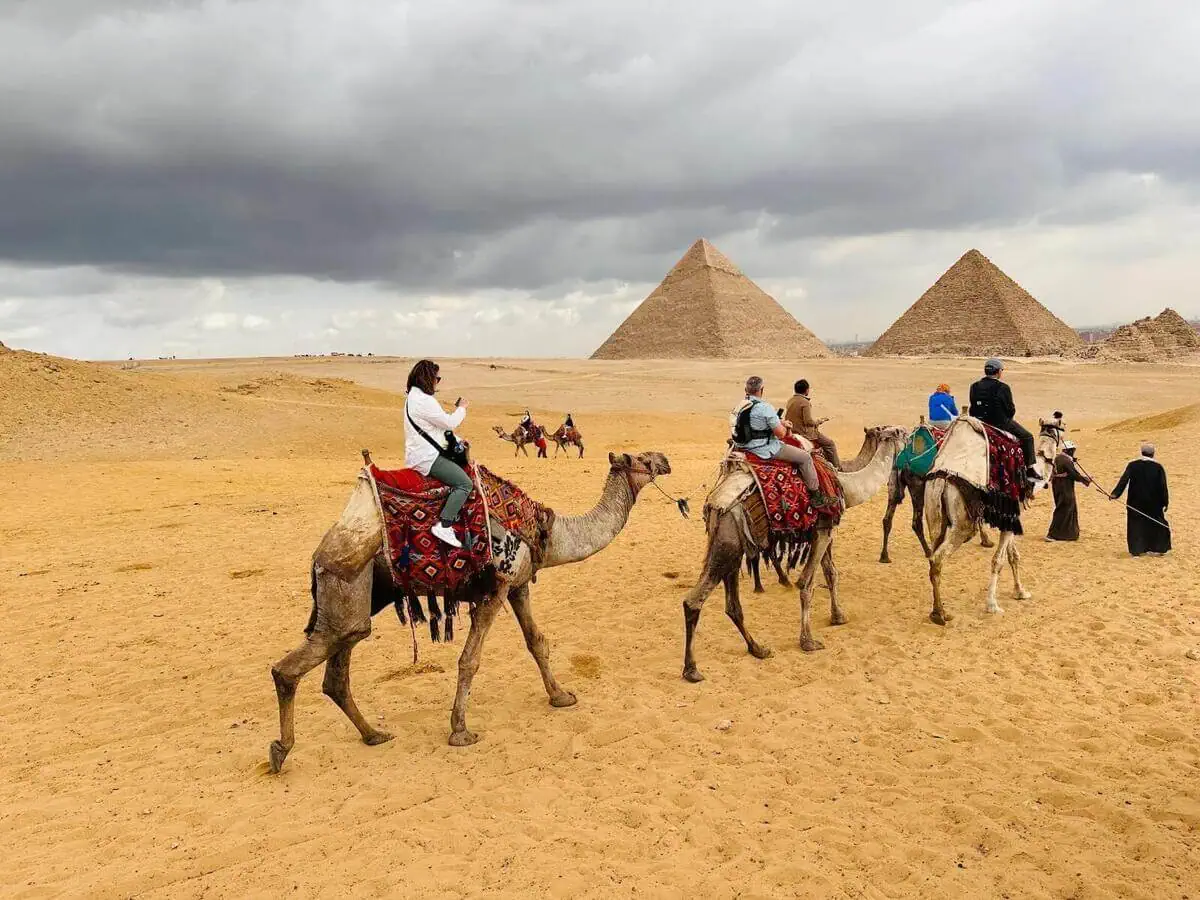
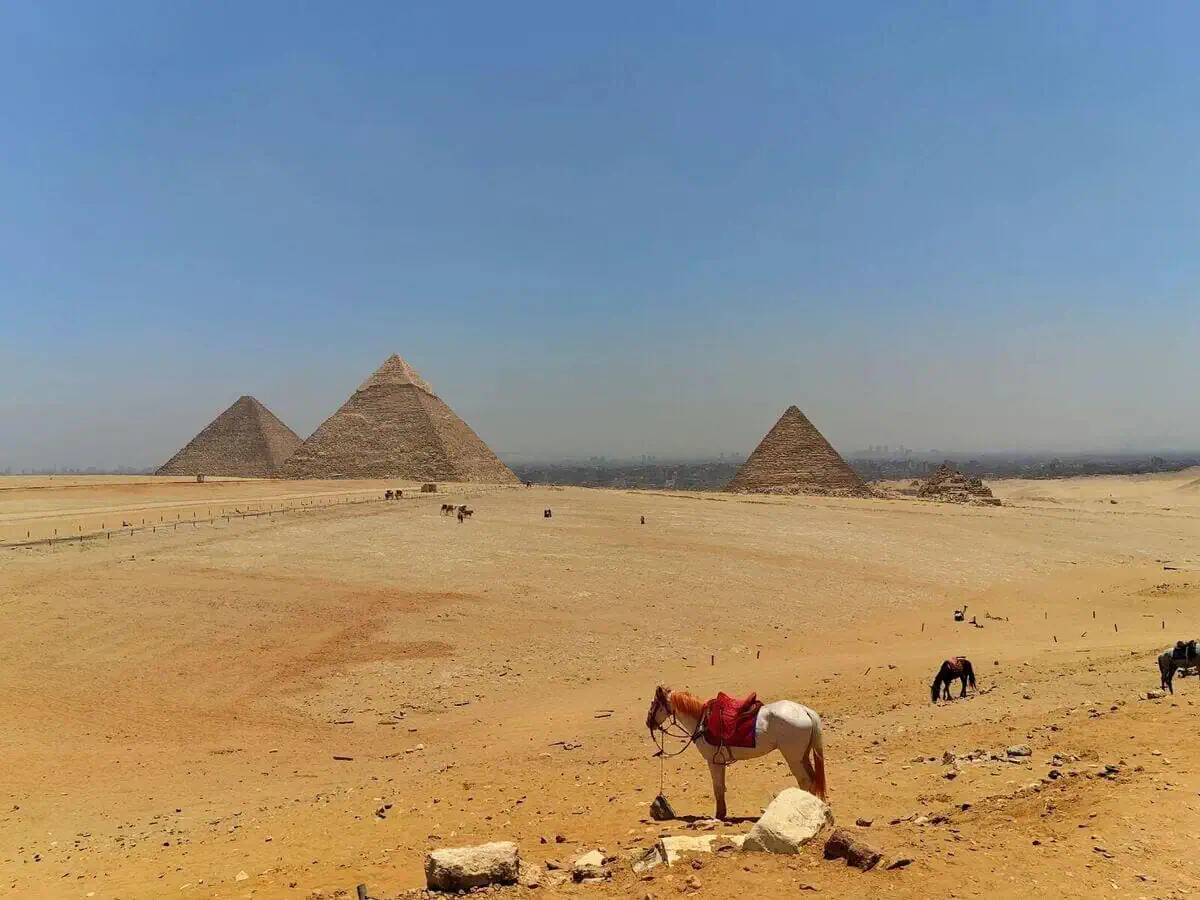
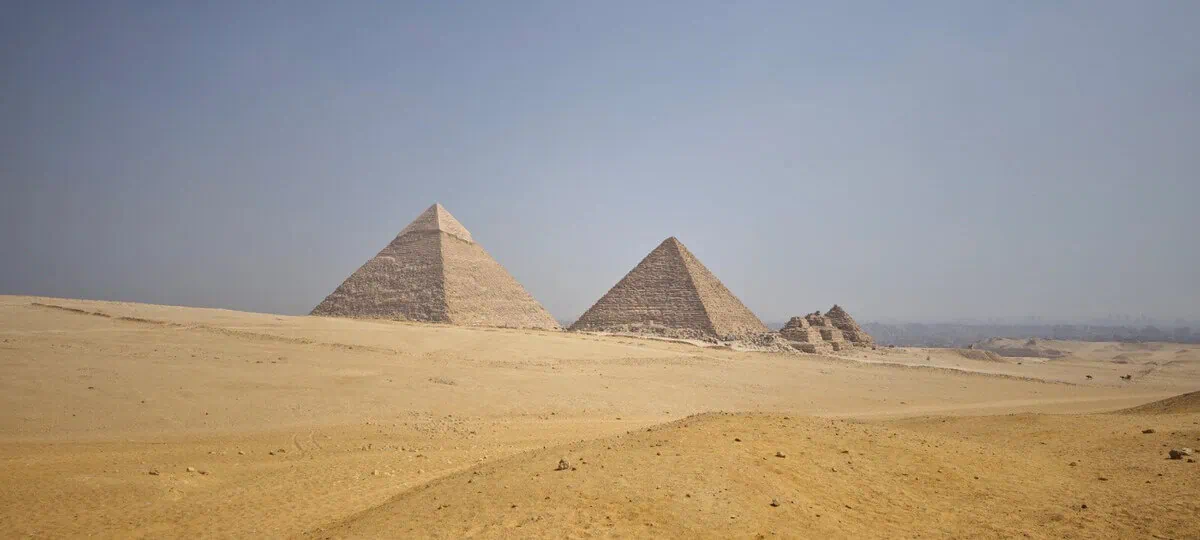
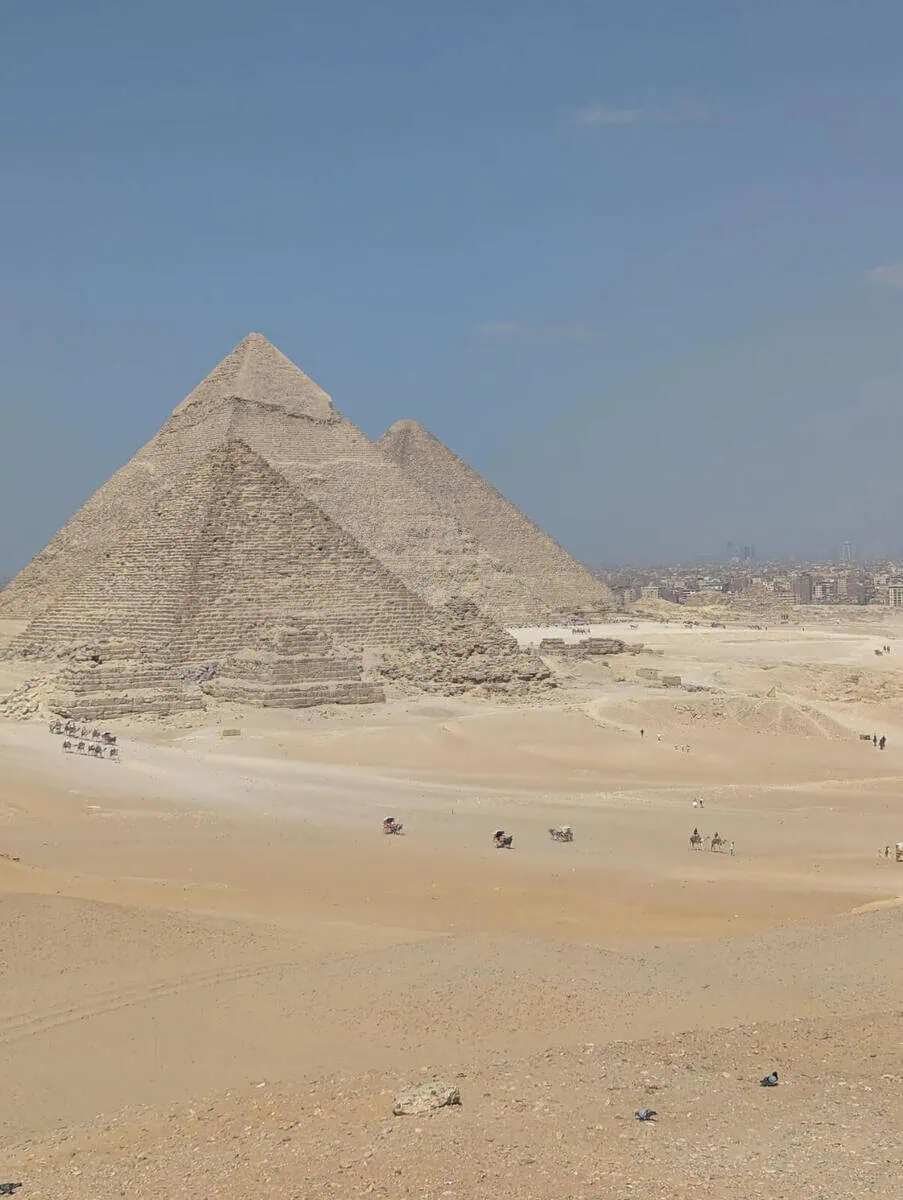
Panoramic Desert Views — The southern viewpoint offers the classic panoramic shot of all three pyramids, especially dramatic at sunrise or sunset with optional camel rides across the desert.
Why Visit
Cultural & Historical Significance
Divine Kingship Symbol — The pyramids represented pharaohs as divine rulers, linking earthly authority with the gods through sacred monumental architecture.
Civilization Engine — Their construction required advanced state organization, skilled labor, and large-scale logistics that strengthened Egypt’s political system.
Human Achievement Icon — The Great Pyramid remained the tallest structure for nearly 4,000 years, influencing global architecture, symbolism, and cultural imagination across eras and continents.
Global Inspiration Legacy — The pyramid form continues to inspire modern architecture, design, and cultural symbolism worldwide, from monuments to contemporary landmarks.
Living Archaeology — Ongoing discoveries like the Diary of Merer and modern scanning technologies continue to reveal new secrets about how the pyramids were built.
Global Heritage Legacy — Since 1979, the Giza pyramids have been a UNESCO World Heritage Site, attracting millions and standing as a universal symbol of human creativity and endurance.

Explore the Wonders of Ancient Egypt
Book your visit to the Pyramids of Giza and explore one of the world’s most iconic ancient landmarks.
Visitor Information
Location & Access
Located in Al Haram, Giza Governorate, approximately 20 km from central Cairo. A new entrance via Fayoum Desert Road improves visitor access.
Getting There
30–40 minutes from Cairo by taxi or ride-hailing apps Guided tours recommended for historical context and navigation
Ticket Pricing
| Ticket | Price (EGP) | Approx. USD |
|---|---|---|
| General Plateau Entry | EGP 700 | ~$14 |
| Inside Great Pyramid of Khufu | EGP 1,500 | ~$30 |
| Inside Pyramid of Khafre | EGP 750 | ~$15 |
| Inside Pyramid of Menkaure | EGP 750 | ~$15 |
| Great Sphinx Area | Included with plateau entry | — |
Prices are subject to change. Booking online through the official Egyptian monuments portal is recommended to avoid queues and confirm current rates.
Essential Tips
- Open Daily: approximately 7:00 AM – 4:00 PM (hours may vary seasonally)
- Visit early morning to avoid heat and crowds
- Wear comfortable closed shoes for uneven terrain
- Interior pyramid passages are steep and narrow
- Dress modestly (shoulders and knees covered recommended)
- Plan 4–5 hours for full exploration of the plateau
FAQs
Frequently Asked Questions About the Pyramids of Giza
Who built the Pyramids of Giza?
They were built during Egypt’s Fourth Dynasty for Pharaohs Khufu, Khafre, and Menkaure.
How old are the pyramids?
They are approximately 4,500 years old, dating back to around 2580 BCE.
Why are the pyramids famous?
They are the last surviving wonder of the ancient world and represent unmatched ancient engineering.
Can you go inside the pyramids?
Yes, visitors can enter the Great Pyramid and select other pyramids with a separate ticket.
What is inside the Great Pyramid?
It contains chambers such as the King’s Chamber, Queen’s Chamber, and Grand Gallery.
When is the best time to visit?
October to April offers the most comfortable weather conditions.
Plan Your Visit
Ready to Step Inside Egypt's Royal History?
Book your cruise or tour package to ensure seamless entry, expert guidance, and the most meaningful experience at the last surviving Wonder of the Ancient World.