
Tomb of Tutankhamun (KV62)
The Palace at a Glance
A Remarkable Ancient Egyptian Discovery
The Tomb of Tutankhamun, officially designated KV62, is one of the most famous archaeological discoveries in human history. Located in the legendary Valley of the Kings on the west bank of Luxor, Egypt, it served as the final resting place of the young pharaoh Tutankhamun, who ruled during the Eighteenth Dynasty (c. 1332–1323 BC).
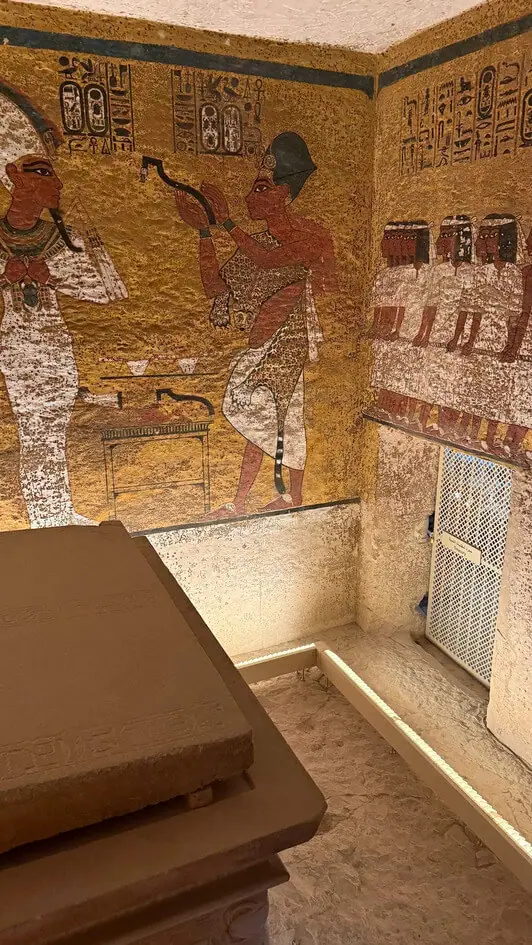
Unlike the grand and elaborately decorated royal tombs of other New Kingdom pharaohs, KV62 is relatively small, modest in design, and surprisingly incomplete in artistic decoration. Yet its global fame comes not from its architecture, but from the extraordinary preservation of its contents—thousands of funerary objects, golden treasures, and the intact mummy of the “Boy King.”
Discovered in 1922 by Howard Carter, the tomb became one of the greatest archaeological breakthroughs of all time, revealing an untouched snapshot of royal burial practices in ancient Egypt.
Official Information
| Category | Details |
|---|---|
| Official Name | Tomb of Tutankhamun (KV62) |
| Location | Valley of the Kings, Luxor, Egypt |
| Built | c. 1323 BC (18th Dynasty) |
| Discovered | 1922 (Howard Carter) |
| Dedicated To | Pharaoh Tutankhamun |
| Chambers | 4 chambers + entrance corridor |
| Site Hours | 6:00 AM – 5:00 PM (seasonal changes) |
| Best Time to Visit | October – April |
Historical Timeline
c. 1332 BCE — Tutankhamun Ascends the Throne
c. 1323 BCE — Sudden Death of the Boy King
c. 1323 BCE — Rapid Construction and Burial in KV62
Ancient Period — Early Tomb Robberies and Sealing
Late Antiquity — Tomb Forgotten Beneath Valley Debris
1914–1922 — Excavation Efforts in the Valley of the Kings
1922 — Discovery of KV62 by Howard Carter
1923–1932 — Systematic Excavation of the Tomb’s Treasures
1970s–2000s — Conservation Efforts and Environmental Protection
Modern Era — Ongoing Research and Preservation of Tutankhamun’s Legacy
Historical Background
Historical Background & Timeline
The tomb of Tutankhamun was constructed during a turbulent yet culturally rich period of ancient Egyptian history. Tutankhamun ascended the throne as a child after the religious upheavals of the Amarna Period, when his predecessor Akhenaten had shifted Egypt toward monotheistic worship of Aten.
After restoring traditional Egyptian religion, Tutankhamun died unexpectedly at a very young age—around 18 or 19 years old. His premature death forced the rapid preparation of a burial site, which likely explains why KV62 appears smaller and less refined than other royal tombs in the Valley of the Kings.
Most scholars believe KV62 may have originally been intended for a non-royal noble and was hastily adapted for the pharaoh. The tomb includes:
- Entrance staircase
- Descending corridor
- Antechamber
- Burial chamber
- Treasury chamber
Shortly after burial, ancient tomb robbers entered KV62 twice. However, due to its low position and later burial under debris and flood sediment, the tomb escaped the widespread looting that affected most royal tombs.
For over 3,000 years, KV62 remained hidden beneath the desert floor until its rediscovery in 1922 by British archaeologist Howard Carter, funded by Lord Carnarvon. The discovery triggered global media attention and permanently changed Egyptology.

Explore the Wonders of Ancient Egypt
Book your visit to the Tomb of Tutankhamun and explore one of the world’s most iconic ancient landmarks.
What Makes It Extraordinary
What Makes Tomb of Tutankhamun Extraordinary
01
The Most Intact Royal Tomb Ever Discovered
KV62 is the only royal tomb in the Valley of the Kings found largely intact. Unlike other tombs that were looted in antiquity, Tutankhamun’s burial chamber preserved an unparalleled collection of artifacts, offering a complete picture of ancient Egyptian royal funerary practices.
02
The Golden Treasure of the Boy King
The tomb contained over 5,000 objects, including gilded chariots, ceremonial beds, jewelry, weapons, and ritual objects. The golden funerary mask of Tutankhamun remains one of the most iconic artifacts in world history.
03
A Rare Glimpse into Royal Burial Practices
Because KV62 was sealed and untouched for centuries, it provides direct evidence of how Egyptian royalty prepared for the afterlife. Items were found exactly as placed, densely packed due to the tomb’s limited space.
04
A Historical Time Capsule of the New Kingdom
The tomb reflects the material culture of the Eighteenth Dynasty in extraordinary detail—furniture, textiles, food offerings, and personal belongings were preserved, creating a unique archaeological time capsule of ancient Egyptian life.

What to See & Experience
Explore the Tomb of Tutankhamun Experience
A visit to KV62 in the Valley of the Kings offers a rare opportunity to step inside one of history’s most significant burial sites.
Entrance Corridor and Staircase
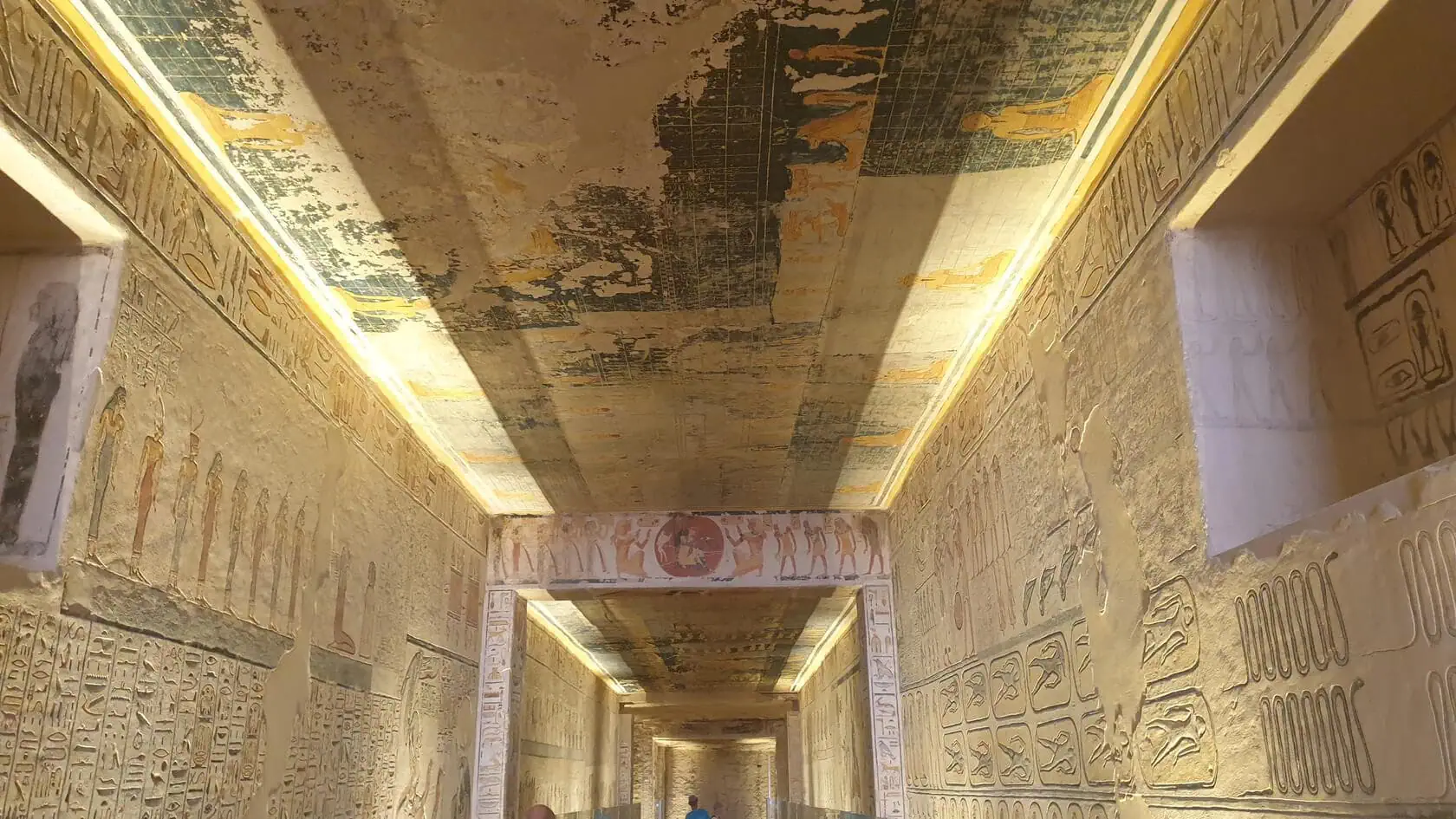
The descent into KV62 begins with a narrow staircase leading down into the rock-cut passageway. This section gives visitors a sense of the tomb’s compact structure and geological setting.
Burial Chamber (The Heart of KV62)
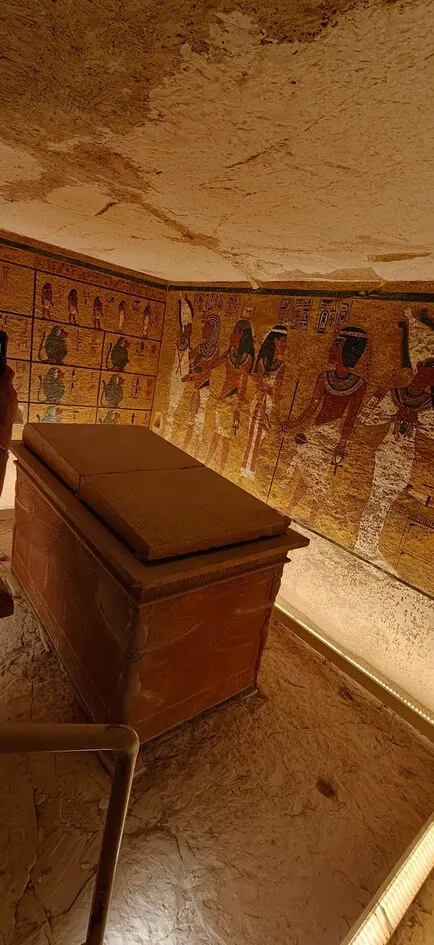
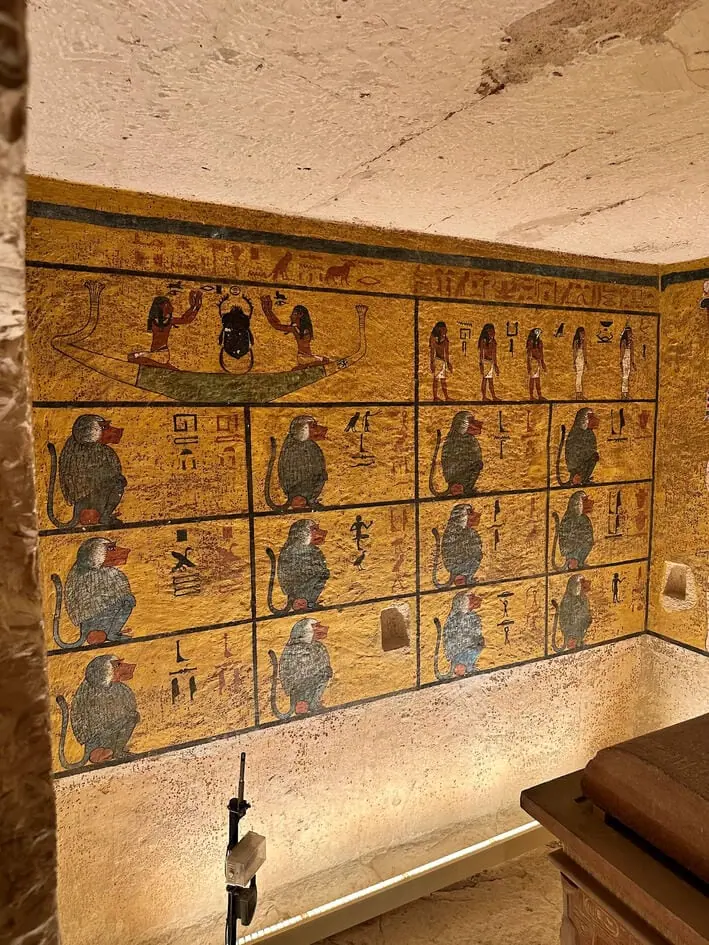
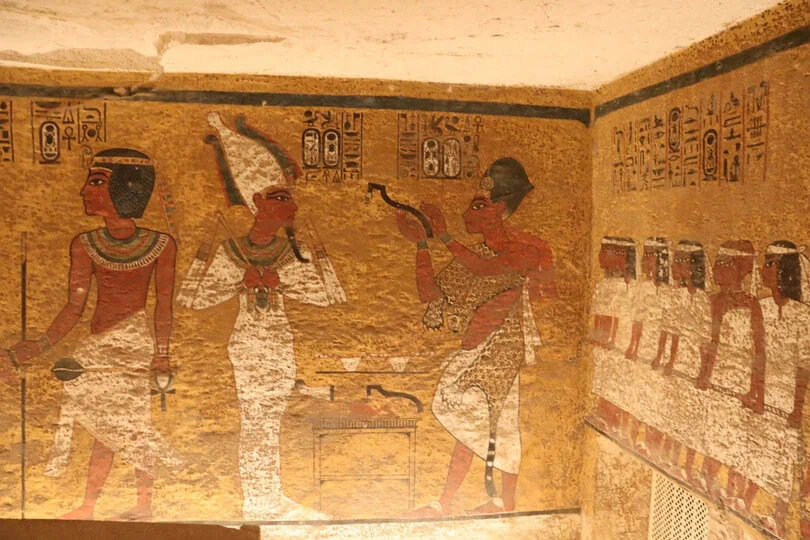
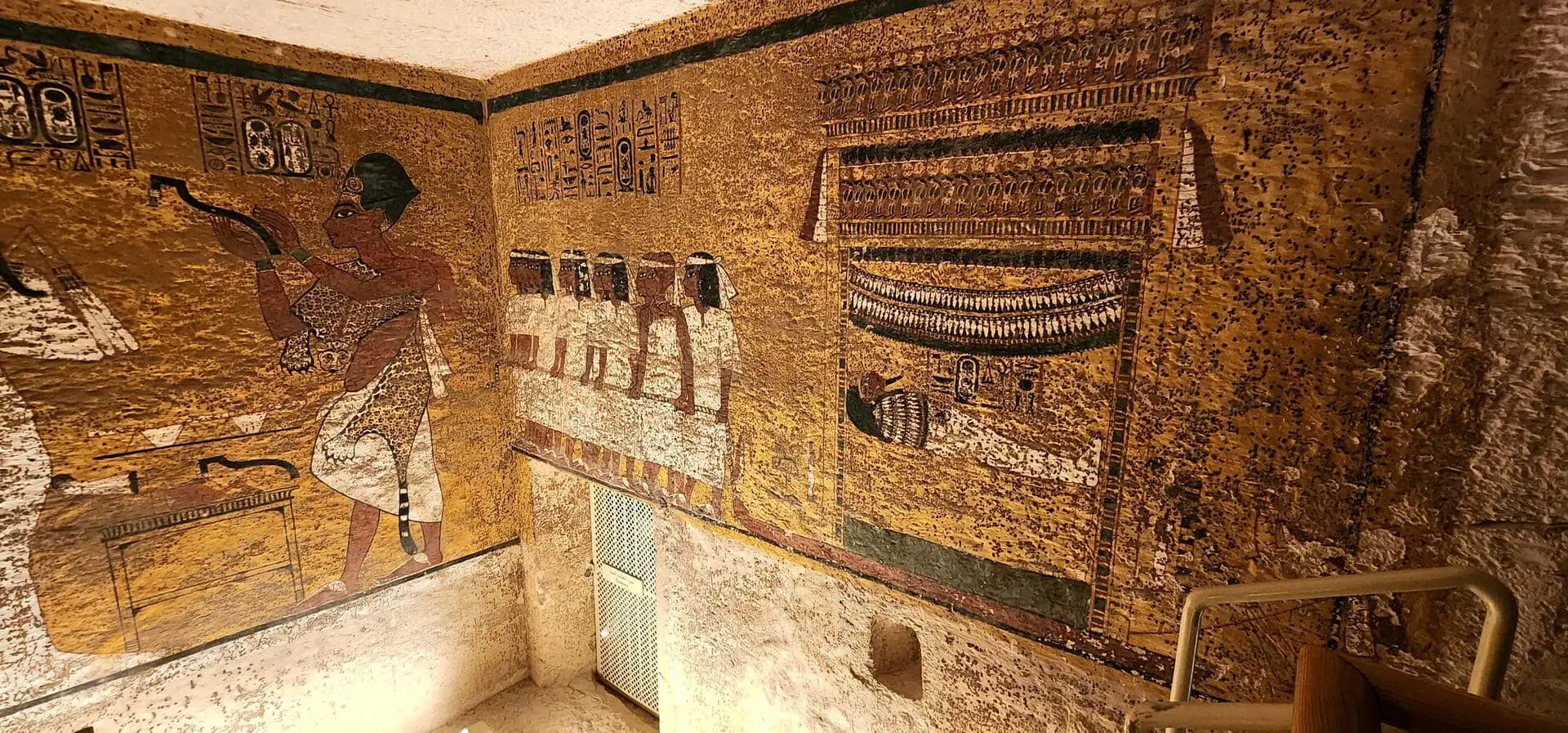
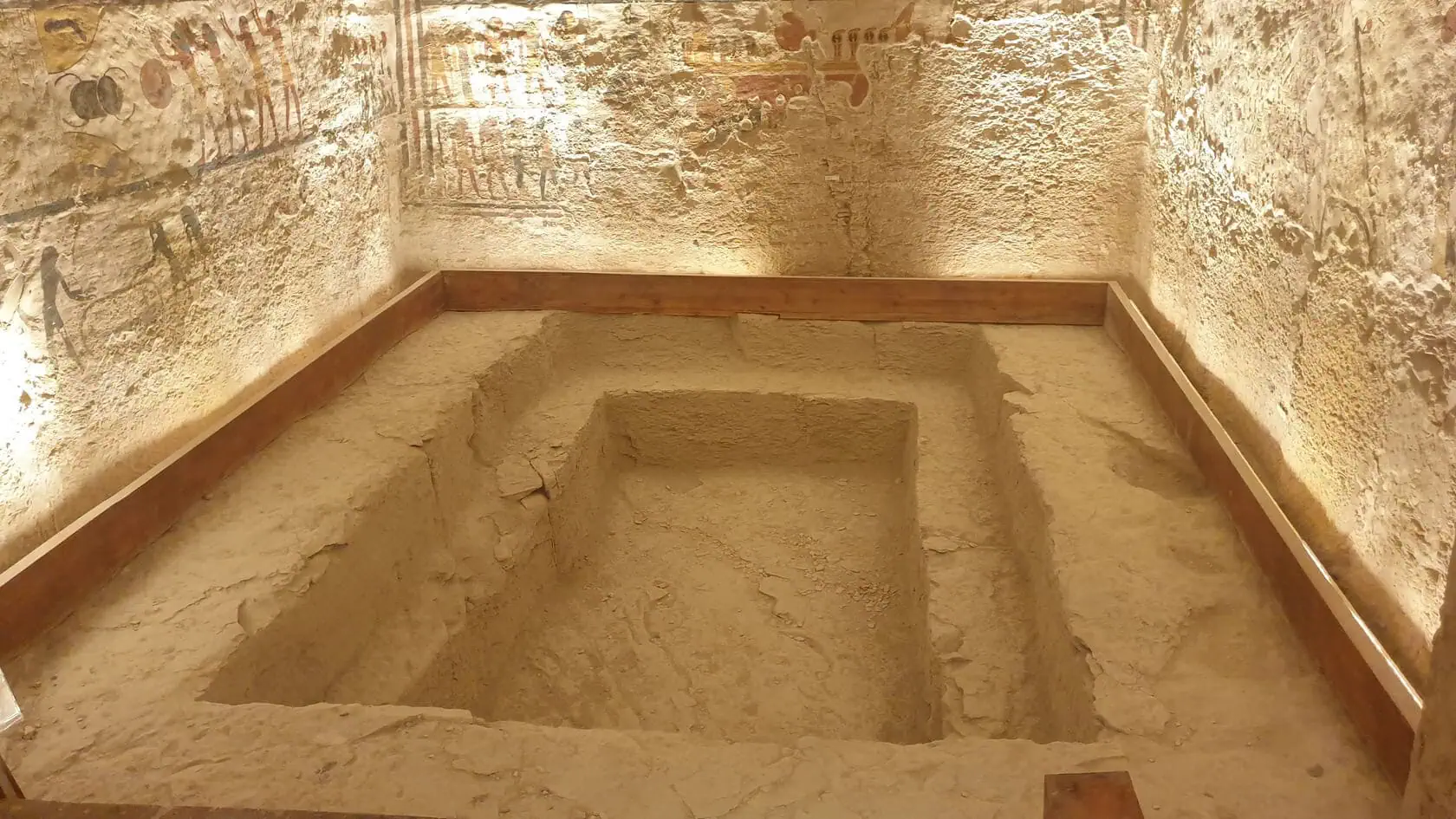
The burial chamber is the most important part of the tomb. Here, the nested shrines once enclosed the sarcophagus of Tutankhamun. Although many artifacts have been moved to museums, the chamber still contains the original stone sarcophagus.
Treasury Chamber
This chamber once held canopic jars and guardian statues protecting the king’s organs. It also contained miniature models of boats and divine figures meant to guide him through the afterlife.
Replica Exhibits and Nearby Displays
Due to conservation concerns, many original artifacts are now displayed in the Egyptian Museum in Cairo and the Grand Egyptian Museum in Giza. However, detailed replicas and interpretive displays help visitors understand the tomb’s original layout.
Valley of the Kings Surroundings
KV62 is part of a larger necropolis containing over 60 royal tombs. The dramatic desert cliffs and ancient burial landscape enhance the historical atmosphere.
Why Visit
Cultural & Historical Significance
The Tomb of Tutankhamun holds immense cultural and historical importance, far beyond its physical size.
It represents a rare archaeological miracle: a royal burial untouched for over three millennia. Unlike other pharaohs whose tombs were stripped by ancient robbers, Tutankhamun’s resting place survived almost completely intact, providing unmatched insight into Egypt’s New Kingdom civilization.
The discovery also reshaped modern understanding of Egyptology. When Howard Carter opened the tomb in 1922, the world witnessed a media sensation that sparked global fascination with ancient Egypt, often called “Tutmania.”
Beyond its treasures, KV62 is a symbol of ancient Egyptian beliefs in the afterlife. Every object placed inside the tomb was intended to ensure safe passage, protection, and eternal life for the king.
Today, the tomb remains a UNESCO-protected heritage site within the Valley of the Kings, attracting millions of visitors annually and continuing to inspire archaeologists, historians, and travelers worldwide.
Explore the Wonders of Ancient Egypt
Book your visit to the Tomb of Tutankhamun and explore one of the world’s most iconic ancient landmarks.
Visitor Information
Location & Access
KV62 is located in the Valley of the Kings, west of Luxor, Egypt. It is approximately 30–40 minutes from central Luxor by car or taxi.
Getting There
Taxi or private car from Luxor
Guided tours (recommended for historical context)
Nile cruise excursions including West Bank sites
Ticket Pricing
Valley of the Kings Entry: EGP 600–750
Entry to Tomb of Tutankhamun (KV62): EGP 300–500 (additional ticket)
Essential Tips
- Typically 6:00 AM – 5:00 PM Hours may vary seasonally and during restoration work
- Visit early morning to avoid crowds and heat
- Photography rules may be restricted inside KV62
- Wear comfortable shoes for uneven terrain
- Bring water and sun protection
- Allow 2–3 hours for full Valley of the Kings exploration
FAQs
Frequently Asked Questions About the Tomb of Tutankhamun (KV62)
Where is the Tomb of Tutankhamun located?
It is located in the Valley of the Kings on the west bank of Luxor, Egypt.
Why is KV62 so famous?
Because it is the most intact royal tomb ever discovered, containing thousands of untouched treasures.
Who discovered the tomb?
British archaeologist Howard Carter discovered it in 1922.
Can visitors enter the tomb today?
Yes, but entry requires a separate ticket and access may be limited for conservation.
What was found inside the tomb?
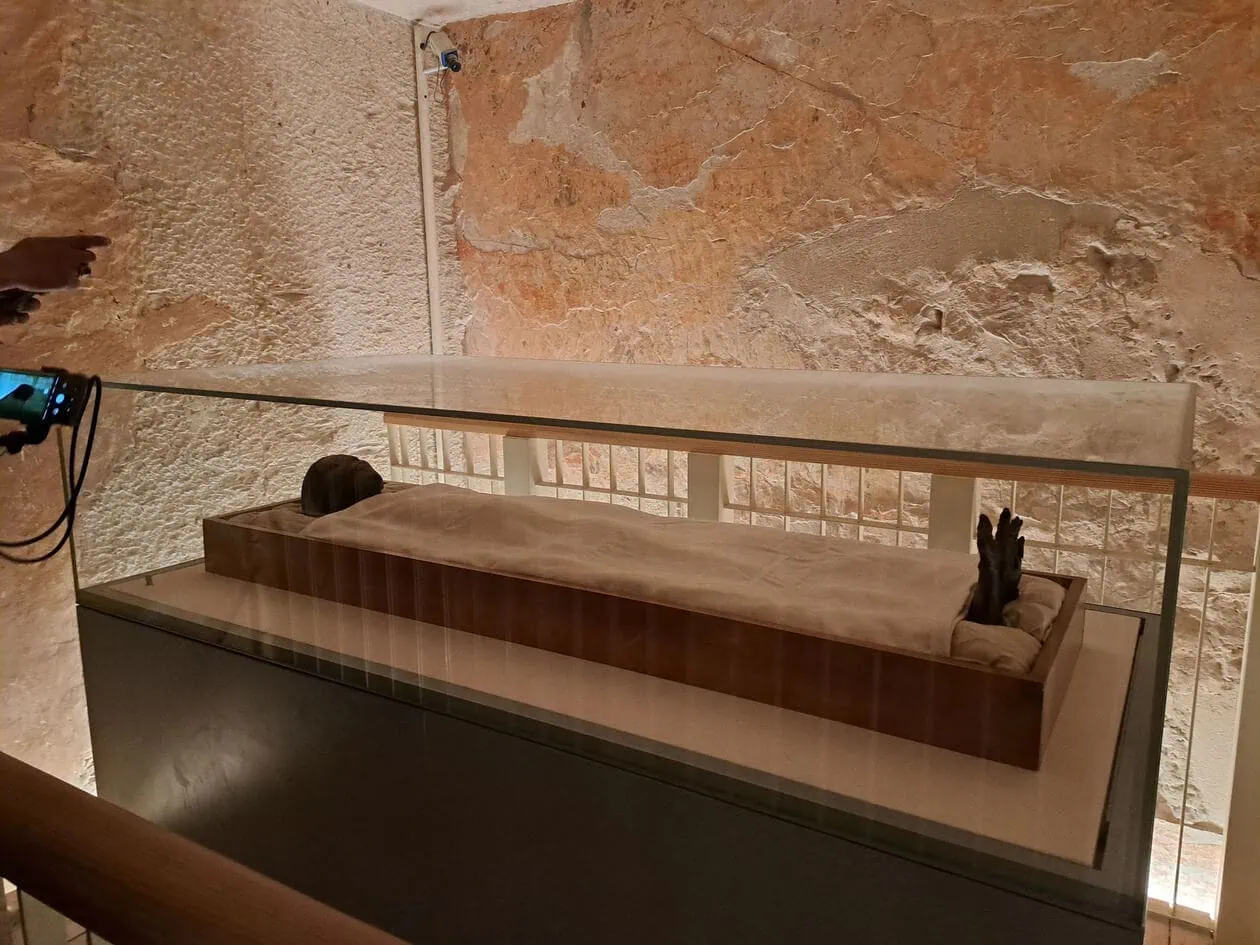
Gold artifacts, furniture, chariots, jewelry, and the mummy of Tutankhamun.
Why was the tomb not looted?
Its hidden location and burial under debris protected it from ancient robbers.
Plan Your Visit
Ready to Step Inside Egypt's Royal History?
Book your cruise or tour package to ensure seamless entry, expert guidance, and the most meaningful experience at the last surviving Wonder of the Ancient World.